
Feeding Guide for Working Dogs: Performance and Recovery
Your dog's food isn't just a meal. It's tactical gear. In high-stakes environments, every calorie must justify its weight, its purpose, and its metabolic cost. This feeding guide for working dogs provides the blueprint to ensure your partner never hits a wall when the mission gets critical. You've likely seen the signs of a failing fuel strategy. Rapid weight loss. Digestive distress. Mid-day crashes. It's frustrating to haul heavy, bulky bags that don't provide the energy required to finish the job.
We'll help you master the science of high-performance canine nutrition. Your dog will maintain lean muscle, stay focused, and recover faster. You'll learn how to optimize endurance while simplifying your field logistics. We are diving into caloric density, gut health under pressure, and the specific nutrients that drive raw power. Performance isn't about filling a bowl; it's about fueling an engine. Let's build a dog that's ready for anything.
Key Takeaways
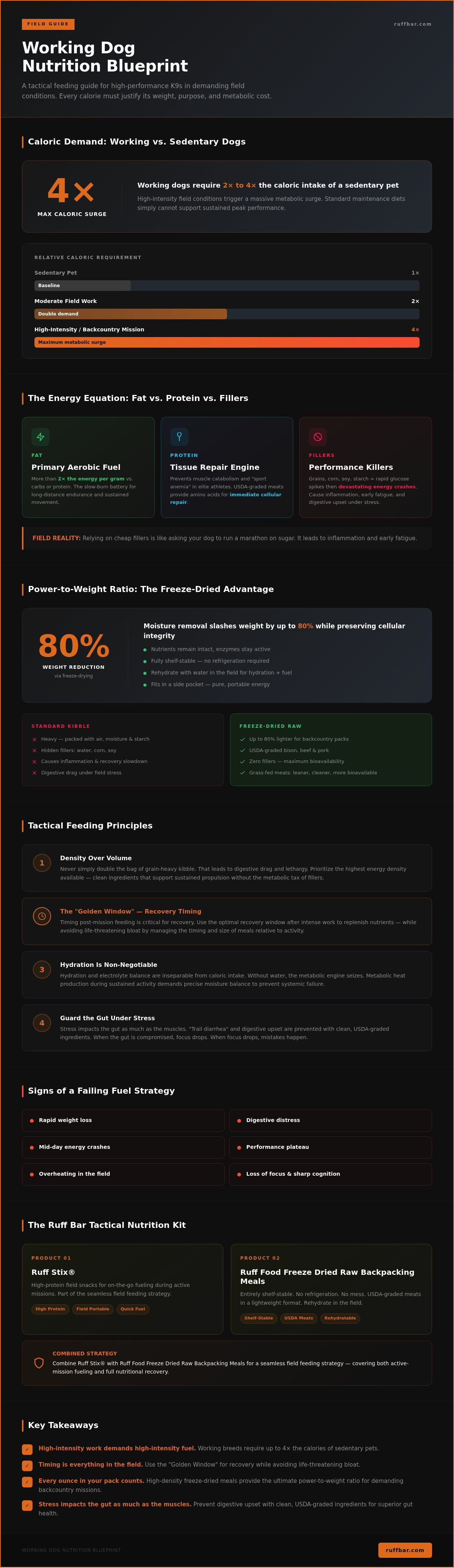
- High-intensity work demands high-intensity fuel. Learn why working breeds require up to 4x the calories of sedentary pets to sustain peak performance.
- Timing is everything in the field. This feeding guide for working dogs explains how to use the "Golden Window" for recovery while avoiding life-threatening bloat.
- Every ounce in your pack counts. Discover how high-density freeze-dried meals provide the ultimate power-to-weight ratio for demanding backcountry missions.
- Stress impacts the gut as much as the muscles. Learn to prevent digestive upset and "trail diarrhea" using clean, USDA-graded ingredients for superior gut health.
- Build your tactical nutrition kit. See how to combine Ruff Stix® and Ruff Food Freeze Dried Raw Backpacking Meals for a seamless field feeding strategy.
Defining Working Dog Nutrition: Beyond Standard Maintenance
Standard maintenance diets fail the high-performance K9. While a sedentary pet survives on baseline calories, working dogs operating in demanding field conditions require a massive metabolic surge. We're talking about a 2x to 4x increase in caloric demand depending on the intensity of the task. This feeding guide for working dogs prioritizes density over volume. You can't simply double a bag of grain-heavy kibble. That leads to digestive drag and lethargy. You need clean, canine natural food that supports sustained propulsion without the metabolic tax of fillers. High-quality protein is non-negotiable. It stops muscle catabolism in its tracks. It keeps the engine running when the environment gets harsh.
Biological efficiency is the goal. Every ingredient must serve a tactical purpose. When your dog is tracking for miles or navigating technical terrain, their body enters a state of high-rate nutrient turnover. If the fuel isn't bioavailable, the dog's performance plateaus. We focus on USDA-graded meats because they provide the amino acid profiles necessary for immediate cellular repair. This isn't just about feeding; it's about equipping your partner for the mission ahead.
Protein vs. Fat: The Energy Equation
Fat is the primary aerobic fuel source for long-distance endurance. It provides more than twice the energy per gram compared to carbohydrates or protein. For a dog tracking for hours, fat is the battery. It provides the slow-burn energy required for steady movement. Protein takes on a different role. It handles tissue repair and prevents "sport anemia" in elite athletes. We avoid "filler" calories like grains and starches. These cause rapid glucose spikes followed by devastating energy crashes. Fuel with precision. Build lean muscle. Sustain peak power. If you rely on cheap fillers, you're essentially asking your dog to run a marathon on sugar. It doesn't work. It leads to inflammation and early fatigue.
The Working Dog Metabolic Shift
Intense work changes how a dog processes nutrients. Absorption rates accelerate. By 2026 standards, metabolic heat production in active dogs is defined as the thermal energy generated during sustained ATP turnover that necessitates a precise balance of moisture and nutrient density to prevent systemic failure. If the nutrition is poor, the dog overheats. Hydration and electrolyte balance are inseparable from caloric intake. Without water, the metabolic engine seizes. Clean ingredients ensure the gut remains efficient under the stress of the hunt or the rescue. When the gut is compromised, focus drops. When focus drops, mistakes happen. High-standard preparation ensures your dog stays sharp, cool, and capable throughout the entire expedition.
Caloric Density: Maximizing Power-to-Weight Ratios
Pack weight is the enemy of endurance. Every gram your dog carries, or you haul for them, must justify its existence. This is the handler's dilemma. You need massive caloric output without the physical burden of heavy, inefficient bags. Standard kibble relies on volume. It's often filled with air, moisture, and starch that adds weight without adding power. This feeding guide for working dogs prioritizes the power-to-weight ratio. We look for the highest energy density available. Grass-fed meats provide more nutrients per ounce than grain-fed alternatives. They are leaner. They are cleaner. They are more bioavailable. This isn't just food. It's tactical gear for the backcountry. To explore a range of high-quality nutrition and gear for your working companion, find out more from specialist retailers.
The Freeze-Dried Advantage
Removing moisture is the ultimate weight-saving strategy. By freeze-drying raw ingredients, we slash the weight by up to 80 percent while preserving cellular integrity. The nutrients remain intact. The enzymes stay active. The flavor stays sharp. Following veterinary nutritional guidelines ensures we balance this density with proper hydration. Rehydration is simple. Add water in the field to expand the meal. This ensures your dog stays hydrated while consuming high-density fuel. Ruff Food Freeze Dried Raw Backpacking Meals are entirely shelf-stable. No refrigeration. No mess. Just pure, portable energy that fits in a side pocket.
Eliminating the Filler Weight
Commercial dog foods are often weighed down by "hidden" fillers. Water. Corn. Soy. These ingredients add bulk but offer zero performance benefits. In fact, they often cause inflammation that slows recovery and triggers digestive upset under stress. When you switch to freeze dried raw dog food for backpacking, you eliminate the junk. You focus on USDA-graded bison, beef, and pork. These proteins offer maximum bioavailability. Your dog absorbs more. They waste less. They recover faster. This efficiency translates to smaller pack sizes and higher energy levels. Every calorie serves a purpose. Every ounce earns its place in the pack. If you want to optimize your dog's trail performance, start by upgrading their fuel source to something that works as hard as they do. You can easily integrate these high-density options by packing Ruff Food Freeze Dried Raw Backpacking Meals for your next mission.
Tactical Feeding Schedules: Timing for Peak Field Performance
Timing isn't just a suggestion; it's a safety requirement. In the field, a full stomach is a liability. This feeding guide for working dogs moves beyond the standard twice-a-day routine. It focuses on metabolic windows. You need to fuel for the work ahead, sustain the effort during the mission, and trigger immediate repair once the job is done. High-performance dogs operate on a different clock. Their bodies demand precision. If you get the timing wrong, you risk more than just a drop in performance. You risk their health.
The 'Golden Window' for recovery is the most critical phase. This 30 to 60-minute period after work is when the body is primed for glycogen replenishment. Feeding a high-density meal now ensures that muscle repair begins immediately. However, you must respect the danger of Gastric Dilvulus Volvulus, commonly known as bloat. Never feed a large meal immediately before or after intense exertion. Allow the heart rate to drop. Let the body cool. Safety and recovery must work in tandem. Using high protein dog energy bars during the day can bridge the gap between these larger meals without overloading the digestive system.
Pre-Work Priming
Start with the 2-hour rule. A full stomach during deployment is a recipe for disaster. It causes lethargy. It increases bloat risk. Instead, focus on metabolic priming. Small, protein-rich snacks given early can jumpstart the system without adding bulk. Hydration loading is equally vital. Get moisture into the system before the sun hits or the tracking begins. A hydrated dog is a resilient dog. They maintain focus longer. They regulate temperature better. They stay in the fight.
The Mid-Day Refuel Strategy
Watch for the "bonk." You'll see it in their eyes. A slight lag in response. A loss of explosive power. These are signs that glycogen stores are hitting zero. This is where Ruff Stix® become essential gear. They are portable. They are high-impact. You don't need a bowl or a break. Consuming targeted amino acids during active hours ensures the canine brain remains sharp and responsive even under extreme environmental stress. This tactical refuel keeps the drive high and the focus locked. Don't wait for a total crash. Following a tactical feeding guide for working dogs ensures you are fueling the propulsion as it happens.
Field Digestion and Hydration Management
Digestion isn't just about nutrient absorption. It's about maintaining focus. A dog struggling with an upset stomach isn't locked onto the scent or the trail; they are managing internal discomfort. This feeding guide for working dogs recognizes the gut-brain-performance axis as a critical component of field success. High-stress environments trigger cortisol release, which can effectively shut down digestive processes. If your dog's fuel is loaded with heavy grains or soy, that food sits in the gut, leading to fermentation and distress. We prioritize clean, bioavailable ingredients to ensure the engine keeps turning even when the pressure is high.
"Trail diarrhea" is more than a mess. It's a mission-ender. It leads to rapid dehydration and electrolyte depletion. Most cases in high-drive dogs aren't caused by pathogens but by stress and poor-quality fillers. By using limited-ingredient, high-protein fuel, you minimize the metabolic tax on the digestive system. Clean nutrition ensures that energy is directed toward propulsion and cognitive tasks rather than managing inflammation in the GI tract. Using nutritional toppers can bridge the gap, providing the palatability and enzymatic support needed to keep the system stable during multi-day expeditions.
Solving Digestive Upset in the Field
Grain-free, limited-ingredient diets are tactical choices. They remove common allergens and inflammatory markers that trigger field-day diarrhea. Organic ingredients play a vital role here by maintaining a stable microbiome. A balanced gut is a resilient gut. When the environment becomes chaotic, the microbiome needs to remain consistent. Ruff Bar Functional Nutrition Toppers are designed for this exact scenario. They provide a concentrated dose of clean nutrition that settles a nervous stomach and ensures your dog continues to process fuel efficiently without the risk of a mid-day crash.
Tactical Hydration Strategies
Hydration is the most common failure point in the field. Many high-drive dogs become so focused on the task that they refuse to drink plain water. We use the "baiting water" technique to overcome this. By adding a scoop of Ruff Food Pure Blend Toppers to their bowl, you transform plain water into a high-value recovery drink. This encourages immediate intake and provides a small boost of amino acids. You must monitor hydration levels constantly. Use the skin tent test: pull the skin between the shoulder blades and release. If it doesn't snap back instantly, your dog is entering a danger zone. Remember that high-protein diets naturally increase water requirements. Never let the bowl run dry. To keep your dog's gut and hydration on track, integrate Ruff Bar Functional Nutrition Toppers into your daily field routine.
Implementing the Ruff Bar Performance Framework
Transitioning to a high-performance raw diet is a tactical upgrade. It requires a methodical shift from high-carbohydrate fillers to nutrient-dense, bioavailable proteins. This feeding guide for working dogs concludes with the practical application of the Ruff Bar framework. You aren't just changing a meal; you're building a custom "Adventure Pack" designed for your dog's specific metabolic output. Combine Ruff Food Freeze Dried Raw Backpacking Meals for base calories with Ruff Stix® for active-hour energy. This tiered approach ensures your dog has the fuel they need when they need it most.
Success is measurable. You must monitor performance metrics to ensure the framework is working. Stool consistency should be firm and small, indicating high nutrient absorption. Energy levels should remain steady without the "crash" associated with grain-heavy diets. Coat quality should reflect the increase in healthy fats and high-standard amino acids. These indicators prove the system is working. If the stool is loose or energy flags, adjust the density. Performance isn't static. Your feeding strategy shouldn't be either.
Selecting Your Protein Gear
Choosing the right amino acid profile is essential for specific types of work. Bison offers lean, nutrient-dense power for explosive tasks. Beef provides high bioavailability for sustained, multi-day effort. Pork serves as an excellent alternative for dogs with specific sensitivities or those requiring a different fat-to-protein ratio. Ruff Stix® are the preferred choice for K9 handlers because they allow for one-handed feeding. You can reward and refuel without breaking your stride or dropping your gear. Customize the caloric intake based on the mission. If the terrain is technical or the temperature drops, increase the density. More resistance means more fuel is required to maintain lean muscle mass.
The Road to Sustained Vitality
The long-term benefits of this framework go beyond the field. A filler-free, USDA-graded diet protects joint and organ health over years of service. It reduces systemic inflammation and improves recovery times between deployments. To further optimize the K9 athlete, integrate performance dog food supplements into the daily routine. This ensures every biological gap is filled, from gut health to joint support. We are committed to providing rugged nutrition for the world's most demanding dogs. Ready to upgrade your dog's fuel? Shop the full Ruff Bar performance collection and equip your partner for the next mission.
Fuel the Mission: Your Strategy for K9 Excellence
Mastering the science of high-performance nutrition is the difference between a dog that finishes and a dog that fails. This feeding guide for working dogs provides the tactical framework needed to optimize every mission. You've learned how to prioritize caloric density, time your meals for maximum recovery, and manage field digestion under stress. By switching to USDA-graded grass-fed meats, you ensure your partner receives the highest standard of bioavailable fuel.
Efficiency matters in the backcountry. Our freeze-dried formulas reduce pack weight by up to 70% compared to traditional wet food, allowing you to move faster and stay out longer. Trusted by professional K9 handlers, our nutrition is designed to thrive where standard kibble fails. Don't leave your dog's endurance to chance. Equip them with the same level of gear you demand for yourself. It's about more than just food; it's about the reliability of high-standard preparation.
Fuel your next adventure with Ruff Bar's high-performance nutrition. Your dog is ready for the challenge. Make sure their fuel is too.
Frequently Asked Questions
How many calories does a working dog need per day?
A working dog typically requires 2x to 4x the calories of a sedentary pet to maintain peak power. This surge depends on terrain difficulty, environmental temperature, and total workload. Consult this feeding guide for working dogs to calculate specific density requirements for your mission. High-intensity tasks like tracking or rescue operations cause rapid glycogen depletion. You must provide fat-centric fuel to sustain long-distance aerobic endurance without causing digestive drag.
Is a grain-free diet safe for high-performance working breeds?
Grain-free diets are essential for high-performance breeds because they eliminate inflammatory fillers and metabolic crashes. Dogs don't require starches for energy; they thrive on fats and proteins. Removing corn, soy, and wheat reduces systemic inflammation and improves overall recovery times. Our formulas focus on USDA-graded grass-fed meats. This ensures every calorie is bioavailable and serves a tactical purpose rather than adding bulk to your dog's gut.
How do I prevent bloat when feeding my dog during a hunting or hiking trip?
Prevent bloat by following the 2-hour rule: never feed a large meal immediately before or after intense work. Gastric Dilvulus Volvulus is a life-threatening risk for deep-chested working breeds. Allow the dog's heart rate to return to baseline before providing significant calories. Use small, high-protein snacks like Ruff Stix® for mid-day refueling. This provides sustained energy without the physical weight and danger of a full stomach during deployment.
Can I use energy bars as a complete meal replacement in the field?
Energy bars should be used as supplemental gear rather than total meal replacements. While Ruff Food Bars provide high-density nutrition, they are designed to bridge the gap between primary feedings. Use Ruff Food Freeze Dried Raw Backpacking Meals for your dog's base caloric intake during multi-day expeditions. This strategy ensures a balanced macronutrient profile. It supports long-term joint health and organ function while maintaining explosive power in the field.
What is the best way to rehydrate freeze-dried raw dog food on the trail?
Mix your freeze-dried raw food with clean water and allow it to sit for several minutes until fully expanded. This process ensures your dog receives critical moisture alongside their nutrients. If your dog is a reluctant drinker, use Ruff Bar Pure Blend Toppers to "bait" the water. This increases palatability and encourages immediate intake. Proper rehydration is vital for maintaining metabolic efficiency and preventing heat stress during technical work.
How do I know if my working dog is getting enough protein for muscle recovery?
Monitor your dog's recovery time and lean muscle mass to gauge protein efficacy. A dog receiving sufficient high-quality protein will bounce back quickly from intense exertion without signs of "sport anemia." Check for a shiny coat and consistent energy levels throughout the day. This feeding guide for working dogs emphasizes USDA-graded meats because they provide the precise amino acid profiles required for cellular repair and sustained propulsion in harsh environments.
What should I do if my dog gets diarrhea during a multi-day backpacking trip?
Address trail diarrhea by immediately simplifying the diet to clean, limited-ingredient proteins. Most field-day digestive upset is caused by stress or poor-quality fillers in commercial kibble. Transitioning to a grain-free, organic diet minimizes the risk of inflammation in the GI tract. Use Ruff Bar Functional Nutrition Toppers to settle a nervous stomach. These toppers provide enzymatic support that helps stabilize the microbiome during high-stress missions or multi-day backcountry trips.
Are Ruff Stix® suitable for dogs with sensitive stomachs?
Ruff Stix® are ideal for dogs with sensitive stomachs because they rely on a limited-ingredient, filler-free formula. We use USDA-graded bison, beef, and pork combined with organic ingredients to reduce the risk of irritation. Many commercial treats use soy or corn that triggers digestive distress in high-drive dogs. By focusing on purity and natural origin, we provide high-impact energy that is easy on the gut and fast to absorb.