
Fat Loading for Dogs: Complete K9 Endurance Guide (2026)
The carb-loading strategy that powers human marathoners will wreck a working trail dog. While human athletes pack on glycogen to avoid hitting the wall, canine physiology runs on an entirely different metabolic engine. When your dog runs out of gas ten miles into a multi-day trek, high-carb kibble won't solve the problem. You need relentless stamina for rough terrain, but exploring fat loading for dogs often sparks a valid fear: triggering acute pancreatitis or severe digestive distress far from the trailhead.
You don't have to choose between peak trail stamina and gut safety. Master the science of canine fat adaptation, and you unlock clean, sustained power that keeps your partner charging uphill day after day. This guide breaks down the mechanics of canine lipid oxidation, provides a safe timeline to transition your working dog to higher fat density, and reveals the nutrient-dense fuel sources built for demanding backcountry expeditions.
Key Takeaways
- Canine athletes thrive on lipid metabolism, relying on efficient fatty acid oxidation rather than carbohydrate burning for prolonged stamina.
- Safe fat loading for dogs requires a structured four-to-six-week ramp phase to upregulate mitochondrial enzymes without triggering gut distress or pancreatitis.
- Metabolically adapted dogs spare valuable muscle glycogen during steady aerobic work, preserving explosive burst energy for brutal uphill ascents.
- Clean animal fats provide bioavailable, dense fuel that far outperforms inflammatory, plant-derived seed oils in harsh outdoor environments.
- Proper trail timing prevents disaster: hold large high-fat rations for evening camp recovery and deploy compact lipid snacks during short trek breaks.
What Is Fat Loading for Dogs and How Does Canine Metabolism Work?
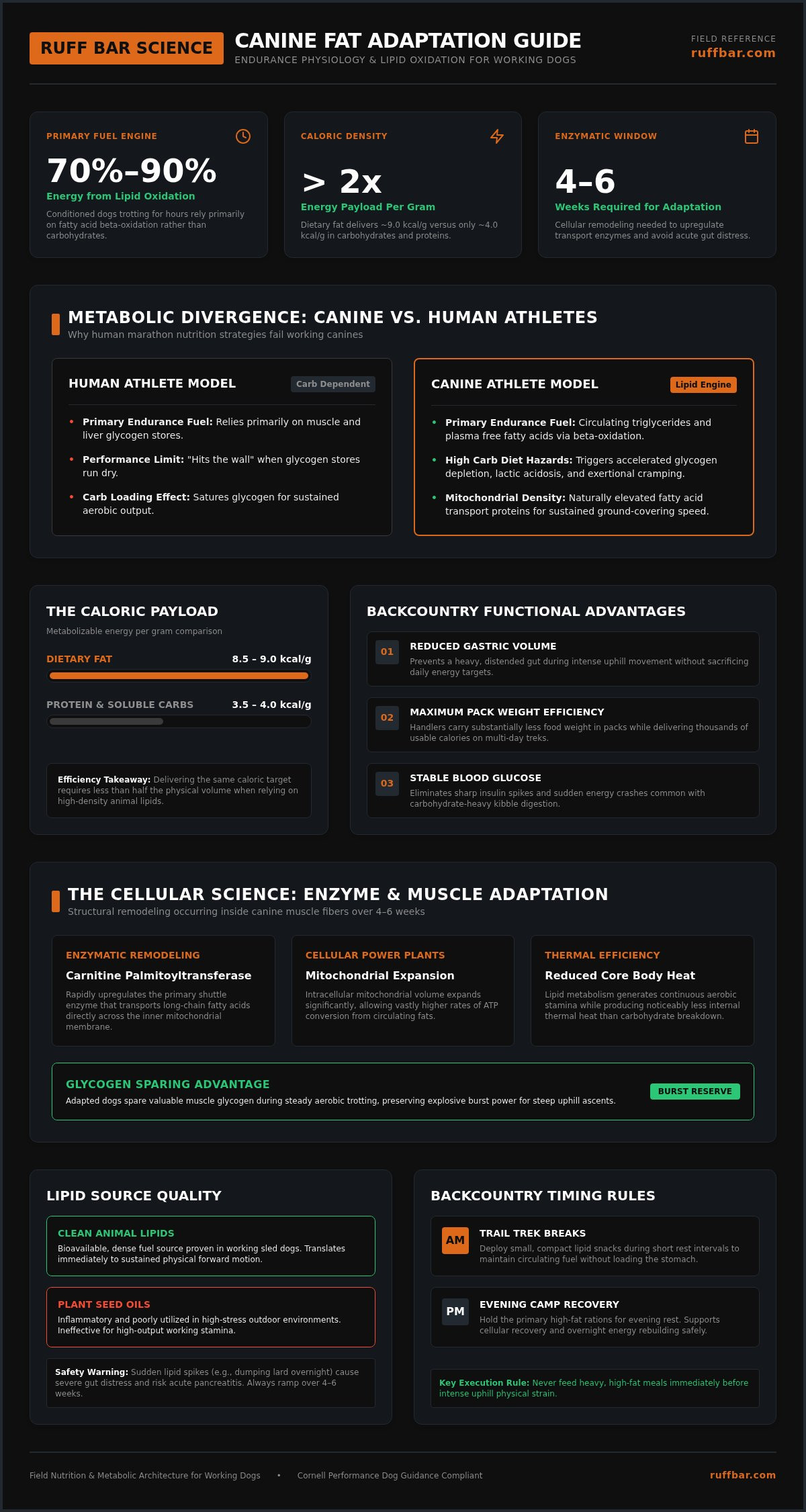
Canine cellular metabolism runs on a different biological fuel than human physiology. Systematic fat loading for dogs is the process of gradually shifting a dog's dietary intake toward dense, bioavailable lipids. This dietary shift trains cellular machinery to prioritize free fatty acids rather than circulating glucose during prolonged exertion. Unlike humans who hit metabolic walls when glycogen depletes, canines burn dietary fat as their primary endurance fuel.
Your trail partner is an aerobic specialist. When trotting for hours across mountain ridges, a conditioned dog draws 70% to 90% of their energy from fatty acid beta-oxidation. They don't need bowls of pasta or sugar-heavy gels. They need pure, dense animal fats that translate directly into steady forward motion.
Canine Lipid Oxidation vs Human Glycogen Loading
Human marathoners load carbohydrates to saturate muscle glycogen. Attempting this strategy with a canine athlete backfires immediately. High-carbohydrate feeding in working dogs accelerates glycogen depletion, triggers severe lactic acidosis, and increases the risk of exertional cramping. Canine muscle fibers naturally maintain exceptionally high mitochondrial densities and elevated levels of fatty acid transport proteins. Studies on sled dog working physiology and nutrition demonstrate that elite endurance canines metabolize fats at sustained rates that would incapacitate a human runner. While a human hits the wall once glycogen runs dry, a lipid-adapted dog utilizes circulating triglycerides and plasma free fatty acids to sustain an effortless, ground-covering pace.
The Caloric Math: 9 Calories per Gram vs 4
Endurance requires intense caloric efficiency. Dietary fat supplies roughly 8.5 to 9.0 kcal per gram of metabolizable energy. Soluble carbohydrates and protein yield only 3.5 to 4.0 kcal per gram. That is more than double the energy payload in every bite. This density provides critical advantages for backcountry athletes:
- Reduced Gastric Volume: Dogs cannot comfortably run uphill with a heavy, distended gut. High-fat density satisfies staggering daily energy demands without packing the stomach with voluminous, plant-heavy kibble.
- Maximum Pack Weight Efficiency: Every ounce inside your backpack counts. Implementing strategic fat loading for dogs allows handlers to carry significantly less food weight while delivering thousands of usable calories per day on extended treks.
- Stable Blood Glucose: Burning fat prevents the sharp insulin spikes and subsequent energy crashes inherent to carbohydrate digestion.
The Cellular Science: How High-Fat Diets Upregulate Endurance
Many handlers treat fueling like a last-minute adjustment, tossing extra lard into a bowl the night before a hunt. That is a dangerous mistake. True fat adaptation requires cellular enzyme remodeling that takes weeks, not an extra meal. Shifting a dog to lipid metabolism isn't just about calories in a dish. It fundamentally rebuilds how canine muscle cells generate power under load.
When executing systematic fat loading for dogs, you are altering their internal cellular architecture. You are signaling muscle fibers to construct the machinery required to transport and burn free fatty acids efficiently. Without this structured adaptation window, sudden lipid spikes simply float unabsorbed through the digestive tract, risking pancreatitis and leaving muscle cells starving for fuel on trail.
Enzymatic Adaptation and Mitochondrial Density
Consistent dietary fat exposure triggers profound physiological adaptations inside canine muscle tissue. First, intracellular mitochondrial volume expands. More mitochondria means more cellular power plants ready to convert fatty acids into usable adenosine triphosphate (ATP). Second, the body rapidly upregulates carnitine palmitoyltransferase, the critical enzyme that shuttles long-chain fatty acids across the inner mitochondrial membrane.
According to Cornell University's guidance on feeding performance dogs, establishing these metabolic shifts requires four to six weeks of structured nutritional conditioning. Once adapted, canine athletes clear serum triglycerides with blistering speed. They generate continuous aerobic energy while producing significantly less core body heat than dogs attempting to metabolize carbohydrate-heavy kibble.
Glycogen Sparing and Lactate Prevention
The definitive athletic advantage of lipid adaptation is glycogen preservation. An unadapted dog burns through precious muscle glycogen within the first hour of hard exertion. That rapid sugar breakdown triggers sharp spikes in blood lactate, muscular fatigue, and heavy panting. In severe mountain conditions, premature glycogen depletion invites exertional rhabdomyolysis, locking muscle tissue into painful, debilitating spasms.
A fat-adapted working dog operates differently. They burn circulating lipids during steady, submaximal trotting, keeping intramuscular glycogen locked in reserve. When the terrain turns technical, like scrambling up loose shale or cresting a steep ridge, the dog taps those pristine glycogen stores for explosive bursts of power. You can dive deeper into the foundational biochemistry in high protein dog energy bars formulated for working dogs. Fueling your athlete with targeted, shelf-stable options from Ruff Bar reinforces this cellular endurance without burdening their digestive tract.
The Step-by-Step Protocol: How to Fat Load Your Dog Safely
Transitioning an endurance canine requires calculated discipline. A standard seven-day pet food transition won't cut it. Pushing cellular machinery toward lipid adaptation requires time, precision, and consistent physical output. Executing safe fat loading for dogs protects the gut while unlocking relentless stamina for high-mileage backcountry work.
Follow this phased protocol to build your dog's athletic engine without shocking their digestive tract.
Phase 1: Baseline Conditioning and Health Screening
Never fat load a sedentary dog. Heavy lipid intake requires high physical demand to drive cellular beta-oxidation. Before altering their diet, verify that your dog is actively conditioning on the trail. Review their veterinary history for past bouts of pancreatitis, liver strain, or genetic hyperlipidemia; breeds like Miniature Schnauzers or dogs with prior pancreatic inflammation must not undergo high-fat feeding. Log current daily food intake, track base body weight, and confirm firm stool quality before adjusting a single gram.
Phase 2: The 6-Week Progressive Ramp Schedule
Cellular remodeling takes four to six weeks. Increase dietary fat calories by no more than 5% to 10% each week while reducing carbohydrate content proportionally. You can smoothly introduce dense, clean animal lipids using measured portions of the best dog food toppers for energy mixed into standard meals. Monitor the dog closely. If stools become greasy or loose, freeze the current ratio for four days or drop back one step until digestion stabilizes.
Mitigating Risks: Pancreatitis and Digestive Distress
Acute pancreatitis is triggered by sudden fat surges shock-loading an unprepared pancreas. Gradual pacing eliminates this hazard. As dietary fat scales toward performance levels, you must maintain balanced structural nutrition. In alignment with Cornell University's performance dog feeding guidelines, dietary protein must stay at or above 30% to 35% of metabolizable energy to guard against sports anemia and support lean tissue repair.
Never overlook hydration. Fat metabolism demands clean cellular waste flushing. Always ensure abundant fresh water, especially when running in dry alpine elevations.
Selecting Clean Fat Sources: Animal Lipids vs Plant Oils
The type of lipid you feed determines whether your canine athlete thrives or crashes. While generic pet food manufacturers dump cheap industrial seed oils into formulas to hit crude fat numbers, high-stakes endurance demands biological precision. Canines require species-appropriate animal fats, not oxidized industrial seed oils, to sustain peak output. Healthy dogs digest 90% to 95% of ingested animal lipids with minimal metabolic strain. Plant oils cannot match that bioavailability.
Quality dictates cellular response. When designing a protocol for fat loading for dogs, every gram must deliver stable energy without introducing inflammatory precursors.
Ruminant Fats: Grass-Fed Beef, Bison, and Pork
Dense animal fats provide clean metabolic fuel. Grass-fed beef, wild bison, and high-standard pork supply stable saturated and monounsaturated fatty acids that resist oxidative degradation. Unlike polyunsaturated oils that turn rancid under pack friction and heat, rendered ruminant tallows stay biologically intact. They deliver pure cellular fuel along with fat-soluble vitamins A, D, E, and K in their native biological matrices, nourishing joint cartilage and working soft tissue over long wilderness miles.
The Problem with Seed Oils and Cheap Fillers
Pouring canola, corn, or soybean oil over a dog's food creates severe physiological compromises:
- Inflammatory Overload: Industrial seed oils are heavily loaded with omega-6 linoleic acid. High concentrations stoke systemic gut inflammation and slow joint recovery after crushing alpine ascents.
- Deficient Fatty Acid Conversion: Dogs convert less than 5% to 10% of plant-derived alpha-linolenic acid (ALA) into active eicosapentaenoic acid (EPA) and docosahexaenoic acid (DHA). They lack sufficient delta-6 and delta-5 desaturase enzymes to process plant lipids efficiently.
- Fragile Oxidative Stability: Highly processed liquid vegetable oils degrade rapidly when exposed to air, light, and heat, forming reactive free radicals that damage working intestinal linings.
Executing successful fat loading for dogs means rejecting cheap grain, soy, and seed oil shortcuts. Pack your vest with clean, lipid-dense fuel built from USDA-inspected grass-fed meats by choosing functional nutrition from Ruff Bar endurance fuel options to keep your partner driving forward.
Field Execution: Sustaining the Adapted Canine Athlete on the Trail
Field execution separates conditioned canine athletes from exhausted casualties. You spent weeks adapting your dog's cellular metabolism. Now trail logistics determine their real-world stamina. Feeding strategy is not just about calorie counts; it is about timing. Dumping a large, high-fat meal into a working dog right before hard physical exertion invites fatal Gastric Dilatation-Volvulus (bloat) and pulls oxygenated blood away from driving limbs. Strategic fat loading for dogs requires disciplined field protocol.
Mid-Adventure Trail Fueling Strategies
Keep circulating free fatty acids steady without overloading the stomach. During brief trail breaks, deliver small, calorically dense fuel increments. Break off portions of shelf-stable Ruff Food Bars to sustain output through steep switchbacks. These targeted rations deliver clean lipids without inducing lethargy. For quick trail commands and high-drive motivation, carry clean animal protein like freeze dried treats for dogs to keep their mental focus razor sharp.
Nightly Recovery and Camp Nutrition
Hold the primary caloric payload until the day's push is over. Wait 60 to 90 minutes after dropping packs at camp before offering the main bowl. This cooling-off window allows core body temperature to drop and heart rate to normalize. Rehydrate camp rations with warm water to create a nutrient-dense broth. This practice guarantees immediate hydration and rapid gastric emptying. Pack-weight efficiency matters on multi-day routes; utilizing freeze dried raw dog food for backpacking gives you raw animal fat density without dead weight. Rehydrating Ruff Food Freeze Dried Raw Backpacking Meals Beef restores glycogen, repairs micro-tears in muscle fiber, and fuels overnight cellular recovery.
Equipping the Modern Working K9
Sustaining a working animal across punishing terrain demands uncompromising gear and nutrition. Backcountry fat loading for dogs must be supported by structural joint defense. Pair clean endurance rations with targeted performance dog food supplements to protect connective ligaments under pack weight. Pocket-sized Ruff Stix® Bison Pork provide tough, chewable animal lipids engineered for extreme environments. Ready your partner for the longest trails with clean performance nutrition at Ruff Bar.
Build Relentless Backcountry Stamina
Conquering brutal wilderness elevation demands deliberate metabolic preparation. Dogs aren't built to limp through high-mileage days on volatile carbohydrate spikes. By executing structured fat loading for dogs, you transform your partner's internal engine into a resilient, fat-oxidizing machine. You spare vital glycogen, prevent performance-killing lactic acid build-up, and unlock sustained aerobic power across every technical ridgeline.
Never settle for oxidized seed oils or cheap fillers when your dog's vitality is on the line. Backcountry expeditions require pure, calorically dense nutrition engineered to perform under relentless physical stress. Give your athlete the metabolic edge they deserve. Explore rugged, grass-fed canine performance fuel at Ruff Bar, crafted with USDA-inspected grass-fed meats, organic ingredients, and zero grain or synthetic fillers. Pack the right fuel, trust the preparation, and watch your dog charge ahead with unwavering stamina.
Frequently Asked Questions
What is the difference between carb loading for humans and fat loading for dogs?
Human runners rely on muscle glycogen to avoid hitting the wall during marathons. Canine physiology works differently. Dogs utilize aerobic lipid beta-oxidation as their primary fuel during sustained exertion. Loading carbohydrates into working dogs spikes blood lactate and triggers rapid muscle exhaustion. Structured fat loading for dogs upregulates mitochondrial enzymes, allowing canine athletes to burn free fatty acids efficiently while sparing glycogen for steep terrain climbs.
Can feeding a high fat diet give my active dog pancreatitis?
Sudden, unconditioned lipid spikes can trigger acute pancreatitis by overwhelming the pancreas with excess digestive demands. However, working dogs adapt safely when handlers increase dietary fats gradually over four to six weeks alongside consistent physical training. Never fat load a dog with a clinical history of pancreatitis or genetic hyperlipidemia. Pacing the dietary ramp schedule allows cellular and pancreatic enzymes to adapt without inflammation.
How many weeks does it take for a dog to become fat adapted?
Full cellular adaptation requires four to six weeks of progressive dietary conditioning. While basic gut bacteria shift within seven to ten days, cellular remodeling takes longer. Muscle fibers require weeks of consistent physical training and elevated lipid intake to build higher mitochondrial volume, upregulate carnitine palmitoyltransferase, and optimize fatty acid transport proteins for sustained backcountry performance.
Can I fat load an everyday companion dog that only walks in the neighborhood?
No. Systematic fat loading for dogs is strictly engineered for working canine athletes, search teams, hunting dogs, and backcountry trail companions facing extreme caloric burn. Sedentary or moderately active dogs lack the energy expenditure required to utilize dense lipids. Feeding high-fat rations without heavy athletic output leads to rapid weight gain, metabolic imbalance, and severe digestive strain.
What are the best natural fat sources to increase an active dog's stamina?
Species-appropriate animal lipids provide the cleanest metabolic fuel for working canines. Rendered grass-fed beef tallow, wild bison fat, and clean pork lipids deliver stable saturated and monounsaturated fatty acids that resist rancidity. Avoid industrial seed oils like canola, corn, and soy. Plant oils oxidize easily under heat, trigger gut inflammation, and fail to provide bioavailable omega-3 fatty acids.
How should I feed my dog high-fat meals during a strenuous backpacking trip?
Never feed a full, high-fat meal right before intense trail work. Heavy digestion combined with heavy exertion increases the risk of life-threatening bloat. Instead, dispense small, calorically dense meat snacks during short trail breaks to keep circulating free fatty acids steady. Feed the primary high-fat ration at camp 60 to 90 minutes after hiking ends, rehydrating it with warm water for optimal digestion.
What are the early warning signs that my dog is not tolerating higher dietary fat?
Monitor stool consistency and recovery energy every morning. Greasy, pale, or liquid stools signal steatorrhea, meaning unabsorbed lipids are passing straight through the colon. Watch for signs of abdominal tenderness, painful posturing, sudden lethargy, or vomiting. If these signs occur, stop increasing fat ratios immediately, drop back to baseline nutrition, and give the digestive tract time to recover.