
Dogs Belly Upset: Myth-Busting Digestive Health for the Performance K9
Feeding boiled chicken and white rice to fix a dogs belly upset is like trying to fuel a marathon runner with soda crackers. It's weak. It's outdated. It's a recipe for performance failure on the trail. You've seen the results. One day you're pushing for the summit; the next, you're managing trail-side diarrhea that sidelines your partner and ruins the trip. You need a dog with the digestive resilience to handle high-intensity exertion without a breakdown in the field.
You already know that inconsistent energy levels and sudden GI distress are more than just an inconvenience. They're a sign that your dog's fuel isn't holding up to the demands of the adventure. We agree that "human grade" marketing often hides the lack of functional excellence your K9 requires. You want a partner that is built for the climb, not just the living room rug.
This guide will dismantle the bland diet fallacy and show you how to build a rugged, resilient gut. You'll learn the specific protocol for managing stomach issues in the field and why switching to high-performance, grain-free nutrition is the key to gut health. We'll give you the confidence to choose fuel that supports endurance, recovery, and total digestive stability.
Key Takeaways
- Understand the biological mechanism of blood shunting. Discover why feeding during peak activity windows invites digestive disaster.
- Identify the hidden dangers of the chicken and rice gold standard. It's a fallacy that can fuel bad bacteria in your dog's gut.
- Implement a precise two-step strategy to manage a dogs belly upset on the trail. Focus on immediate stabilization and controlled hydration.
- Build a more resilient K9 by choosing USDA-graded proteins. Eliminate the specific fillers that trigger chronic inflammation and GI distress.
The Rugged Truth About Dogs Belly Upset
A dogs belly upset isn't a minor inconvenience. It's a mechanical failure of the performance engine. When your K9 is pushing through miles of technical terrain, their gut is the furnace. If that furnace stalls, the mission ends. This isn't just about a "tummy ache." It's about systemic disruption. Clinical Gastroenteritis in dogs involves inflammation of the stomach and intestines, but for the performance dog, it's often triggered by the sheer intensity of the work itself.
Gut failure usually stems from three distinct triggers. Dietary indiscretion is the obvious one. High-intensity stress is the physiological one. Poor fuel quality is the chronic one. Acute distress hits hard and fast, often manifesting as sudden trail-side diarrhea. Chronic sensitivity is more insidious. It leads to inconsistent energy and low-grade inflammation. For active breeds, a frequent dogs belly upset is rarely isolated. It's a symptom of a body struggling to process low-grade ingredients under high-stakes pressure. It's the result of a system that's over-taxed and under-fueled.
Symptoms That Stop the Adventure
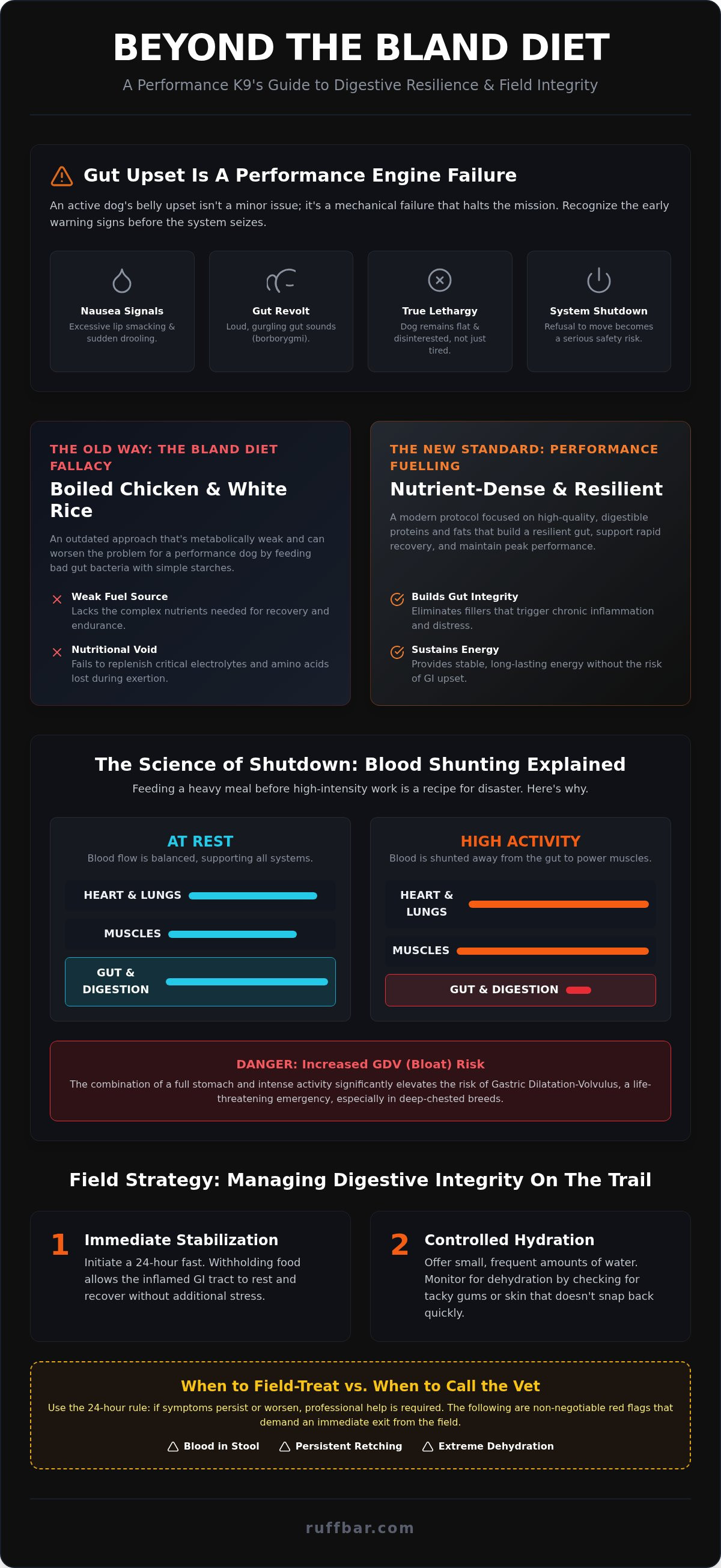
You need to catch the warning signs before the engine seizes. Watch for excessive lip smacking. Notice the sudden drooling. These are the early indicators of nausea. Listen for borborygmi. These loud, gurgling gut sounds signal that the digestive tract is in revolt. You must also distinguish between healthy exhaustion and true lethargy. Exhaustion is a dog that rests and recovers. Lethargy is a dog that remains flat and disinterested. When a belly ache turns into a refusal to move, it becomes a safety risk for the entire team. It's a signal to downshift immediately.
When to Call the Vet vs. When to Field-Treat
Field management requires a cool head and decisive action. Use the 24-hour rule to monitor persistence. If the symptoms don't resolve with rest and fasting, you have a problem. Watch for the red flags that demand an immediate exit. Blood in the stool, persistent retching without production, or extreme dehydration are non-negotiable. Perform the Hydration Test regularly. Check the gums for tackiness. Pinch the skin on the neck to see if it snaps back. If they can't process fluids, the field treatment has failed. Get to a clinic. Don't gamble with your partner's recovery.
Myth: High Activity Requires Heavy Meals
You think a ten-mile ridge run requires a massive breakfast. You're wrong. Loading your dog’s stomach before high-intensity work is a recipe for disaster. It’s the fastest way to trigger a dogs belly upset that ends the day early. When the heart rate climbs, the body prioritizes survival. It initiates blood shunting. Oxygen-rich blood is pulled away from the gastrointestinal tract. It flows to the heart, lungs, and skeletal muscles. The gut stops. Digestion ceases. Any heavy meal sitting in the stomach becomes a stagnant weight.
This stagnation isn't just uncomfortable. It's dangerous. For deep-chested breeds, the combination of a heavy meal and intense movement significantly increases the risk of Gastric Dilatation-Volvulus (GDV). The stomach can twist. This cuts off blood supply. It creates a life-threatening emergency in the backcountry. You don't need volume. You need precision. High-protein micro-fueling keeps glucose levels stable without the bulk that leads to GI failure. You can find signs your performance dog may need extra support by monitoring their recovery speed after high-output segments.
The Physiology of Digestive Shutdown
Feeding a large meal before a hike leads to fermentation. Because blood flow is restricted, the food isn't moving. It sits. It warms. It produces gas. This creates internal pressure and distress. High cortisol levels from the stress of the hunt or the trail further slow down gastric emptying. Add heat stress to the mix, and the system collapses. The body is too busy cooling itself to worry about yesterday’s kibble. This is where a dogs belly upset often begins, turning a performance partner into a liability.
Strategic Fueling: Quality Over Volume
Stop thinking in bowls. Start thinking in bits. High-protein dog energy bars provide necessary amino acids without the "kibble bloat" effect. Clean-label, grain-free snacks are designed to be processed efficiently even under stress. Follow the 30-minute rule. Never feed a significant amount until the heart rate has dropped. Wait for the panting to subside. This allows the blood to return to the gut. If you want to maintain peak energy without the risk of bloat, explore high-performance fuel options that prioritize gut integrity.
The 'Bland Diet' Fallacy for Performance K9s
For decades, the standard response to a dogs belly upset has been a bowl of boiled chicken and white rice. This "bland diet" is a legacy fix designed for sedentary house pets, not high-output athletes. It's a temporary patch that lacks the caloric density and micronutrient profile required for active recovery. When your dog is burning thousands of calories on the trail, they need functional fuel, not empty starch. Simple carbohydrates like rice provide a massive glycemic load that can actually compromise the gut further.
Recent canine gut microbiome research suggests that the bacterial balance in the GI tract is sensitive to sudden influxes of starch. Instead of soothing the system, white rice often feeds opportunistic bacteria and yeast. This can prolong inflammation and lead to a cycle of recurring sensitivity. Performance dogs require amino acids like glutamine and glycine to repair the intestinal lining. You won't find those in a bowl of rice. You need bioavailable proteins and collagen to rebuild the gut wall and restore systemic integrity.
Why Rice Isn't the Answer
Rice is a high-glycemic filler. It spikes insulin and contributes to systemic inflammation. For a dog already dealing with a dogs belly upset, these spikes are counterproductive. Grains also contain antinutrients like lectins and phytates that can irritate an already inflamed intestinal lining. Transitioning from "bland" to "functional" requires removing these irritants entirely. You want a recovery protocol that targets the root cause of the distress rather than just masking the symptoms with fiber and starch.
Clean Protein as the Ultimate Soother
Clean, USDA-graded proteins are the foundation of a resilient gut. Grass-fed bison and beef provide essential zinc and B-vitamins that act as catalysts for gut repair. These minerals are vital for maintaining the mucosal barrier that protects the GI tract from pathogens. Freeze-dried raw proteins are particularly effective because they maintain natural enzyme integrity. This makes them significantly easier to digest during a recovery phase. Using freeze dried raw dog food for backpacking ensures your dog gets the nutrients they need without the inflammatory fillers. It provides the stability required to get back on the trail quickly and safely.
Field Strategy: Managing Digestive Integrity on the Trail
You’re ten miles into the backcountry. Your partner stops. The head drops. This is the moment of truth. A dogs belly upset in the wilderness isn't just a mess; it’s a mission-critical failure. You can’t simply "go home" and rest. You must manage the crisis where you stand. The goal is simple. Stop the irritation. Restore blood flow. Stabilize the gut. Following a disciplined field protocol ensures a minor setback doesn't become a dangerous evacuation.
- Step 1: Immediate Cessation. Stop moving. Drop the pack. Find shade. As we established, blood is currently shunted to the limbs. You need that blood back in the GI tract to initiate repair. Let the heart rate normalize for at least 60 minutes.
- Step 2: Controlled Hydration. Eliminate gulping. Large volumes of water ingested rapidly lead to air ingestion and further gastric distension. Offer small, frequent laps of water every 15 minutes.
- Step 3: Microbiome Stabilization. Introduce gut-specific toppers. These provide the targeted nutrients needed to settle the stomach without the bulk of a full meal.
- Step 4: Gradual Re-fueling. Use high-density, low-volume protein. Avoid all grains and starches. Think "fuel bits," not "food bowls."
Hydration Hacks for Nauseous Dogs
Nauseous dogs often refuse plain water. Bone broth is your best tactical tool. It uses scent to encourage fluid intake and provides essential collagen for the gut lining. Never offer ice-cold water from mountain streams to a dog with a dogs belly upset. The temperature shock can trigger stomach spasms and worsen vomiting. If your dog has already lost fluids, plain water isn't enough. You need to restore the electrolyte balance to maintain muscle function and neurological clarity.
The Handler's Emergency Kit
Preparation is the difference between a ruined trip and a successful recovery. You wouldn't hike without a first-aid kit; don't hike without performance dog food supplements in your pack. These are essential equipment for the modern handler. Ruff Bar Functional Toppers act as a reset button for the digestive system, providing pure protein in a portable, shelf-stable format. Keep your dog away from environmental triggers like stagnant puddles or wild scat. These are breeding grounds for pathogens that turn mild GI distress into a clinical emergency. If you want to ensure your dog is prepared for the next high-stakes expedition, stock your kit with functional nutrition designed for the trail.
Fueling for Resilience: The Ruff Bar Gut-Health Standard
Performance isn't accidental. It's engineered. You don't treat your climbing rack, your mountain bike, or your boots with casual disregard. Your dog's internal systems deserve that same uncompromising standard. When you prioritize high-stakes nutrition, you're not just buying food. You're investing in performance equipment. Most commercial options rely on soy, corn, and meat by-products. These low-grade fillers are the primary architects of a chronic dogs belly upset. They ignite inflammation. They slow down recovery. They fail the moment the trail gets steep and the heart rate climbs.
We reject shortcuts. Our sourcing is built on USDA-graded grass-fed meats. This ensures a clean, bioavailable protein source that the canine body recognizes and processes with ease. By eliminating the garbage, we eliminate the primary triggers for GI distress. The Ruff Stix® format is specifically designed for the working dog's reality. It offers high-value nutrition in a low-impact, portable package. It provides the fuel your dog needs without the digestive bulk that leads to blood shunting failures during peak exertion. It's about delivering maximum energy with minimum digestive tax.
The Power of Pure Ingredients
Resilience starts with variety. Rotating between clean proteins like Bison and Pork helps prevent the development of food sensitivities. It keeps the immune system sharp and the gut microbiome diverse. We use organic whole ingredients to fuel your partner without the interference of synthetic additives or chemical preservatives. These additives often act as hidden irritants that trigger a dogs belly upset in otherwise healthy animals. If you want to maintain peak output on multi-day expeditions, you need high protein dog energy bars that prioritize clean, sustained energy over cheap caloric fillers.
Building a Bulletproof Gut
A "sensitive" stomach is often just a symptom of inconsistent fueling. Building long-term resilience requires a commitment to quality that doesn't waver when you leave the house. You cannot expect a rugged gut if you constantly fluctuate between high-grade performance meals and grocery store snacks filled with grains. Using freeze dried treats for dogs provides a consistent, raw-equivalent diet that supports the microbiome every day. This daily discipline creates the foundation for trail-side stability. It ensures that when the pressure is on and the terrain is technical, the engine won't stall. It's time to stop managing symptoms and start building strength. Upgrade your dog's fuel to match their ambition. Equip them for the miles ahead.
Build the Gut for the Miles Ahead
A dogs belly upset isn't an inevitable trail hazard. It's a failure of preparation. You've learned that standard bland diets are weak fixes for high-output athletes. You know that blood shunting demands precision. You understand that functional proteins are the building blocks of a resilient GI tract. Stop reacting to digestive failure. Start engineering for endurance. True resilience requires zero grain, zero soy, and zero fillers. It demands high-standard equipment for the internal system.
Backcountry handlers and K9 athletes trust nutrition that holds up under pressure. We use only USDA-graded grass-fed meats to ensure every calorie serves a purpose. This is fueling for the summit, not just the sidewalk. Don't let poor fuel quality sideline your partner when the terrain gets tough. Your dog is built to move. Give them the fuel that matches their drive.
Fuel your dog's next adventure with Ruff Bar's clean protein nutrition. We'll see you on the trail.
Field Intelligence: Frequently Asked Questions
What can I give my dog for an upset stomach on a hiking trip?
Prioritize immediate rest and small amounts of bone broth or a clean protein topper. You must allow the digestive system to stabilize before introducing solid food. Avoid the temptation to use heavy fillers or human medications without veterinary guidance. Small, frequent sips of water or broth will maintain hydration without overwhelming the gut. This approach focuses on settling the inflammation rather than adding more work to the digestive tract.
Is it okay to feed my dog after they have vomited on the trail?
Stop feeding immediately and initiate a period of gastric rest. You should wait at least two to four hours after the last vomiting episode before offering anything other than water. Pushing food into an irritated stomach often triggers a relapse. Once the dog is stable and showing interest, start with a high-protein, low-volume snack. This ensures the system can handle the fuel without another mechanical failure.
Can high-protein diets cause an upset belly in active dogs?
Clean, bioavailable protein is rarely the culprit behind a dogs belly upset. The real triggers are usually high-fat contents, grains, or synthetic fillers found in low-grade kibbles. Performance dogs are built to process animal proteins efficiently. If your dog experiences distress, investigate the source and quality of the meat rather than the protein percentage. USDA-graded meats without inflammatory additives provide the safest energy source for high-output work.
How do I know if my dog's stomach ache is an emergency?
Look for systemic failure red flags like blood in the stool, persistent retching without production, or extreme lethargy. If your dog's gums are tacky or their skin doesn't snap back after a pinch, they are dangerously dehydrated. These symptoms indicate more than a simple stomach ache. They signal a clinical crisis that requires immediate evacuation and professional veterinary intervention. Don't wait for the symptoms to worsen in the backcountry.
Why does my dog always get diarrhea after a long run or hunt?
This is a direct result of physiological stress and blood shunting. During intense activity, the body pulls blood away from the gut to power the muscles and lungs. This temporary shutdown stops digestion and can lead to "runner's diarrhea." Managing the intensity of the work and ensuring a cool-down period before feeding can mitigate this. It's a sign the body needs better pacing and cleaner fuel.
Are there human foods that actually help a dog's upset stomach?
Plain canned pumpkin is a reliable field option for adding soluble fiber. Ensure it is pure pumpkin and not spiced pie filling. While many handlers still use boiled chicken, we've established that the accompanying white rice is often a high-glycemic mistake. Stick to simple, lean proteins if you must use human-grade food. Avoid anything with seasonings, oils, or complex carbohydrates that can further irritate the intestinal lining.
How long should I wait to feed my dog after high-intensity exercise?
Wait at least 30 to 60 minutes after the activity ends. You must ensure the dog's heart rate has returned to a resting state and their panting has subsided. Feeding too early while blood flow is still concentrated in the muscles leads to poor digestion and increased gas. This recovery window is essential for allowing the body to shift back into "rest and digest" mode safely.
Can stress from travel or new environments cause a dog's belly upset?
Cortisol spikes from travel or high-stakes environments directly impact gut motility. Stress hormones slow down gastric emptying and can trigger a dogs belly upset before the hike even begins. You can manage this by maintaining a consistent, high-quality diet during transit. Avoid introducing new treats or changing formulas while away from home. Consistency in nutrition provides the internal stability your dog needs to handle external stressors.