
Dog Recovery Treats After Exercise: What Active Dogs Need
After a hard run, your dog needs water, a chance to cool down, and quiet rest before a treat. Then decide whether dog recovery treats after exercise belong in the routine, based on the effort, your dog’s needs, and what they’ve already eaten.
It’s natural to wonder what to offer after a long hike, a fast training session, or a full day on the trail. A snack can be convenient, but it shouldn’t replace a balanced diet or be treated as a shortcut to recovery. Let your dog settle before deciding whether food makes sense.
This guide explains how exercise affects your dog, when a treat may fit, and what to check before choosing one. Use the activity, your dog’s behavior, and the product’s ingredients and feeding directions to shape a routine around water, rest, and sensible nutrition.
Key Takeaways
- Recovery is a routine, not a single snack. Cooling down, water, and quiet rest come before food.
- Choose dog recovery treats after exercise by checking ingredients, portability, storage needs, and whether the format suits your dog.
- Use a flexible post-activity sequence rather than relying on one feeding schedule for every dog.
- Compare snack formats and consider your dog’s preferences and the demands of the outing before packing a treat.
- Ruff Bar offers nutrition options for active dogs. Review current product labels and directions before offering one.
Why dog recovery after exercise matters, and where treats fit
You want your dog ready for the next trail, training session, or game of fetch. Care after exertion helps support a comfortable return to routine, but it doesn’t start with a snack. The effort, weather, fitness, age, and health of your dog all affect what they need afterward. A short, easy walk calls for a different routine than a demanding hike on a hot day.
Post-exercise recovery is the period after activity when a dog rests, has access to water, and gradually returns to their usual resting behavior. There’s no single timeline for every dog. Watch how yours responds rather than expecting them to bounce back on a schedule. Tiredness can follow hard effort, but collapse, unusual weakness, confusion, repeated vomiting, or breathing that appears severely difficult are not signs to manage with a treat. Contact a veterinarian promptly if symptoms concern you, and seek urgent veterinary care for severe or sudden distress.
What does recovery after exercise mean for a dog?
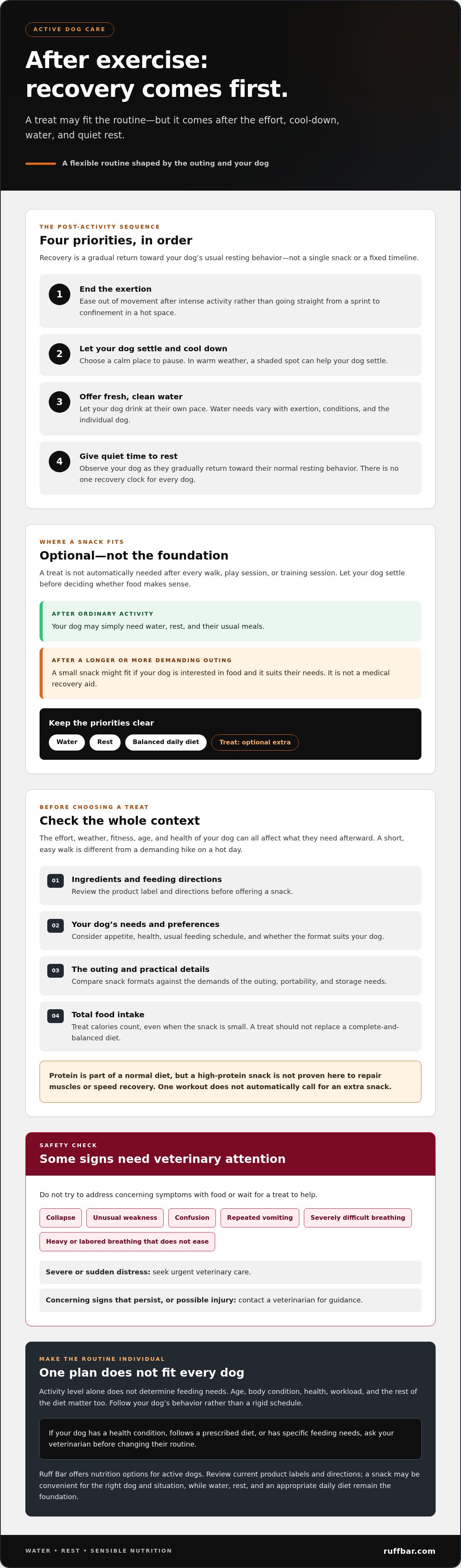
Think of recovery as a simple sequence: end the exertion, let your dog settle, offer fresh water, and provide a quiet place to rest. Observe their behavior as they cool down and return toward their normal routine. Activity type matters, too. The nutritional needs of athletic dogs can vary with the demands of their work, so a snack shouldn’t stand in for an overall feeding plan.
Are recovery treats necessary after every workout?
No. A treat isn’t automatically needed after every walk, play session, or training session. After ordinary activity, your dog may simply need water, rest, and their usual meals. After a longer or more demanding outing, a small snack might fit if your dog is interested in food and it suits their needs. That still doesn’t make it a medical recovery aid.
Keep the distinction clear: a treat is an optional addition, not a replacement for water, rest, or a complete-and-balanced diet. Consider your dog’s appetite, health, usual feeding schedule, and total food intake before adding one. Treat calories count, even when the snack is small. If your dog has a health condition, follows a prescribed diet, or has specific feeding needs, ask your veterinarian before changing their routine. Dog recovery treats after exercise are only one possible part of care, never the whole plan.
What happens in a dog’s body after exercise?
A hard run, steep climb, or energetic play asks your dog’s body to work harder than quiet time at home. Afterward, the priority is a controlled shift from activity to rest. Your dog may pant while cooling down, seek a drink, or settle for a nap. Their response depends on the effort, conditions, and individual dog, so pay attention to behavior rather than following a rigid recovery clock.
Hydration, cooling down, and rest after activity
Offer fresh, clean water and let your dog drink at their own pace. Don’t assume every dog needs the same amount. Needs can vary with exertion, conditions, and individual factors. After intense activity, ease out of movement instead of going straight from a sprint to a long period confined in a hot space. Choose a calm, shaded place to settle, especially in warm weather, and give your dog room to rest.
Watch how your dog behaves as they cool down. Heavy or labored breathing that doesn’t ease, marked weakness, confusion, vomiting, or collapse can signal a serious problem. Don’t try to address these signs with food or wait for a treat to help. Contact a veterinarian urgently for severe or sudden symptoms, and seek veterinary guidance if concerning signs persist or your dog seems injured.
Why protein and energy need context
Protein is a normal part of a dog’s diet and provides amino acids the body uses for everyday functions, including maintaining tissues. That doesn’t mean a high-protein snack repairs muscles or speeds recovery. A treat is an occasional addition, not a replacement for a complete daily diet suited to the individual dog. Cornell University’s overview of the nutritional needs of your sports dog explains how feeding considerations can differ across activity types.
Activity level alone doesn’t determine a dog’s feeding needs; age, body condition, health, workload, and the rest of the diet matter, too. A dog that spends hours on endurance work may have different overall energy needs than one doing brief bursts of training, but a single workout doesn’t automatically call for an extra snack. Consider regular meals and total daily intake before offering dog recovery treats after exercise. If your dog has a medical condition, unusual appetite, or a prescribed diet, ask your veterinarian before making changes.
If you’re comparing optional nutrition for active outings, review Ruff Bar’s active-dog nutrition options alongside ingredient information and product directions. A snack may be convenient for the right dog and situation, but water, rest, and an appropriate daily diet remain the foundation.
How to choose dog recovery treats after exercise
The right post-activity snack is the one that fits your dog, not the one with the boldest performance claim. Compare the label, texture, carrying needs, and feeding directions. A treat can be convenient after a hike or training session, but no format guarantees better recovery.
Which treat qualities matter after a workout?
Start with ingredient transparency. Check the full ingredient list, calorie information, and feeding directions, then consider whether the suggested portion suits your dog’s size and routine. If your dog has known sensitivities, look for potential triggers before offering anything new. Grain-free or high-protein claims alone don’t establish that a snack is a better fit or that it will improve recovery.
Format matters, too. A snack packed for a hike should be easy to carry and stored as directed. Texture matters if your dog has preferences or needs that make some foods harder to eat. Use this comparison as a starting point, then verify details on the specific product label.
| Snack format | What to check | Practical fit |
|---|---|---|
| Chewy treats or Stix | Ingredients, texture, portion directions | Consider whether your dog can comfortably chew it and how it should be stored. |
| Bars | Ingredients, calories, feeding directions | Check whether the package is convenient to carry and protect during an outing. |
| Freeze-dried food | Label directions and storage guidance | Review how the product is intended to be served and stored before packing it. |
| Toppers | Serving instructions and intended use | May fit better into a planned meal than an on-the-go snack. |
How to assess a treat against your dog’s needs
Allergies, dietary restrictions, age, appetite, and existing veterinary recommendations all matter. Introduce a new treat cautiously, and stop offering it if you notice a concerning reaction. If your dog follows a prescribed diet or has a health condition, ask your veterinarian whether a particular treat is appropriate.
Count treats as part of the day’s food, not as extras that don’t matter. Check package calories and directions, and account for snacks alongside regular meals without guessing at a universal serving size. Ruff Bar offers Ruff Food Bars, Ruff Stix®, freeze-dried meals, and toppers. Review current ingredients and product directions before choosing. For broader context, consult a guide to high-protein dog energy bars as you compare formats. Dog recovery treats after exercise remain optional nutrition, not a substitute for water, rest, or a complete daily diet.
When and how to offer a treat after exercise
A dependable post-activity routine gives you a chance to check how your dog is doing before deciding whether food belongs in the moment. There’s no single feeding clock for every walk, training session, or trail day. Let your dog’s behavior, appetite, and usual meal schedule guide the choice.
A simple post-activity routine for active dogs
- End the activity calmly. Ease out of vigorous play or training and move to a quiet, comfortable spot.
- Offer fresh water. Keep clean water available and allow your dog to drink at their own pace.
- Give them time to settle. Wait until your dog is calmer and behaving normally before considering food. Don’t rush to offer a snack while they’re still highly worked up.
- Observe before deciding. Notice whether your dog seems comfortable, interested in food, and ready to rest. Their response matters more than a fixed schedule.
- Choose whether a snack fits. If you offer one, follow the product’s feeding directions and account for it alongside regular meals. A treat is optional, not a substitute for water, rest, or the dog’s usual complete diet.
For a planned outing, check storage and handling instructions before packing a snack. A published guide to freeze-dried treats for dogs can offer broader format and handling context. Then confirm the directions on the specific product you choose. Don’t assume two treats with similar appearances have the same feeding instructions.
When a snack may not be the right next step
Pause feeding if your dog appears unwell. A treat won’t address pain, overheating, vomiting, or unusual weakness, and offering food shouldn’t delay getting help. If symptoms are severe or sudden, contact a veterinarian urgently. Seek veterinary advice for persistent changes, possible injury, or behavior that seems unusual for your dog.
Health conditions, prescribed diets, and individual feeding needs can also change what’s appropriate. Ask your veterinarian if you’re unsure whether a snack fits your dog’s routine. This is especially useful before introducing a new treat or changing how much your dog eats. Review the current ingredient information and label directions for any product, and include the snack in the day’s overall food intake.
Build your routine around the dog in front of you: activity ends, water is available, your dog settles, and then you decide. If an optional snack makes sense for your outing, explore Ruff Bar’s nutrition options and check product details before offering one.
How Ruff Bar nutrition can fit an active dog’s routine
Once water, rest, and your dog’s regular feeding plan are covered, an optional nutrition product may fit some outings. Think about the format and occasion first. A snack carried for a trail day serves a different practical role from a meal planned for a backpacking trip. Neither should be treated as a medical recovery product or a shortcut to better performance.
Which Ruff Bar options might suit an active routine?
Ruff Bar offers Ruff Stix®, Ruff Food Bars, and freeze-dried backpacking meals for active-dog nutrition. Stix and food bars are snack formats to consider for outings, while freeze-dried meals are a meal option to evaluate when planning food for a trip. The right choice depends on your dog’s dietary needs, the occasion, and the product’s current directions. Don’t assume products share the same ingredients, feeding instructions, or storage requirements.
Ruff Bar describes its formulas as high-protein and grain-free, using USDA-graded grass-fed meats and whole organic ingredients without fillers. Treat those descriptions as a starting point, not a promise of recovery benefits. Check the current product label for exact ingredients, calorie information, feeding directions, and storage guidance before packing or serving anything. If you’re considering a meal for a backpacking outing, plan how it fits into your dog’s overall daily diet and trip provisions.
Choose with clear expectations, then plan the next outing
Before trying a product, compare its label with your dog’s known sensitivities, dietary restrictions, age, appetite, and any veterinary recommendations. Follow the specific feeding directions, and account for snacks within the day’s total food intake. If your dog has a health condition or follows a prescribed diet, check with your veterinarian before introducing a new option.
Keep the routine grounded. A food bar or Stix may be convenient to carry if its label and storage guidance suit the outing. A freeze-dried meal may fit as part of planned trip food. Neither replaces fresh water, quiet rest, or a complete diet that meets your dog’s needs. Signs of pain, overheating, vomiting, unusual weakness, or other concerning symptoms call for veterinary advice, not a treat.
Dog recovery treats after exercise are optional nutrition, not a treatment. Check the details, choose for your individual dog, and keep expectations realistic. Explore Ruff Bar’s active-dog nutrition options as you plan your next outing.
Make the Next Outing Count
A thoughtful post-activity routine isn’t built around a single snack. Notice how your dog is doing and choose what fits their needs. Dog recovery treats after exercise are optional; water, rest, and a suitable complete diet remain the foundation. If you offer a treat, check the current label, feeding directions, and ingredients, and factor it into your dog’s daily food intake.
Ruff Bar offers high-protein, grain-free nutrition products for active dogs. The brand describes its formulas as using USDA-graded grass-fed meats and whole organic ingredients without fillers. These are nutrition options, not treatments or guarantees of improved recovery. Review product details and consider your dog’s individual dietary needs before choosing. For health concerns or questions about a prescribed diet, your veterinarian’s guidance comes first.
Explore Ruff Bar nutrition for active dogs and plan a routine that keeps care practical, consistent, and ready for the next adventure.
Frequently Asked Questions
Are recovery treats necessary for dogs after exercise?
No. Most dogs don’t need a special treat after every walk, play session, or workout. Fresh water, a chance to rest, and the dog’s regular complete-and-balanced diet are the essentials. A snack may fit after a demanding outing if it suits your dog’s needs and daily food plan. Treats are optional, not a substitute for a meal or a way to treat exercise-related symptoms.
What should I give my dog after a long walk or run?
Start with a calm place to rest and access to fresh water. Once your dog has settled and seems comfortable, you can offer their usual meal or an appropriate snack if it fits their routine. Choose a treat with clear ingredients and feeding directions, and consider known sensitivities. A treat isn’t required after every outing, and it shouldn’t replace your dog’s regular balanced diet.
How soon after exercise can a dog eat a treat?
There isn’t one timing rule for every dog or activity. Let your dog cool down, settle, and behave normally before deciding whether to offer food. Consider their appetite, usual meal schedule, and how strenuous the activity was. Follow the specific product’s feeding directions rather than applying a fixed wait time. If your dog seems unwell, hold off on food and contact a veterinarian for guidance.
Can I give my dog a high-protein treat after a workout?
A high-protein treat may be suitable for some dogs, but protein content alone doesn’t make a snack necessary or prove it will improve recovery. Check the ingredient list and feeding directions, and consider your dog’s age, health, sensitivities, and overall diet. If your dog has a medical condition or follows a prescribed diet, ask your veterinarian before introducing a new treat.
How much should I feed my dog after exercise?
Use the treat’s current label for portion guidance; don’t estimate based on the length of a walk or workout. Account for the snack as part of your dog’s total daily food, including regular meals and other treats. The right amount depends on the individual dog and the specific product, so there’s no universal post-exercise serving size. Ask your veterinarian if you need an individualized feeding plan.
Should dogs drink water immediately after exercise?
Make fresh, clean water available as soon as activity ends, and let your dog drink at their own pace. Don’t force water or assume every dog needs the same amount. After a demanding outing or exercise in warm conditions, move to a cooler, calm place and observe your dog. If they seem distressed, unusually weak, or unable to drink normally, contact a veterinarian promptly.
What signs after exercise mean I should call a veterinarian?
Seek urgent veterinary help for collapse, confusion, severe or labored breathing, marked weakness, or signs that could indicate overheating. Contact a veterinarian if vomiting, limping, pain, unusual behavior, or other concerning changes persist after activity. Don’t use a treat to mask symptoms or delay care. If you’re unsure whether your dog’s response is normal, describe what happened and what you’re observing to your veterinary clinic.