
Dog Nutrition for Muscle Recovery: Fueling the K9 Athlete’s Repair Cycle
The summit was just the beginning. While you're peeling off boots, your dog's body is already entering a high-stakes repair phase. Standard kibble isn't enough to fix the damage. You're fueling an athlete, not a passenger. Understanding dog nutrition for muscle recovery is the only way to ensure those micro-tears become lean mass instead of chronic soreness. Confusing labels and filler-heavy bags won't cut it when joint health and muscle integrity are on the line.
You want more miles. You want higher peaks. You want a partner who doesn't spend Monday limping through the house. We know that drive to push further and the fear of seeing a strong dog slow down. This guide masters the science of post-adventure nutrition to help you eliminate downtime and prevent long-term degradation. You'll learn how to identify truly digestible protein, time your feeding for maximum impact, and build a no-compromise strategy that keeps your K9 athlete lean and explosive. We're moving past crude protein numbers. We're diving into functional, performance-driven fuel designed for the trail and the recovery window that follows.
Key Takeaways
- Decode the K9 muscle recovery cycle to transform post-trail inflammation into lean, functional strength.
- Master the essential amino acid blueprint required to trigger protein synthesis and prevent muscle breakdown during high-endurance tasks.
- Prioritize biological value over crude percentages to ensure your dog nutrition for muscle recovery actually reaches the cellular level.
- Leverage the critical 60-minute post-adventure window to maximize nutrient uptake and slash recovery times between summits.
- Build a tactical, no-compromise fueling strategy using high-density, portable nutrition designed for the rigors of the backcountry.
Understanding the K9 Muscle Recovery Cycle
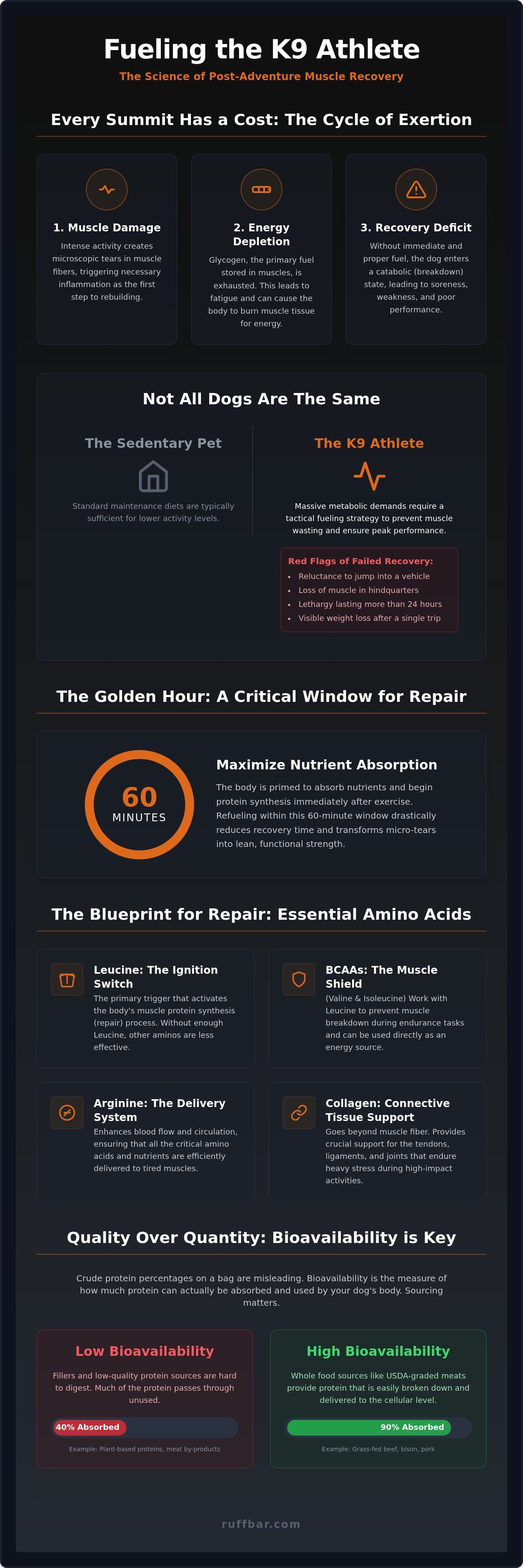
Movement is a double-edged sword. Every mile on the trail and every vertical foot climbed creates microscopic damage within your dog's muscle fibers. These micro-tears are the necessary precursors to strength, but they come with a cost: acute inflammation. This is why your dog feels stiff or slow the morning after a heavy pack-out. While rest allows the heart rate to drop, it does nothing to rebuild cellular structure. True dog nutrition for muscle recovery focuses on closing the gap between exertion and repair.
Fatigue isn't just about tired lungs. It's about empty tanks. Glycogen depletion is the silent killer of performance in working dogs. When these glucose stores vanish, the body enters a catabolic state, effectively eating its own muscle tissue to keep the engine running. Rest is only half the battle. Without the right fuel, your dog isn't recovering; they're just waiting to be exhausted again. You aren't just feeding a pet. You're maintaining a high-performance machine.
This level of dedication to specialized fueling mirrors the approach taken by human elite athletes; just as rugby and Gaelic games players might use RAMPP Nutrition to optimize their own recovery, your canine partner requires a tailored strategy to handle the physical demands of the trail.
The Athletic K9 vs. The Sedentary Pet
A backyard pet and a summit partner are not the same. High-altitude movement and multi-day endurance tasks create massive metabolic demands that standard maintenance diets cannot meet. Working breeds require a sophisticated approach to the nutritional needs of athletic dogs. They process protein with higher metabolic intensity during exertion, necessitating a rapid influx of amino acids to maintain a positive nitrogen balance and prevent muscle wasting.
Watch for the red flags of failed recovery in your athlete:
- Reluctance to jump into the truck or onto the bed.
- Loss of muscle definition in the hindquarters.
- Persistent lethargy that lasts more than 24 hours post-adventure.
- Visible tucking or weight loss after a single weekend trip.
The Science of Repair: Protein Synthesis
Muscle protein synthesis is the biological process of replacing damaged proteins with new, stronger ones. This is the engine of repair. During high-intensity exercise, the body's nitrogen balance shifts toward depletion. To flip the switch from breakdown to buildup, the system requires a flood of specific building blocks. Amino acids are the bricks of the muscular skeletal system. Without a steady supply of bioavailable protein, the cycle stalls.
Effective dog nutrition for muscle recovery ensures these bricks are delivered exactly when the biological window is open. Repair is a tactical operation. It requires the right materials at the right time. If the nitrogen balance remains negative, the dog loses lean mass. If it stays positive, they return to the trail stronger than before. Quality sourcing determines how quickly that shift occurs. Don't settle for fillers when the mission requires structural integrity.
The Essential Amino Acid Blueprint for Repair
Protein isn't a monolith. It's a complex assembly of amino acids, each with a tactical role in the repair cycle. When we talk about dog nutrition for muscle recovery, we are really talking about the availability of these specific building blocks. Without the right blueprint, the body cannot reconstruct the fibers damaged during a high-output day. It's the difference between a dog that bounces back and one that stays sidelined.
Leucine acts as the primary trigger. It is the biochemical "on" switch for muscle protein synthesis. Without sufficient leucine, the other aminos simply sit in reserve. Valine and isoleucine work alongside it to prevent muscle breakdown during endurance tasks. Together, these three form the Branched-Chain Amino Acid (BCAA) group, essential for protecting lean mass when the trail gets steep. Arginine supports this process by enhancing blood flow, ensuring these nutrients actually reach the tired muscles through optimized circulation. Recent advances in muscle recovery supplements highlight how targeting these specific pathways can inhibit muscle atrophy during periods of heavy work.
BCAA’s for Dogs: Why They Matter
BCAAs are unique because they can be oxidized in the muscle for energy. This makes them an immediate fuel source for repair. For the working dog, BCAAs do more than just build tissue; they reduce the central perception of fatigue. This keeps your partner sharp and focused during technical descents. While synthetic powders exist, natural, high-density sources are superior. USDA-graded, grass-fed meats provide these aminos in their most stable, bioavailable form. Using a portable tool like Ruff Stix® Bison Pork allows you to deliver these critical aminos exactly when the metabolic window is open.
Collagen and Connective Tissue Support
Repair isn't limited to muscle fibers. The K9 athlete relies heavily on tendons and ligaments to translate power into movement. Lysine is the heavy lifter here, supporting collagen formation and overall connective tissue health. Comprehensive dog nutrition for muscle recovery must address these structural components to prevent injury. To maintain long-term joint longevity, the diet must also be rich in glycine and proline. These aren't found in high concentrations in muscle meat alone. This is why whole-prey protein sources, including organ and connective tissues, provide a superior amino profile compared to isolated crude protein fillers. It's about structural integrity from the bone out. You don't just want a dog that can run; you want a dog that can stay sound for a lifetime of summits.
Bioavailability: Why Sourcing Trumps Crude Protein Percentages
Don't get blinded by the back of the bag. A high protein percentage means nothing if the source is indigestible. Crude protein is simply a laboratory measurement of nitrogen. It doesn't distinguish between high-quality muscle meat and rendered feathers, hair, or hooves. For dog nutrition for muscle recovery, digestibility is the only metric that matters. If the protein doesn't reach the bloodstream, it can't repair the muscle fibers you worked so hard to build. Bioavailability determines how much of that fuel actually reaches the cellular level to trigger repair.
Many commercial brands use peas and lentils to inflate their protein numbers. These legumes are problematic for high-performance dogs. They contain anti-nutrients that can interfere with the absorption of taurine, an essential amino acid for heart health. When you're pushing miles in the backcountry, you can't afford a nutritional bottleneck. You need clean, animal-based power. Grass-fed meats offer a superior nutrient density compared to grain-fed alternatives, providing a natural ratio of Omega fatty acids that help manage the inflammation discussed earlier in this guide.
USDA-Graded Meats: The Performance Standard
Stop settling for "meat meal" or unidentified animal by-products. These ingredients are often rendered at extreme temperatures, destroying the very nutrients your dog needs. We believe human-grade, USDA-graded meat sourcing is non-negotiable for athletes. Clean sourcing has a direct impact on digestive efficiency. When the protein source is high-quality, the dog's system doesn't have to work as hard to break it down. This ensures that the energy spent on digestion is minimized, leaving more resources available for structural repair and metabolic recovery.
The Raw Advantage: Freeze-Drying vs. High-Heat Processing
High-heat cooking is the enemy of structural integrity. Extreme temperatures denature delicate proteins and destroy the natural enzymes required for efficient nutrient uptake. This forces the dog's body to scavenge for its own internal enzymes, slowing down the overall recovery process. Freeze-drying is the gold standard for preservation because it removes moisture while keeping the biological matrix intact. It provides the benefits of raw nutrition in a shelf-stable, portable format. For those navigating remote terrain, freeze dried raw dog food for backpacking delivers a lightweight, high-density recovery solution that doesn't compromise on quality. It's the ultimate tool for maintaining dog nutrition for muscle recovery when you're miles from the nearest freezer.
Strategic Feeding: The Post-Adventure Recovery Window
The trail doesn't end at the truck. It ends when the repair cycle is complete. Timing is the most overlooked variable in dog nutrition for muscle recovery. Within 30 to 60 minutes of stopping, your dog's metabolic rate remains elevated. Their cells are primed. They are hungry for amino acids. They are ready for glycogen replenishment. Missing this window means leaving muscle tissue in a state of breakdown for hours longer than necessary. You must strike while the biological iron is hot.
Hydration is the prerequisite for nutrient transport. Water moves aminos. It flushes metabolic waste. It regulates core temperature. Never feed a dog that is still panting heavily. Cooling down is a safety requirement, not a suggestion. Feeding a massive, dry meal to an exhausted, dehydrated dog is a recipe for gastric torsion. We prioritize safety. We prioritize efficiency. We prioritize results. Balance your protein intake with high-quality fats to provide sustained energy for the hours following the adventure.
Step-by-Step Post-Trail Protocol
Precision is mandatory for the elite K9 athlete. Follow this tactical sequence to maximize the impact of your dog nutrition for muscle recovery strategy:
- Cool Down: Allow 15 to 20 minutes of walking and water access to lower the core temperature.
- The Recovery Snack: Utilize high protein dog energy bars immediately. These bridge the gap between the trail and the bowl without overtaxing the digestive system.
- The Full Meal: Once the dog is fully rested, provide rehydrated freeze-dried raw food. The added moisture ensures optimal absorption and cellular hydration.
Managing Inflammation Naturally
Inflammation is a fire that needs extinguishing. Synthetic anti-inflammatories should be a last resort because they often mask pain rather than fixing the underlying damage. Use the power of whole foods instead. Blueberries provide essential antioxidants to combat oxidative stress. Organic vegetables offer the phytonutrients needed for systemic health. Omega-3 fatty acids act as the natural extinguisher for muscle heat and joint friction. This approach builds a resilient athlete from the inside out. You aren't just feeding for today; you're fueling for the next decade of summits.
Ruff Bar: Uncompromising Nutrition for Peak K9 Performance
You've mastered the science. You know the timing. Now you need the gear. Ruff Bar is the tactical answer for handlers who demand elite dog nutrition for muscle recovery. We don't do fillers. We don't do shortcuts. We build tools for athletes. Whether it's the summit or the training field, our formulas provide the raw power required to rebuild what the trail takes away. This is about structural integrity. This is about performance. This is about the bond of shared activity.
Ruff Stix® Bison Pork and Beef variants are the essential recovery tools for the 60-minute window. They're portable. They're dense. They deliver high-protein results in a format that fits in a pack side-pocket. You don't need a cooler or a bowl. You just need the right fuel at the right time. For the evening meal, our Pure Blend Toppers inject raw, freeze-dried power into standard diets. It's about maximizing nutrient density without adding unnecessary weight or synthetic fillers. This is dog nutrition for muscle recovery stripped down to its most effective form.
The Ruff Bar Difference: Sourcing and Standards
Quality begins with the animal. We use USDA-graded grass-fed bison, beef, and pork because they offer superior amino acid profiles compared to grain-fed, commercial-grade alternatives. We pair these meats with organic ingredients that support digestion and immunity. No grains. No corn. No soy. It's a clean-burning fuel source crafted for handlers who refuse to settle for "good enough." Your dog is an active partner, not a passenger. They deserve a nutrition strategy that matches their grit and endurance. We preserve the integrity of every enzyme through freeze-drying, ensuring the protein remains bioavailable and ready for synthesis.
Building Your K9’s Recovery Kit
Consistency builds resilience. Integrating performance dog food supplements into a daily routine ensures the body is always ready for the next mission. Choose Ruff Stix® for immediate post-trail fueling. Choose our Ruff Food Freeze Dried Raw Backpacking Meals for multi-day expeditions where weight and nutrition are equally critical. Every product we make is designed for the backpack, the trail, and the athlete. It's equipment, not just food. Don't leave your dog's recovery to chance. Gear up for your next adventure at ruffbar.com and see the difference that uncompromising standards make.
Fuel the Mission: Ready for the Next Summit
The summit was just the halfway point. True performance is defined by how fast your partner can return to the field. You now have the tactical blueprint for dog nutrition for muscle recovery. You understand that timing the post-trail window is critical. You know that sourcing matters. High-standard proteins provide the bioavailable aminos that fillers simply can't match. This isn't just about food. It's about maintaining structural integrity and preventing the long-term degradation that slows down elite K9 athletes.
Don't settle for "good enough" when the mission requires excellence. Trusted by backcountry handlers and K9 athletes, our formulas prioritize USDA-graded grass-fed meats with no grains, soy, or fillers. We build functional tools designed to belong in a backpack, not a grocery store shelf. Fuel your dog’s recovery with Ruff Bar Performance Nutrition. Equip your partner with the fuel they need to stay lean, strong, and ready for whatever lies over the next ridge. The trail is waiting. Stay ready.
Frequently Asked Questions
How long does it take for a dog’s muscles to recover after a hike?
Standard recovery generally takes 24 to 48 hours for moderate exertion. High-mileage treks or technical vertical climbs can extend this window to 72 hours. The speed of repair depends entirely on the quality of dog nutrition for muscle recovery and the intensity of the effort. If your dog remains stiff or lethargic after three days, they are likely under-fueled. Prioritize high-density proteins immediately post-trail to shorten this timeline and prevent chronic soreness.
Can I give my dog human protein shakes for muscle recovery?
No. Human protein shakes often contain xylitol, chocolate, or excessive dairy that can be toxic or cause severe GI distress in dogs. They also lack the specific amino acid balance required by a canine metabolism. Stick to species-appropriate fuel like Ruff Stix. These deliver USDA-graded meats without the dangerous sweeteners or synthetic fillers found in human supplements. While human athletes can find high-quality, all-natural support through Fantastic Nutrition, your dog's biology requires a rugged, meat-based blueprint that human powders cannot provide.
What are the best high-protein foods for dog muscle growth?
USDA-graded grass-fed bison, beef, and pork are the gold standard for K9 athletes. These whole-prey sources provide a complete amino acid profile and high bioavailability. Avoid "meat meals" or plant-based proteins like peas and lentils that can inhibit nutrient uptake and interfere with taurine levels. Freeze-dried raw meals preserve the integrity of the enzymes needed for repair. Quality sourcing ensures the protein actually reaches the muscle fibers rather than passing through as waste.
Does high protein cause kidney damage in active dogs?
No. Modern research indicates that high protein does not cause kidney damage in healthy, active dogs. The kidneys are designed to process protein efficiently as a primary energy source. Problems generally arise from low-quality, indigestible proteins or pre-existing medical conditions. For a high-performance athlete, a high-protein diet is essential for maintaining lean mass and structural integrity. Just ensure your dog has constant access to clean water to support metabolic filtration during high-output phases.
Is grain-free food better for a performance dog’s recovery?
Yes, provided the diet relies on meat rather than legume fillers. Grain-free diets that use USDA-graded meats maximize nutrient density and reduce inflammatory potential. Many grains act as empty fillers that provide calories without the structural building blocks needed for repair. We focus on grain-free formulas to ensure every gram of weight in your pack is functional fuel. This supports dog nutrition for muscle recovery by eliminating biological noise and focusing on cellular repair.
How can I tell if my dog is suffering from muscle fatigue?
Look for subtle mechanical changes in their movement. Shortened strides, a lowered tail carriage, or reluctance to jump into the truck are primary indicators. You might notice trembling in the hindquarters or a slower response to standard commands. If your dog is "pacing" instead of finding a comfortable resting position, they are likely dealing with acute soreness. Early detection allows you to adjust your fueling strategy and prevent long-term soft tissue injury or degradation.
Should I feed my dog immediately after exercise or wait?
Wait until their breathing returns to a normal rhythm. Feeding a dog while they are still panting heavily increases the risk of life-threatening bloat and poor nutrient absorption. Once the heart rate drops, usually within 15 to 20 minutes, provide a small, high-protein snack like a Ruff Bar. This hits the metabolic window without overloading the stomach. Save the full, rehydrated meal for when they are completely relaxed and settled at camp.
What role does hydration play in canine muscle recovery?
Hydration is the transport system for every nutrient in the body. Water moves amino acids into the cells and flushes metabolic waste out of the system. Dehydration stalls the repair cycle and increases the risk of heat-related injury during exertion. It's the critical link between the food they eat and the muscles they build. Always rehydrate freeze-dried meals to provide an extra layer of moisture during the recovery phase to ensure maximum efficiency.