
Dog Food Topper for Skin and Coat: How to Choose in 2026
A topper can add to the bowl, but it can’t diagnose an itchy dog. If you’re considering a dog food topper for skin and coat, focus on how its ingredients and intended role fit your dog’s overall diet. Look for useful label details, not claims that sound like treatment promises.
The right choice should complement your dog’s complete food, not displace it. This guide explains how to compare formats, check nutrient information, and follow feeding directions. You’ll also learn what a topper can reasonably contribute and when ongoing itching, redness, or coat changes call for veterinary advice.
Ruff Bar offers Functional Nutrition Toppers and Pure Blend Toppers as meal additions. Compare the specific product information with your dog’s needs, and use the steps below to introduce a new addition thoughtfully. A topper can complement a routine, but it isn’t a shortcut to a medical answer.
Key Takeaways
- A dog food topper for skin and coat can complement your dog’s regular food, but it isn’t a treatment for persistent skin problems.
- Dietary fats and protein contribute to normal skin and coat condition, but a topper does not guarantee visible results.
- Compare formats, label details, and feeding directions to understand what each topper is intended to provide.
- Use the label to guide introduction and portioning while keeping complete food central to your dog’s routine.
- Ruff Bar Functional Nutrition Toppers and Ruff Bar Pure Blend Toppers are meal-addition options to consider as part of a balanced feeding plan.
What a dog food topper for skin and coat can, and cannot, do
A dog food topper is an addition to a meal, not automatically a complete and balanced food. Depending on its ingredients and intended use, it may add variety or contribute nutrients. A dog food topper for skin and coat can be part of your dog’s overall nutrition, but the product name alone doesn’t tell you whether it suits your dog or what results to expect.
A topper is a dietary addition, not a diagnosis or treatment. It may complement a feeding routine, but it can’t identify the cause of a skin problem, replace an examination, or take the place of prescribed care.
Nutrition contributes to normal skin and coat condition, but it isn’t the only influence. Skin and coat changes can have different causes, and appearance alone doesn’t reveal which one is at work. The broad Dog Health Overview also puts nutrition in context alongside other health considerations. A topper can be one part of a routine, not a shortcut to a medical answer.
Topper, supplement, or complete food: what is the difference?
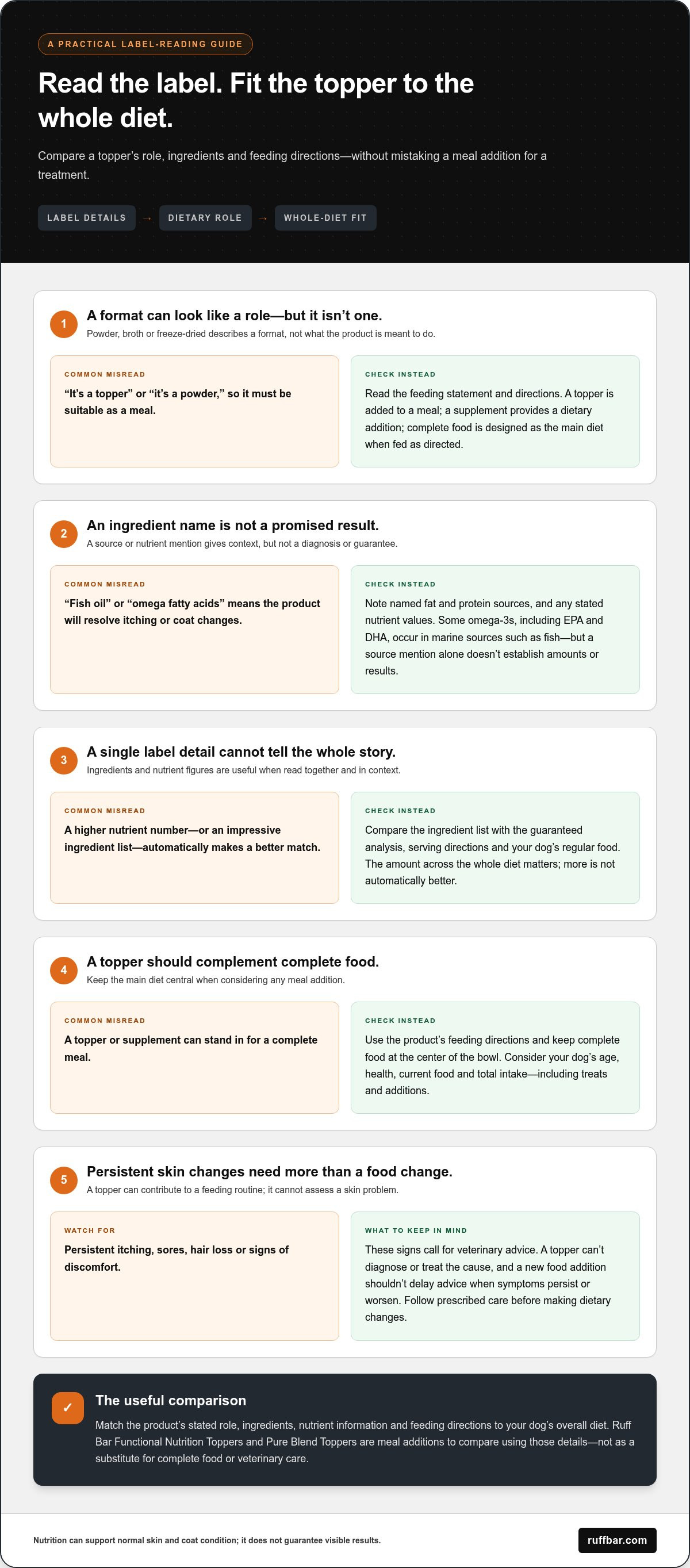
These categories describe different intended roles, even when products look similar. A topper is added to a meal. A supplement provides a specific dietary addition. Complete food is designed to serve as the main diet when fed as directed. A powder, broth, or freeze-dried format doesn’t establish a product’s role by itself. Check the label for its feeding statement and directions, including whether it is intended for supplemental or intermittent feeding.
Keep your dog’s regular complete food at the center of the bowl. Don’t replace it with a topper or supplement unless a veterinarian guides that change. If you can’t tell how a product fits into the diet, don’t assume it can stand in for a complete meal.
When coat changes deserve more than a food change
Persistent itching, sores, hair loss, or signs of discomfort call for veterinary advice. These symptoms can’t be reliably diagnosed by looking at the coat, and changing food may not address the underlying issue. A veterinarian can examine your dog and advise whether further assessment or care is needed.
A topper can’t examine skin, determine whether a dog has an allergy or infection, or treat disease. Don’t let a new food addition delay advice when symptoms persist or worsen. If a veterinarian has prescribed care, follow that plan before making dietary changes. Choose toppers for their role in the feeding routine, not as a substitute for medical support.
How nutrition supports a dog’s skin barrier and coat
Skin acts as a barrier, and the coat is made largely of protein. Both rely on adequate nutrition over time. Dietary fats supply essential fatty acids that help maintain normal skin function and coat condition. Protein provides building blocks for body tissues, including skin and hair. These nutrients matter, but adding more of one nutrient doesn’t automatically improve an individual dog’s symptoms.
Balanced nutrition matters more than chasing one fashionable ingredient. A food or topper needs to make sense within the whole diet, not just look impressive on the package. Your dog’s age, health, current food, and total intake all shape what’s appropriate.
Omega-3 and omega-6: understand the label without overreading it
Omega-3 and omega-6 are separate groups of fatty acids, with different roles in the body. Some omega-3s, including EPA and DHA, occur in marine sources such as fish. A label may name a source or state fatty-acid content, but that doesn’t prove the product will resolve itching, dryness, or coat changes. The amount your dog gets across the whole diet matters, too.
Read the detail, not just the headline. A product listing “fish oil” or “omega fatty acids” tells you about its ingredients or intended nutritional contribution. It doesn’t establish the amount of each fatty acid or whether it suits every dog. If the label gives specific values, interpret them alongside the serving directions and your dog’s regular food. A higher number doesn’t automatically mean a better match.
Protein, vitamins, and the whole-diet context
Protein supports tissue maintenance, but a single protein source isn’t a guaranteed fix for skin concerns. Vitamins and other nutrients also contribute to normal body function. Their presence on a label doesn’t prove that an individual dog’s symptoms will improve. Needs vary with the dog and with everything in the feeding routine, including main food, treats, and additions.
Compare the ingredient list and guaranteed analysis together. The ingredient list identifies what’s included; the guaranteed analysis reports selected nutrient levels. Neither one alone tells the full story of how a product fits your dog’s daily diet. Check whether the product is intended as complete food or a supplemental addition, then follow its feeding directions.
For a practical comparison, note the named fat or protein sources, any stated nutrient values, and the product’s intended feeding role. Then consider how those details fit with your dog’s current food. Ruff Bar’s Functional Nutrition Toppers and Pure Blend Toppers are meal additions to compare against those criteria. Review the specific product information and keep the complete diet in view.
Explore Ruff Bar toppers and compare the product information with your dog’s feeding routine. Use the label to guide your choice, rather than expecting a specific skin or coat result.
How to compare dog food toppers for a shiny coat and healthy skin
Start with what the label says, not the promise on the front of the package. A dog food topper for skin and coat can come in different formats and serve different dietary roles. No format is automatically best. The useful choice is the one that fits your dog’s needs, feeding routine, and any dietary restrictions.
Label-reading rule: match the product’s stated role to your dog’s dietary needs, then follow its feeding directions. Use this framework to compare categories without assuming that every product in a category has the same ingredients or nutritional profile.
| Format or category | Intended role | What to check for label clarity | Feeding directions to review |
|---|---|---|---|
| Whole-food topper | A food-based addition to a meal; ingredients and purpose vary by product. | Look for named ingredients, the product’s stated purpose, and its feeding classification. | Check serving guidance and whether it is intended as a supplemental addition. |
| Freeze-dried topper | A dried format that can be added to a meal; the format alone doesn’t establish its nutritional role. | Review the full ingredient list and any guaranteed analysis, rather than relying on the format or front-label language. | Follow the product’s stated portion guidance, including any preparation instructions. |
| Functional topper | Marketed around a particular nutritional purpose, which should be explained by the label. | Check which ingredients and nutrient details are actually stated, and distinguish them from general benefit claims. | Use the directions on that product. Don’t assume the serving matches another topper. |
Read ingredients and guaranteed analysis together
The ingredient list shows what a product contains. The guaranteed analysis reports selected nutrient levels. Read both, then check the stated purpose and feeding classification before weighing marketing language. If a label doesn’t provide a specific nutrient value, don’t infer one from an ingredient name or product format. Compare like with like, using the information for the specific product rather than assumptions based on another recipe.
Choose a format that fits your dog and routine
Practical fit matters. Consider whether the product is easy to portion, mix into a regular meal, store as directed, and carry if you feed away from home. These details depend on the product, so assess each option individually. Review ingredients against known sensitivities or dietary restrictions, but don’t use a product comparison to diagnose a suspected reaction.
For a broader look at how supplements may fit into an active dog’s feeding plan, explore performance dog food supplements. Keep your comparison grounded in the stated role, label details, feeding directions, and fit with the existing diet.
How to introduce a skin-and-coat topper safely
A new addition should fit the feeding plan your dog already tolerates. Keep regular complete food central, follow the topper’s package directions, and observe how your dog responds. A measured approach makes it easier to notice changes without treating a topper as an allergy test or a replacement for veterinary care.
Use this routine when adding a dog food topper for skin and coat:
- Review the label. Check the intended feeding role, ingredients, preparation instructions, and serving directions. Consider known food sensitivities and dietary restrictions. If your dog has a medical condition or a prescribed diet, get veterinary guidance before changing the food routine.
- Follow the product directions. Use the amount and method on that product’s label, not a serving estimate from another topper. Keep regular complete food in place unless your veterinarian advises otherwise. Account for toppers and treats in the overall daily feeding plan so additions don’t displace too much of your dog’s regular food.
- Monitor and keep notes. Where practical, make one change at a time. Track appetite, stool, skin comfort, and coat condition, along with when you introduced the topper. A simple note can help you describe observations accurately if you need veterinary advice. Don’t assume that a visible change proves the topper caused it.
Start with the product’s own feeding directions
Serving guidance is product-specific. Follow the package directions, including instructions for preparing or mixing the topper, and don’t substitute a generic amount. If the label identifies the product as supplemental food, keep it in that role. Your dog’s main diet, treats, and other additions all contribute to the overall feeding plan, so consider the full routine rather than assessing the topper in isolation.
Know when to pause and get veterinary guidance
If your dog develops concerning symptoms after a new addition, stop feeding it and seek veterinary advice. Arrange prompt care for severe, persistent, or worsening itching, or for damaged skin. A topper isn’t a controlled allergy test and can’t confirm or treat the cause of a reaction. Don’t delay an examination or prescribed care while trying different food additions.
Keep your observations practical: note the product, when you introduced it, how you followed the directions, and what changed. That record can help your veterinarian assess the situation. If you’re comparing broader additions to an active dog’s diet, this guide to performance dog food supplements can help put supplement categories in context.
For a meal addition to consider as part of a thoughtful feeding routine, explore Ruff Bar toppers and review the product information and directions before serving.
Ruff Bar toppers: a practical next step for your dog’s bowl
Once you know how to assess a topper’s role, ingredients, and feeding directions, you can compare Ruff Bar’s Functional Nutrition Toppers and Pure Blend Toppers. Both are meal additions to consider. A category name alone doesn’t establish specific ingredients, nutrient levels, or skin-and-coat outcomes. Use the information for the specific product to guide your decision.
Consider the functional or pure blend topper category
These categories offer different options to compare, but one isn’t automatically better. Review the information for the specific topper you’re considering. Look at its stated purpose, ingredient list, feeding classification, and directions. Then consider how those details fit your dog’s existing food and dietary needs. Choose based on the product information, not just its category name or a promise of a particular result.
If you’re looking for a dog food topper for skin and coat, apply the same careful filter. A product’s category or marketing language can’t confirm that it contains a particular nutrient or will improve a specific symptom. Compare the product information with your goals, and keep expectations grounded: a topper can be part of a feeding routine, but it isn’t a substitute for veterinary assessment when skin problems persist.
Build a bowl routine around the complete diet
Keep your dog’s complete food at the center of the routine unless a veterinarian advises a change. Before serving any topper, check its directions and consider how it fits alongside the regular meal, treats, and other additions. Follow product-specific guidance rather than borrowing a serving amount from a different format or category. If your dog has a prescribed diet or known food sensitivities, get veterinary guidance before making changes.
Make the choice manageable: compare the product information with your dog’s current diet, select an addition that fits your routine, and monitor your dog as you introduce it. A clear process helps you make an informed choice without expecting a topper to diagnose or resolve skin concerns. For a separate look at energy-focused topper ideas, see this resource on DIY dog food toppers for energy. It covers a different goal, so use it as energy-focused reading rather than skin-and-coat guidance.
Ready to compare Ruff Bar’s topper options? Explore the topper categories and use the product information and feeding directions to decide what fits your dog’s bowl.
Choose your dog’s next bowl addition with confidence
Make your next choice deliberate. Decide what you want an addition to contribute to your dog’s routine, then use the product information and feeding directions to judge whether it fits. A dog food topper for skin and coat belongs in a considered diet, not in a promise of a particular result. Keep your dog’s needs, established food, and any veterinary guidance in view.
Ruff Bar offers Functional Nutrition Toppers and Pure Blend Toppers. Compare the specific product information and intended use rather than assuming a category guarantees particular ingredients or benefits. A steady feeding routine is a more thoughtful starting point than chasing a quick fix.
Use the label to make an informed decision, keep complete food central, and seek veterinary advice if skin concerns persist. The FAQ below answers common questions about choosing and using a topper.
Frequently Asked Questions
Can a dog food topper improve my dog’s skin and coat?
It may contribute nutritional support, but improvement isn’t guaranteed. A dog food topper for skin and coat is most relevant when its label and feeding role fit your dog’s overall diet. For a useful comparison, note your dog’s usual food, current skin or coat concerns, and any recent diet changes. This context can help you avoid attributing every change to the topper and give your veterinarian clearer information if concerns continue.
What ingredients should I look for in a dog food topper for skin and coat?
Look for clearly named ingredients and check what the label says about the product’s purpose and nutrients. Dietary fats, including omega-3 and omega-6 fatty acids, and adequate protein contribute to normal body function. An ingredient’s presence alone doesn’t show how much your dog receives or whether it suits the diet. Compare the ingredient list with the guaranteed analysis and feeding directions. If your dog has known sensitivities, review the full ingredient list carefully.
Are omega-3 supplements or food toppers better for a dog’s coat?
Neither category is automatically better; the right fit depends on the dog, the existing diet, and the product information. An omega-3 supplement is intended to provide a focused addition, while a food topper may serve a broader meal-complementing role. Check whether the product identifies omega-3 sources or specific fatty acids such as EPA and DHA, and follow its directions. If your dog has a medical condition or takes medication, discuss supplements with your veterinarian first.
Can I add a skin-and-coat topper to my dog’s regular food every day?
Daily use depends on the specific product’s directions and your dog’s overall feeding plan. Check whether the label gives daily serving guidance and accounts for your dog’s size or weight. Include treats and other additions when considering the full routine, since extras contribute to total intake. If your dog eats a prescribed diet, has health needs, or is already receiving supplements, consult your veterinarian before making daily use part of the plan.
How long does it take for a dog food topper to help a dog’s coat?
There’s no reliable timeline that applies to every dog or topper. Any change depends on factors such as the dog’s overall diet, the reason for the coat concern, and whether the product fits their needs. Avoid judging a topper after a single meal or expecting a guaranteed result by a set date. Keep a brief record of what you feed and any changes you observe, and discuss persistent concerns with your veterinarian.
Can a food topper stop my dog from itching?
No topper can be counted on to stop itching, and itching alone doesn’t reveal its cause. If your dog is scratching persistently, developing sores, losing hair, or showing discomfort, arrange veterinary advice rather than cycling through food additions. A veterinarian can assess your dog and recommend next steps. If symptoms begin or worsen after introducing a new product, stop feeding that addition and seek guidance, especially if your dog seems unwell.
Should a dog food topper replace my dog’s regular food?
No, a topper shouldn’t replace your dog’s regular complete food unless your veterinarian advises a diet change. Check the package’s feeding classification: a product intended as a supplemental addition isn’t automatically suitable as a sole diet. If you’re considering changing your dog’s main food, make that decision separately and get professional guidance when health needs or prescribed feeding instructions are involved. Keep the product information available to discuss it accurately.
Ready to compare meal additions for your dog? Explore Ruff Bar’s topper options and review the product information as you choose what fits your feeding routine.