
Cooling Proteins for Dogs: Managing Performance and Thermal Load Naturally
Your dog is a high-performance athlete, but even the best engines redline when the thermal load gets too high. You've seen it on mid-July treks. The tongue hangs lower. The endurance hits a wall. Most owners look for shade, but elite handlers look at the bowl. Integrating cooling proteins for dogs into their diet isn't just a trend. It's a way to provide metabolic equipment that fights overheating before it starts.
We agree that a hot dog is a sidelined dog. Whether it's chronic skin inflammation or a sudden drop in trail speed, internal heat is the enemy of vitality. This guide will show you how to use food energetics to regulate core temperature and boost endurance naturally. You'll get a definitive breakdown of cooling versus warming proteins and learn how to optimize thermal recovery for your dog. It's time to stop reacting to the heat and start outsmarting it.
Key Takeaways
- Understand how "heat stacking" occurs when digestive heat compounds with high ambient temperatures and physical exertion.
- Identify the specific cooling proteins for dogs, such as duck and pork, that act as tactical metabolic equipment to lower internal thermal load.
- Learn to recognize the physical and behavioral indicators of a dog running "hot" before their performance hits a wall.
- Master the distinction between cooling, warming, and neutral proteins to optimize your dog’s diet for every season and environment.
- Discover how portable, high-standard nutrition like Ruff Food Freeze Dried Raw Duck maintains propulsion and thermal balance on the trail.
Understanding Canine Food Energetics and Physiological Thermoregulation
Your dog's body is a precision-engineered combustion engine. Every mile on the trail generates friction and heat. Every meal consumed adds to that internal fire. This biological process is known as Physiological Thermoregulation; it is the invisible barrier between peak performance and total exhaustion. Food energetics isn't a mystical concept. It's the technical study of how specific ingredients impact a dog’s internal thermal state. When you prioritize cooling proteins for dogs, you aren't just feeding them. You're installing a metabolic radiator.
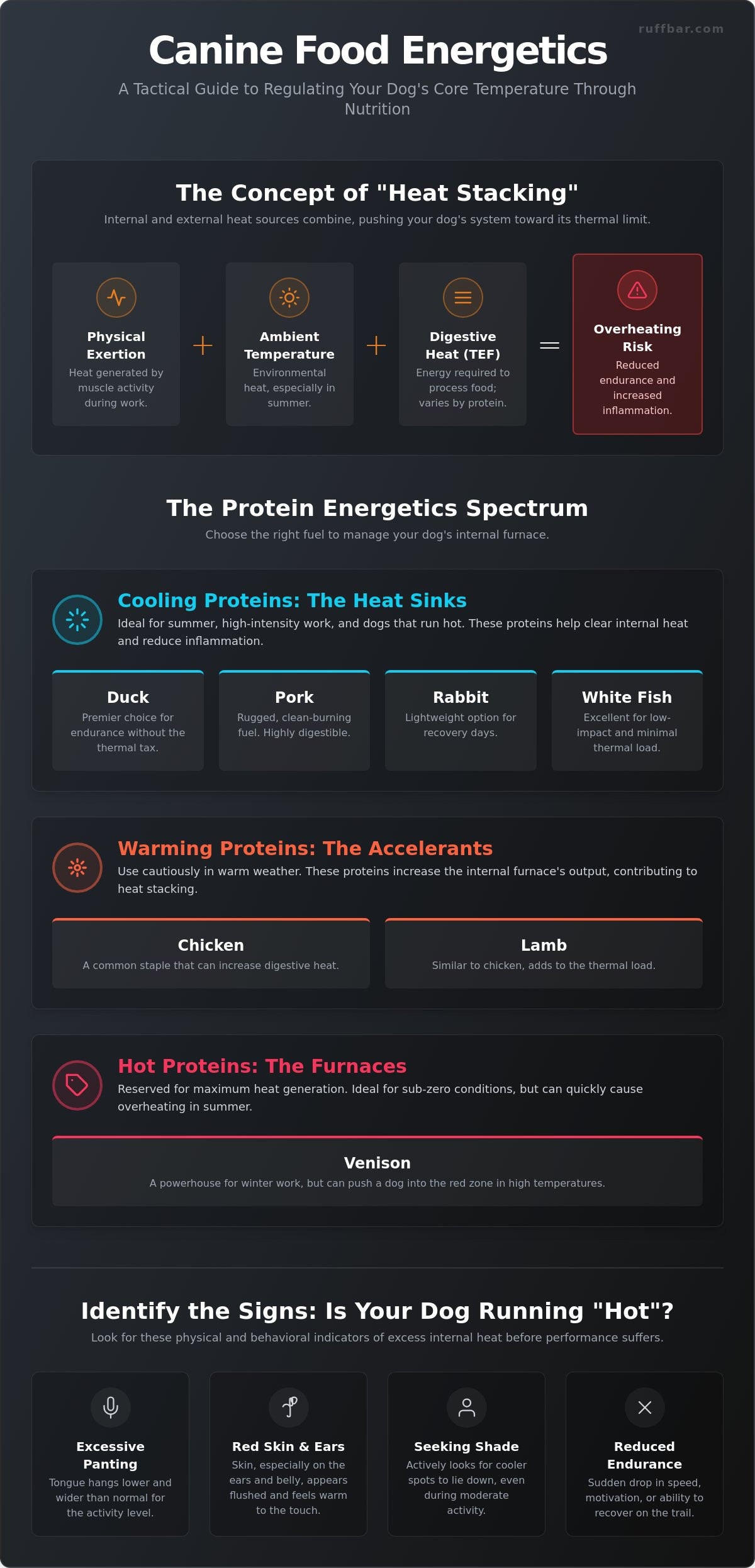
The biological connection is clear. Metabolic heat from digestion compounds with exercise-induced heat. This creates a "thermal stacking" effect. If your dog is already working hard in high ambient temperatures, a warming protein like chicken or venison acts as fuel for inflammation. It forces the heart and lungs to work harder just to vent the excess heat. Conversely, cooling proteins act as heat sinks. They streamline the digestive process and allow the body to prioritize movement over temperature management. Maintaining a neutral baseline is the secret to year-round endurance.
The Science of the Internal Furnace
The thermic effect of food (TEF) is the energy required for digestion, absorption, and disposal of nutrients. High-intensity work requires a diet that minimizes this metabolic thermal load. If the digestive system is struggling to process heavy, warming ingredients, the core body temperature rises. This leaves less room for the heat generated by muscles during a sprint or climb. Integrating targeted performance dog food supplements can support systemic balance. These tools ensure the gut remains efficient, keeping the internal furnace from redlining when the environment gets demanding.
TCM Energetics Meets Modern K9 Performance
In the world of high-stakes nutrition, we define active dogs by three states: Hot, Cold, and Neutral. A "hot" dog is easy to spot. They have red ears, skin that is warm to the touch, and they seek shade even during moderate activity. These dogs struggle with recovery because their systems are already taxed by internal heat. Identifying your dog’s natural energetic baseline is essential for tactical feeding. If your partner runs hot, feeding warming proteins is a recipe for decreased endurance. Neutral dogs offer the most versatility, but even they require cooling proteins for dogs when the summer sun turns the trail into an oven. Proper energetics ensure your dog stays in the fight longer.
The Reference Guide to Cooling, Warming, and Neutral Proteins
Choosing the right fuel is a tactical decision. It isn't just about calories. It's about thermodynamics. Every gram of protein your dog consumes triggers the thermic effect of food, which is the internal heat generated during the breakdown of nutrients. When you select cooling proteins for dogs, you're choosing ingredients that minimize this spike. This keeps the core temperature stable during high-intensity work. Sourcing matters more than the label alone. USDA-graded meats without synthetic fillers ensure that the metabolic cost of digestion remains low, preventing your dog from overheating from the inside out.
Cooling Proteins: The Heat Sinks
These proteins are essential for summer expeditions. They help clear internal heat and reduce systemic inflammation. Duck is the premier choice for endurance. It provides rich energy without the thermal tax. Pork is a rugged, clean-burning fuel. It is highly digestible and keeps the system cool under pressure. Rabbit and white fish are lightweight options, excellent for low-impact recovery days when you need to keep the thermal load at zero. If you need a portable solution that utilizes these energetics, consider packing Ruff Stix® Pork for your next high-heat training session.
Warming and Hot Proteins: The Accelerants
Warming proteins have their place, but they are dangerous in July. They act as accelerants to a dog's internal furnace. Chicken and lamb are common staples, yet they often lead to "heat stacking." This is where environmental heat and digestive heat collide. Venison is categorized as a "hot" protein. It is a powerhouse for sub-zero winter work where you want the body to generate maximum warmth. In the summer, venison can push a high-performance dog into the red zone.
Don't ignore the fillers. Many standard kibbles use "hidden" warming ingredients like high-glycemic carbohydrates or poor-quality chicken meal. These additives increase the metabolic struggle. They force the body to work harder to process "junk" energy. This creates unnecessary friction in the gut and raises core temperature before the dog even starts to move.
Neutral Proteins: The Versatile Foundation
Beef is the gold standard for a neutral baseline. It provides steady, year-round performance without significantly shifting the internal temperature. When you need a reliable foundation that doesn't lean too hard into cooling or warming, neutral proteins are the answer. They offer a safe harbor for dogs with balanced energetics. Utilizing cooling proteins for dogs alongside a neutral base allows you to fine-tune your K9 athlete's performance for any terrain or temperature.
Why Active Dogs Need Cooling Proteins During High-Intensity Work
Performance isn't just about output. It's about efficiency. When your dog is working a ridgeline or pushing through a high-speed training session, they face a phenomenon called heat stacking. This happens when high ambient temperatures and intense muscular exertion collide with the metabolic heat of digestion. If you're feeding warming proteins like chicken in 90-degree weather, you're essentially redlining the engine. Cooling proteins for dogs act as a metabolic relief valve. They reduce the "digestive tax," ensuring that the body's energy is spent on propulsion rather than internal cooling.
Systemic inflammation is the silent killer of endurance. Internal heat doesn't just affect the core; it radiates to the joints and skin. Dogs fed a cooling diet return to their respiratory baseline faster after a sprint. Their heart rate stabilizes quicker. They don't just survive the heat; they master it. By managing inflammation from the inside out, you're protecting the long-term health of your K9 partner while maximizing their immediate output. This isn't about comfort. It's about survival and success in demanding environments.
Endurance and Thermal Thresholds
Internal temperature directly dictates muscular propulsion. Once a dog hits their thermal threshold, focus shatters. They stop looking for the trail and start looking for a way to vent. This leads to "panting-out," where respiratory efficiency drops as the dog struggles to move air. We've seen the difference on multi-day backcountry trips. Dogs fueled by cooling proteins for dogs maintain their drive on day three, while those on warming diets hit a wall by noon on day one. It's the difference between a partner that keeps pace and one you have to carry. Efficiency is the ultimate advantage.
Strategic Fueling with High Protein Dog Energy Bars
Maintaining glucose levels without spiking internal heat is a delicate balance. Utilizing high protein dog energy bars allows for sustained adventure fuel that respects the body's energetic state. Grain-free, whole-food ingredients are non-negotiable here. Fillers and synthetics create metabolic friction, which generates more heat during the breakdown process. We prioritize grass-fed sourcing because it offers superior anti-inflammatory benefits. When every calorie serves a purpose, your dog stays lean, cool, and ready for the next objective. High-standard preparation leads to high-standard results. Don't compromise on the gear you put in their bowl.
Identifying When Your Dog Runs "Hot" and How to Adjust Their Diet
A high-performance handler doesn't wait for a breakdown. You monitor the gauges. You watch the vitals. Identifying when your dog runs "hot" is a critical skill for anyone pushing limits in the backcountry. Physical signs are often the first warning. Red ears. Skin that feels like a radiator. A relentless drive to find shade even during short breaks. These aren't just quirks; they are indicators that the internal thermal load is exceeding the body's ability to vent. Behavioral cues follow quickly. If your dog is panting excessively at rest or showing "lazy" performance in moderate heat, their engine is redlining. Integrating cooling proteins for dogs provides the metabolic relief needed to bring those levels down.
Adjusting your dog's "equipment" as the weather changes is non-negotiable. Just as you swap a heavy shell for a breathable layer, you must cycle their protein sources. Seasonal cycling ensures that the body isn't fighting its own fuel. When the mercury rises, the warming proteins that sustained them in winter become a liability. You need a diet that acts as a heat sink, not an accelerant.
While you optimize your dog's internal temperature, don't forget your own wellness; understanding the benefits of fresh, cooling beverages as discussed on lejushk.com can help you stay as resilient as your K9 partner on the trail.
Beyond nutrition, maintaining your own standards of excellence is part of the elite handler's mindset; for a truly premium experience, you can explore Grooming at House of Barbaard, a destination that mirrors the precision and quality you demand in the field.
For those who want to bring that same level of professional precision to their own daily routine, you can visit Hair Bar NYC Professional to discover high-end equipment designed for efficiency and style.
Similarly, refueling yourself with high-quality, authentic cuisine is essential for recovery; those in search of the Best Indian Food in Hayward, CA | Favorite Indian Restaurant | Indian Food near me can enjoy a world-class buffet that provides the same level of excellence you provide for your dog.
The "Hot Dog" Checklist for Handlers
- Paw Pad Heat: Check their pads five minutes after stopping. Persistent heat indicates systemic inflammation and a high core temperature.
- Thirst Levels: Monitor for over-drinking. If your dog is obsessed with the water bowl, they may be trying to compensate for the internal heat generated by warming food.
- Early Warning Signs: Look for "hot spots" on the skin or sudden tear staining. These are often the first outward signals of an energetic imbalance.
Tactical Transitioning on the Trail
Transitioning to a cooling diet requires a tactical approach. Don't swap the entire meal plan overnight. A 7-day transition protects the gut-lung axis. Start by replacing 25% of the current ration with cooling alternatives. Monitor stool quality. Watch for increased energy. By day four, move to a 50/50 split. By day seven, the system should be fully recalibrated. Use moisture-rich toppers to bridge the gap and ensure hydration remains high. Managing the gut-lung axis is essential; if the gut is overheated from heavy digestion, respiratory efficiency suffers. Cooling proteins for dogs like pork or duck streamline this process, allowing the lungs to focus on oxygen exchange rather than heat dissipation. Equip your partner for the heat by switching to Ruff Stix® Pork today.
Ruff Bar Solutions for Temperature-Regulated Performance
We don't just sell food. We provide metabolic equipment for the modern K9 athlete. Every Ruff Bar product is engineered to meet the demands of high-stakes environments. When you prioritize cooling proteins for dogs, you need sourcing that matches your ambition. Our USDA-graded, grass-fed meats are processed without synthetic cooling agents or fillers. This ensures that every calorie provides propulsion, not just digestive friction. High-standard preparation leads to high-standard results. Don't compromise on the gear you put in their bowl.
Ruff Food Freeze Dried Raw Duck is the premier cooling meal for the backcountry. It is lightweight. It is nutrient-dense. It provides the sustained energy required for multi-day treks without the thermal spike associated with beef. For faster, high-intensity training, Ruff Stix® Pork offers uncompromising cooling power in a punchy, portable format. These are the tools you need when the mercury rises and the mission continues.
Pork and Duck: The Ruff Bar Performance Advantage
Our Pork is a clean-burning fuel source. It is designed for summer athletes who cannot afford to overheat. We eliminate the energetic clutter found in standard treats. Fillers like grain or low-quality meals act as metabolic friction. They slow down the system. They raise the core temperature. By focusing on pure, high-standard proteins, we ensure your dog's internal radiator stays clear. Duck offers a unique advantage for endurance. It delivers the fat and protein needed for long-range movement while maintaining a cooling energetic profile. It is the ultimate backcountry fuel.
We focus on three pillars of performance:
- Sourcing: USDA-graded, grass-fed meats for maximum purity.
- Efficiency: Zero fillers to reduce metabolic friction.
- Thermodynamics: Targeted cooling proteins for dogs to manage thermal load.
Fueling Your Next Adventure
Successful handlers choose their equipment based on the forecast. If the trail is hot, you pack the duck and pork. If you're working a neutral base, add a Ruff Bar Pure Blend Topper to give your dog a cooling edge. These toppers integrate seamlessly into any performance base. They allow you to shift the energetic profile of a standard meal without a total overhaul. If your dog is showing early signs of heat stacking, adding a cooling topper can reset the baseline. It is precision nutrition for high-stakes environments. Our formats are shelf-stable and rugged. They belong in a backpack, not a grocery store shelf. You prepare for the terrain. You prepare for the weather. Now, prepare the bowl. Equip your dog with cooling performance nutrition today.
Master the Heat and Fuel the Mission
Proactive thermal management is the hallmark of an elite handler. You've learned that internal heat is as much of a threat as the summer sun. By integrating cooling proteins for dogs, you're not just feeding your partner; you're optimizing their metabolic radiator. You now have the tactical knowledge to identify a "hot" dog before they redline. You have the transition plan to pivot their energetics for peak endurance. Stop reacting to the environment. Start outsmarting it.
The mission requires equipment that doesn't compromise. Our fuel features USDA-graded grass-fed meats. No fillers. No grains. No synthetic additives. These formulas are field-tested by K9 athletes and adventure dogs in the most demanding terrains on the planet. Don't let your dog's diet be the bottleneck of your next expedition. Shop Ruff Bar Cooling Performance Proteins and keep your engine running cool when the stakes are high. The trail is waiting. Go get it.
Frequently Asked Questions
Is chicken a cooling protein for dogs?
No, chicken is a warming protein that acts as an accelerant to the internal furnace. Feeding chicken during high-heat expeditions can lead to heat stacking. This increases the metabolic load and forces the heart to work harder to vent excess heat. Save chicken for cold-weather recovery or neutral environments where you need to generate more core warmth to maintain performance.
How long does it take for cooling proteins to affect my dog?
You will see an immediate reduction in digestive heat during the first meal. However, systemic recalibration usually takes about 7 to 10 days of consistent feeding. This allows the body to clear residual inflammation from warming ingredients. Regular use of cooling proteins for dogs ensures the "digestive tax" remains low. This allows for faster respiratory recovery after intense sprints on the trail.
Can I feed cooling proteins to my dog in the winter?
You can feed cooling proteins in winter, but you must monitor for signs of a "cold" state. If your dog is shivering, seeking heat, or has cold paw pads, they need warming fuel like venison or lamb. Cooling proteins in sub-zero temps might lower their thermal baseline too much for comfort. Most handlers use neutral proteins as a winter foundation and save cooling options for high-output summer work.
Will cooling proteins help with my dog’s summer allergies and hot spots?
Yes, cooling proteins are highly effective for managing summer allergies and hot spots. These conditions are often external signals of internal heat and systemic inflammation. By feeding duck or pork, you lower the internal thermal load. This reduces the redness and itching associated with heat-driven skin reactions. It is a tactical way to clear the "fire" from the inside out without synthetic additives.
What is the best cooling protein for a dog with a sensitive stomach?
Pork is the premier cooling protein for dogs with sensitive stomachs. It is highly digestible and clean-burning. Unlike some rich cooling proteins like duck, pork provides a rugged energy source that is gentle on the gut. It minimizes metabolic friction and digestive distress. This makes it an ideal choice for K9 athletes who need thermal management without risking loose stools during a mission.
Does the way the food is processed affect its energetics?
Processing significantly impacts energetics. High-heat kibble processing creates "dry heat" which can tax the system and increase the metabolic struggle. Raw or freeze-dried formats preserve the natural cooling properties of the meat. Freeze-dried raw meals provide the benefits of raw nutrition with the portability required for the backcountry. They require less energy to break down, keeping the core temperature stable during activity.
Can I mix cooling and warming proteins in the same meal?
You can mix them, but it dilutes the tactical effect of the cooling diet. Mixing chicken with duck creates a neutral or slightly warming energetic state. If your goal is to manage a high thermal load during a summer expedition, stick to a pure cooling profile. For general maintenance in moderate weather, a blend can provide a balanced baseline that doesn't lean too hard in either direction.
How do I know if my dog is a "hot" dog or a "cold" dog?
Analyze your dog's resting state and physical vitals. A "hot" dog has red ears, warm skin, and seeks cool surfaces like tile or shade. They often pant even after minor exertion. A "cold" dog seeks blankets, has cold extremities, and may be lethargic in low temperatures. Most performance dogs lean "hot" due to high muscle mass and intense activity levels. Monitoring these signals helps you choose the right cooling proteins for dogs based on the forecast.