
Building Lean Muscle in Dogs: A Safe, Step-by-Step Guide
More protein isn’t a muscle-building plan. Building lean muscle in dogs takes progressive activity, appropriate nutrition, and time to recover. If you’re unsure which exercises suit your dog, how food fits into a strength plan, or whether your dog is doing too much, start with a careful, gradual approach.
It’s natural to want your dog fit, capable, and ready for the next trail or outing. But there’s no one-size-fits-all routine, and adding protein alone won’t build strength. Exercise, a suitable complete diet, and rest work together, so your plan should reflect your dog’s current health and activity level.
This guide explains how to increase activity gradually, think about protein and calories, and recognize signs that call for a break. It also covers when muscle loss or weakness needs veterinary attention. Build a stronger foundation one safe step at a time.
Key Takeaways
- Start with your dog’s health, age, body condition, and current activity level to set a realistic baseline.
- Building lean muscle in dogs calls for manageable, repeatable exercise that progresses gradually, not sudden bursts of intense effort.
- Adequate energy and dietary amino acids matter, while excess calories can add fat rather than lean tissue.
- Use a flexible weekly activity plan as a starting point, then adjust its challenge and rest days to suit your dog.
- Watch for signs of overexertion or an underlying health concern, and know when to pause and seek veterinary advice.
Building Lean Muscle in Dogs Starts With a Healthy Baseline
Strength isn’t a number on the scale. Healthy muscle development means building and maintaining functional muscle through suitable conditioning and nutrition, not simply adding body weight. A heavier dog isn’t automatically stronger. Extra weight may be body fat, which can make movement more difficult rather than improve fitness.
There’s no universal target for a muscular build. Breed influences a dog’s natural frame and muscle shape; age, health, body condition, and current activity affect what they can safely do and how progress may appear. A lean working breed and a stockier companion won’t look alike, even when both are fit. For a wider view of how nutrition, exercise, and other factors contribute to dog health, consider the whole picture, not appearance alone.
Building lean muscle in dogs should start with observation, not a demanding workout. Record your dog’s current condition before changing activity. That gives you a fair comparison point and can help you notice changes that deserve attention.
How to assess your dog's starting point
Record your dog’s weight, body-condition score, usual activity, and visible muscle symmetry. Note whether everyday movement seems comfortable and whether one side of the body looks noticeably different from the other. When tracking weight, use the same scale and similar conditions so routine fluctuations don’t distract from longer-term patterns.
Body-condition scoring helps you observe fat coverage and overall shape, but it doesn’t measure muscle directly. Photos taken from consistent angles and in similar lighting can help you compare posture and visible contours over time. Treat these records as reference points, not a diagnosis or proof that muscle has increased. If you’re unsure how to interpret a change, get veterinary guidance.
When weakness or muscle loss needs a veterinarian
Pause plans for added activity and seek veterinary assessment for sudden muscle loss, limping, pain, or unexplained weakness. These changes shouldn’t be treated as ordinary signs of being out of shape. Illness, aging, and injury can affect muscle independently of exercise, so pushing harder may leave the underlying issue unaddressed.
Get veterinary guidance before starting a conditioning plan for a puppy, senior dog, or dog with a known health issue. Their needs and safe activity levels can differ, and an individual assessment can help set appropriate next steps. A sound baseline protects the dog in front of you, not an idealized fitness target.
How Exercise Builds Muscle in Dogs: Progress Gradually
Movement gives a dog’s body a reason to adapt, but more effort isn’t automatically better. For building lean muscle in dogs, use your baseline to choose manageable activity, increase the challenge gradually, and allow time to recover. This approach builds a routine around your dog’s abilities instead of an arbitrary target.
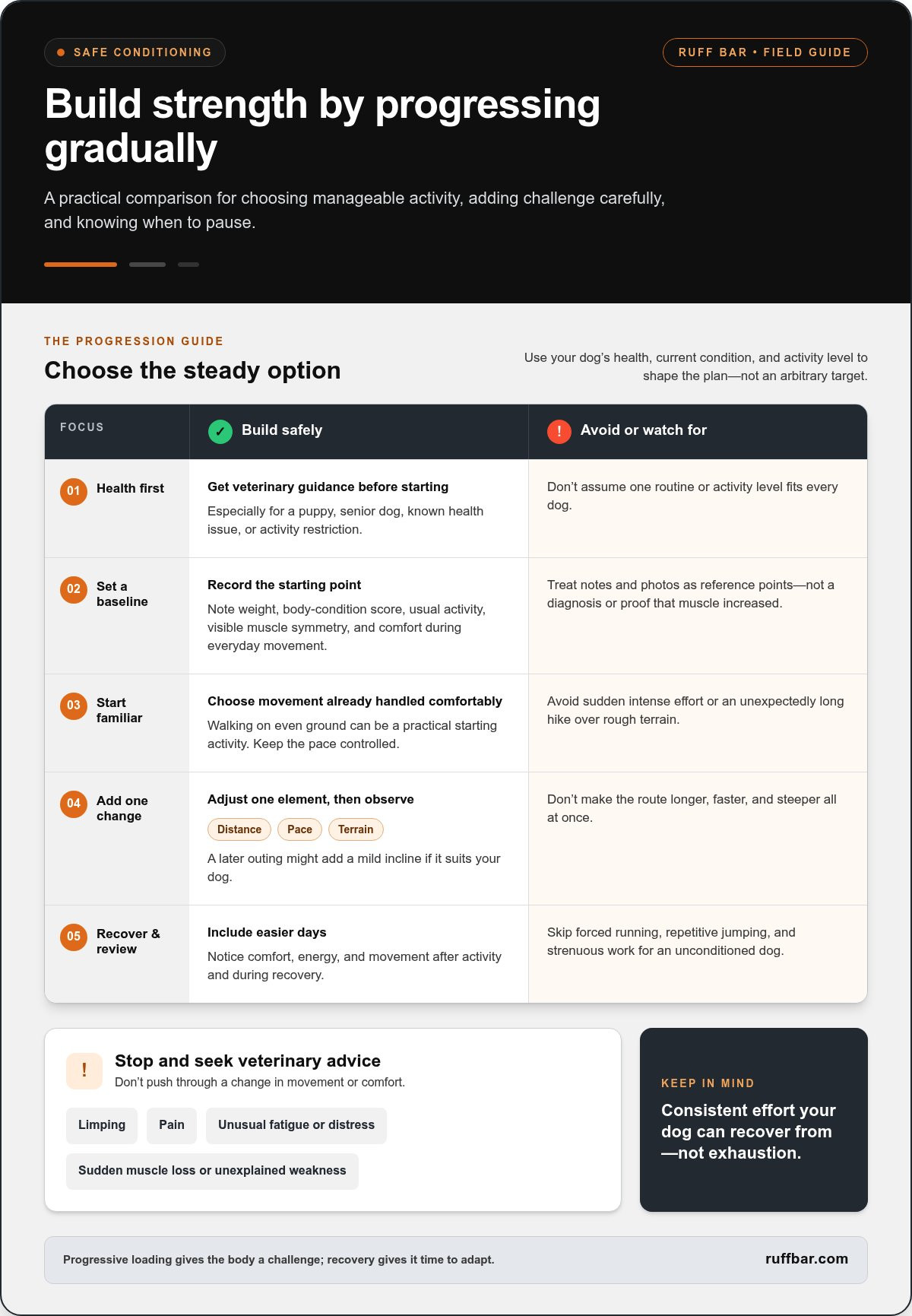
Progressive loading means adding a little challenge over time; recovery gives the body a chance to adapt to that work. Controlled, repeatable movement is easier to monitor than a sudden burst of intense exertion. A familiar walk on comfortable ground, for example, offers a clearer starting point than an unexpectedly long hike over rough terrain.
- Check health: Get veterinary guidance before starting if your dog is a puppy, a senior, has a health condition, or has activity restrictions.
- Set the baseline: Use your record of current movement and condition to choose an activity your dog can manage comfortably.
- Begin with familiar activity: Choose movement your dog already handles without pain or distress.
- Progress gradually: Adjust one part of the activity, then observe how your dog responds.
- Allow recovery: Include easier days and watch for changes in comfort, energy, and movement afterward.
Choose movement that fits your dog's abilities
Walking on even ground can be a practical starting activity. If it suits your dog, a gentle incline or relaxed play on safe footing may add variety. The right choice depends on age, breed traits, body condition, fitness, and any veterinary restrictions. Keep the pace controlled, and stop if pain, limping, unusual fatigue, or distress appears. Don’t push through a change in movement.
Increase activity without overtraining
Change one element at a time: distance, pace, or terrain. If your dog handles a familiar walk comfortably, you might try a mild incline on a later outing instead of making the route longer, faster, and steeper all at once. Build in easier days, and notice whether your dog moves normally and seems comfortable after activity and during recovery.
Skip forced running, repetitive jumping, and strenuous work for an unconditioned dog. Excitement can mask fatigue, so pay attention to how your dog moves rather than relying only on enthusiasm. If a new activity brings on limping, pain, or unusual tiredness, stop and seek veterinary advice before progressing. Aim for consistent effort your dog can recover from, not exhaustion.
For outings that fit an active routine, portable nutrition options for dogs can be considered as part of the dog’s overall feeding plan. Ruff Bar offers energy bars, chewable Stix, and freeze-dried backpacking meals for active dogs. These products don’t replace appropriate conditioning, a complete diet, or recovery.
Protein, Calories, and Complete Food: What Supports Canine Muscle?
Muscle responds to a combination of training and nourishment. Appropriate activity challenges the body; dietary amino acids provide building blocks for maintaining and forming tissue; and sufficient energy supports normal body functions and movement. No single ingredient can replace that foundation. For building lean muscle in dogs, the whole feeding plan matters more than chasing a high-protein number.
Energy balance matters, too. A dog that eats more calories than they use may gain body fat rather than functional muscle. Needs differ with body size, age, health, activity, and current condition, so avoid increasing portions just because exercise has increased. Monitor body condition and discuss meaningful food changes with your veterinarian.
Why protein alone is not a muscle-building plan
Protein supplies amino acids used to maintain body tissues, including muscle. But higher protein intake alone doesn’t guarantee more muscle. The overall diet, appropriate exercise, a dog’s health, and recovery all influence progress. A dog eating extra calories without a suitable conditioning plan may simply gain weight. Before changing diets or adding targeted supplements, get veterinary advice tailored to your dog.
Start with your dog’s everyday food. A complete and balanced food appropriate for their life stage is designed to provide a broad nutrient foundation. Treats, toppers, and supplements serve different roles: they may add variety or fit into an individual feeding plan, but they aren’t interchangeable with complete food. For a broader look at how supplements may fit an active dog’s routine, explore performance dog food supplements.
Fit active-dog products into the whole feeding plan
Think of a treat or topper as an addition, not a meal replacement. Count it as part of your dog’s overall intake, follow its product label, and avoid letting extras crowd out the complete food that forms the dietary foundation. Supplements follow the same principle: they can’t compensate for an unsuitable diet or replace activity and recovery.
Ruff Bar makes nutrition products for active dogs, including food bars, chewable Stix, freeze-dried meals, toppers, and supplements. Its formulas use USDA-graded grass-fed meats and whole organic ingredients without fillers. These ingredient choices and product categories don’t establish a muscle-building effect. Portable foods can be practical additions on an outing, but choose and portion them with your dog’s full diet in mind. Ruff Bar’s high-protein dog energy bars are a portable option for active-dog adventures, not a replacement for complete food.
Keep the approach disciplined: feed an appropriate complete diet, match intake to your dog’s needs, and treat extras as part of the plan. If weight, appetite, or condition changes unexpectedly, pause adjustments and consult your veterinarian before adding calories or supplements.
A Practical Weekly Plan for Building Lean Muscle in Dogs
A useful routine is one your dog can repeat and recover from. Start with activity your dog already handles comfortably, not an ambitious target. The sample week below is a framework, not a prescription. Swap days, reduce activity, or add rest to match your dog’s current fitness, age, health, and veterinary guidance. Keep the effort controlled, then observe how your dog responds.
Build a repeatable routine
Balance familiar low-impact movement with modest challenges and relaxed recovery. A challenge could mean a route with a gentle incline or a new stretch of safe terrain, not a dramatic jump in effort. Keep rest in the plan. Rest can mean no structured workout, with calm everyday movement as appropriate for your dog.
- Day one: Choose familiar, comfortable movement, such as your dog’s usual walk.
- Day two: Keep activity easy. Allow a relaxed recovery day without added challenge.
- Day three: If your dog recovered well, try a modest change, such as a gentle incline or varied safe footing.
- Day four: Return to familiar, lower-impact movement, or take a rest day if your dog seems tired.
- Day five: Repeat the manageable challenge only if movement and recovery have stayed comfortable.
- Days six and seven: Mix easy activity with rest. Don’t treat every day as a training day.
Shift the pattern to fit your dog. A dog who’s new to regular activity may need more easy days; a dog already accustomed to outings may tolerate a different balance. On longer adventures, plan practical fueling as part of the overall feeding routine, not as a shortcut to muscle growth. This freeze-dried raw dog food for backpacking guide is relevant when considering food for outings.
Measure progress and adjust the plan
Review your baseline notes regularly instead of chasing rapid visual changes. Track whether your dog moves smoothly, seems eager to participate, recovers comfortably, eats as usual, and maintains a suitable body condition. A brief note after each outing can reveal patterns that are easy to miss day to day.
Scale back when fatigue, soreness, reluctance, or an altered gait appears. Don’t add difficulty until your dog is handling the current routine well. If progress stalls or new symptoms develop, pause the plan and ask your veterinarian to reassess before making further changes.
Keep outings enjoyable and food choices aligned with your dog’s complete feeding plan. For portable options made for active dogs, explore active-dog nutrition and consider how any treat or topper fits into daily intake.
Keep Muscle-Building Safe: Recovery, Red Flags, and Next Steps
Progress should be steady, not forced. With building lean muscle in dogs, visible changes take time, and rushing to make a dog look stronger can add strain without creating a safer, more capable athlete. Keep the goal practical: comfortable movement, better conditioning, and a routine your dog can sustain. Assess your dog, progress gradually, feed appropriately, allow recovery, and monitor for changes.
Recovery is part of the training plan
Exercise is only one part of the work. Rest, sleep, access to fresh water, and an appropriate routine all support recovery. After an outing, notice whether your dog returns to normal movement and behavior. A dog who’s ready to settle may simply need downtime. Persistent discomfort, reluctance to move, or a change in gait calls for more caution than ordinary post-activity tiredness.
Make recovery visible in your routine. After activity, give your dog a calm place to rest and keep water accessible. Check how they stand, walk, and respond to familiar cues later, rather than judging the session only by enthusiasm during the outing. A dog may stay eager to play while tiring, so enthusiasm alone isn’t a reliable reason to keep adding effort.
- Observe: Look for normal, comfortable movement after activity.
- Support: Provide rest, sleep, and access to fresh water.
- Adjust: Make the next session easier if your dog seems less comfortable or energetic than usual.
Know when to pause and seek veterinary guidance
Stop strenuous activity if your dog shows distress or develops an abnormal gait. Persistent lameness, pain, weakness, or unexplained muscle loss deserves veterinary assessment, not a harder workout or an improvised supplement. These signs can have causes unrelated to conditioning. Pause the plan and get professional guidance before resuming or changing food and supplements.
Keep a simple record of what you notice: which activity came before the change, how your dog moves, and whether appetite or everyday behavior has shifted. That information can help your veterinarian understand the pattern. Don’t try to diagnose the cause from photos or body-condition notes alone. If symptoms are new or worsening, prioritize assessment over training targets.
Think of the plan as a cycle, not a race: assess your dog’s needs, build activity gradually, provide appropriate complete nutrition, protect recovery, and keep monitoring. Change only what your dog is ready to handle. If the routine stops feeling comfortable, scale back and reassess rather than pushing through for faster results.
For optional fueling support that fits into a broader feeding plan, Explore Ruff Bar nutrition for active dogs. Treats, toppers, and supplements are additions, not substitutes for complete food, suitable activity, or recovery.
Make the Next Outing Count
Building lean muscle in dogs isn’t a race toward a particular look. It’s a chance to help your dog move through daily life and shared adventures with confidence. Choose a goal that matters for your dog, then let comfort, engagement, and veterinary guidance shape what comes next. Steady, individualized progress is more valuable than a dramatic change achieved by pushing too hard.
As you plan future outings, consider how nutrition fits into your dog’s routine without letting extras take the place of complete food. Ruff Bar focuses on nutrition products for active dogs, including food bars, chewable Stix, freeze-dried meals, toppers, and supplements. Its formulas feature USDA-graded grass-fed meats and whole organic ingredients without fillers. Treats, toppers, and supplements are optional additions to an appropriate feeding plan, not muscle-building treatments or replacements for balanced meals.
Explore Ruff Bar nutrition for active dogs as you prepare for the miles and moments ahead. Keep the plan thoughtful, stay responsive to your dog, and enjoy building capability together.
Frequently Asked Questions
Can extra protein build muscle in dogs?
Extra protein alone doesn’t guarantee muscle growth. Protein provides amino acids used in body tissues, but building lean muscle in dogs also depends on suitable activity, energy intake, health, age, and the overall diet. For example, adding a protein-rich snack without accounting for its calories can change total intake without improving conditioning. Keep your dog’s regular food as the foundation, and ask a veterinarian before making major diet changes or adding supplements.
How long does it take to build lean muscle in a dog?
There’s no set timeline, because each dog starts from a different level of fitness and has individual health, age, and genetic factors. Look for practical signs of progress, such as moving more comfortably through a familiar activity, rather than expecting a quick change in shape. Keep notes on activity and condition so you can spot trends. If progress stalls or muscle loss appears, seek veterinary advice instead of increasing workload or food on your own.
What exercises help dogs build muscle safely?
Controlled walks, gentle inclines, and suitable play can support fitness when they match your dog’s abilities. Choose safe footing and a pace that lets your dog move comfortably. For instance, try a familiar flat route before introducing a mild incline. Change only one feature at a time, and stop if your dog shows pain, limping, unusual fatigue, or distress. Avoid strenuous exercise for dogs who aren’t conditioned for it.
Can puppies do muscle-building workouts?
Puppies need age-appropriate movement, not adult-style strength sessions or forced repetitive exercise. Keep play controlled, let the puppy rest when they choose, and avoid turning normal activity into a demanding workout. A growing dog’s needs can depend on health and breed characteristics, so ask your veterinarian for individualized guidance. Don’t apply an adult conditioning plan or a generic weekly schedule to a puppy without professional advice.
How can I tell whether my dog is gaining muscle or fat?
Weight alone can’t tell you whether a dog has gained muscle or fat. Track weight alongside body shape, movement, and consistent photos taken from similar angles. A body-condition score can help you follow overall condition, but it isn’t a precise muscle measurement. If the change is unclear, your veterinarian can assess your dog’s condition and help determine whether weight or diet adjustments are appropriate.
Should I give my dog supplements to build muscle?
Supplements don’t guarantee muscle growth and shouldn’t replace complete food, appropriate activity, or veterinary care. Before adding one, review its intended use and feeding directions with your veterinarian, especially if your dog takes medication or has a health condition. This helps prevent an unsuitable product or change from complicating the dog’s existing plan. Puppies and senior dogs also need individualized advice before supplement use.
What should I do if my dog is losing muscle?
Contact your veterinarian about unexplained or sudden muscle loss rather than responding with extra protein or harder exercise. Note when you first noticed the change and whether your dog also has weakness, pain, appetite changes, or difficulty moving. These details can help guide an assessment. Until you have advice, avoid strenuous activity if movement seems uncomfortable, and don’t assume inactivity is the only possible cause.