
Best Food for Canine Athletes: Fueling Performance and Recovery in 2026
A summit push at 10,000 feet is no place for a mid-day energy crash. Your dog is an elite partner, not a sedentary companion. If you're still fueling their expeditions with high-carb fillers and heavy wet food, you're compromising their potential. Finding the best food for canine athletes requires moving past marketing labels and into the science of biological density. You need sustained power, rapid muscle repair, and a pack weight that doesn't slow you down. It's about gear, not just groceries.
We understand the frustration of watching a high-drive dog hit a wall because their gut is struggling with grain-heavy processing. This article delivers the definitive nutritional framework to maximize your dog's endurance, power, and recovery through biologically dense, high-performance fueling. We'll explore the 2026 AAFCO regulatory shifts, Cornell's latest macronutrient partitioning research, and the tactical advantage of freeze-dried raw meals. Discover how to optimize the 30-minute anabolic window to ensure your partner wakes up ready for the next ridge. From fat-fueled endurance to protein-driven recovery, this is how you build a better athlete.
Key Takeaways
- Master the metabolic shift. Learn why fat serves as the primary aerobic engine for endurance and how to scale caloric density for extreme terrains.
- Prioritize biological density. Discover why the best food for canine athletes relies on a strict hierarchy of high-quality protein and fat over carbohydrate-loaded fillers.
- Shield performance from heat damage. Understand the bioavailability advantage of freeze-dried raw meals and how they preserve the vital enzymes destroyed by traditional kibble processing.
- Optimize fueling windows. Learn the strategic timing for pre-loading and intra-activity snacks to prevent hypoglycemia and maintain sustained output during long-range expeditions.
- Accelerate recovery. Identify how sourcing elite, grass-fed proteins facilitates rapid muscle and ligament repair to keep your partner ready for the next ridge.
Defining the Metabolic Demands of Canine Athletes
High-performance dogs operate on a different physiological plane. A multiday expedition isn't just a walk; it's an extreme metabolic demand. While humans rely on carbohydrates for aerobic output, dogs are optimized to burn fat. This efficiency allows them to sustain movement across brutal terrain. Traditional kibble often fails here. It's loaded with starch. Starch leads to insulin spikes. It leads to inflammation. It leads to energy crashes when the trail gets steep. The best food for canine athletes prioritizes fat as the primary engine. It respects the animal's biology. It provides the density required for sustained propulsion.
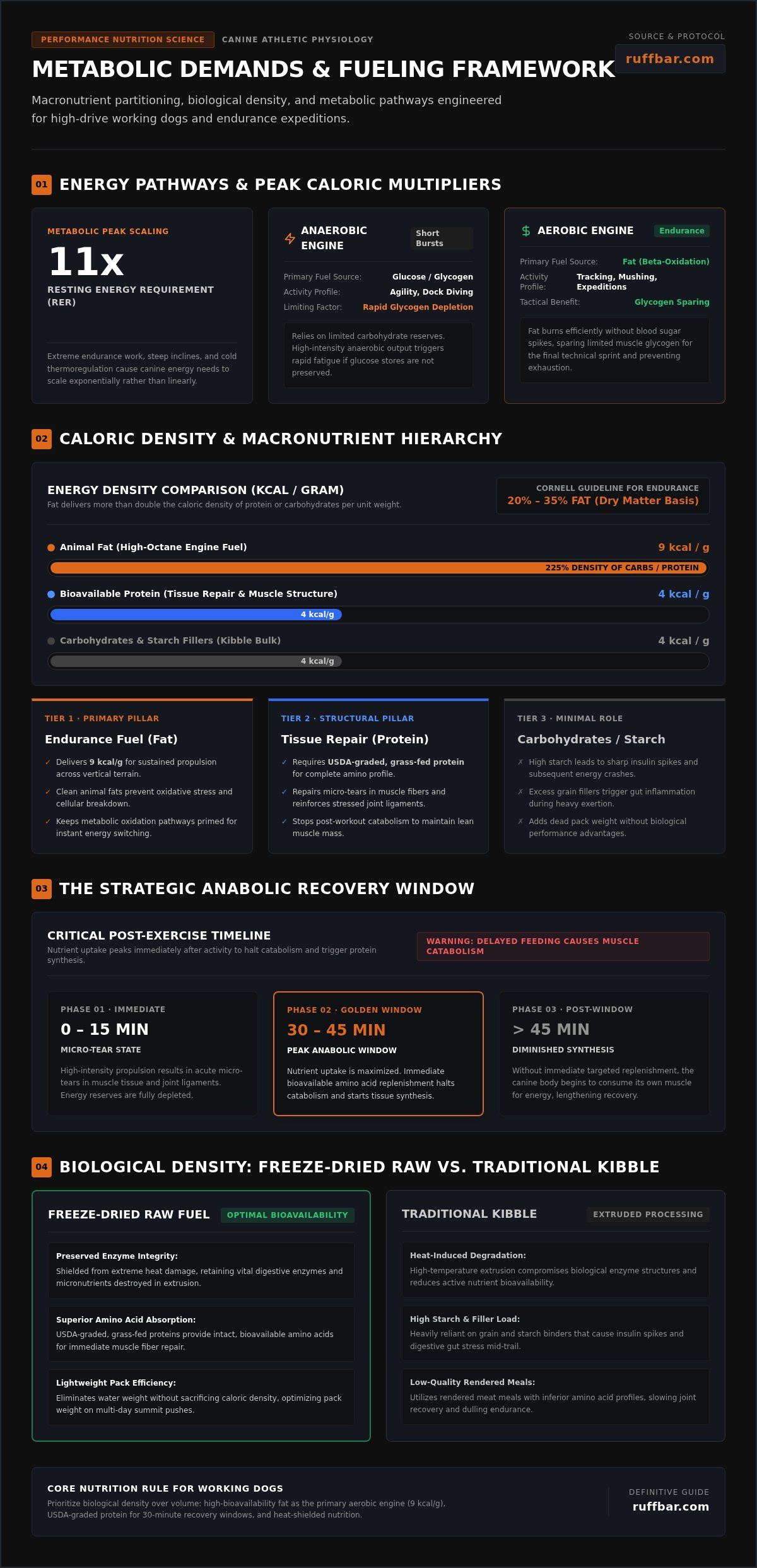
Energy needs aren't linear. They scale exponentially. Cold weather forces the body to burn calories just for thermoregulation. Steep inclines multiply the load on every joint. Research indicates that extreme endurance work can require up to 11 times the Resting Energy Requirement. Understanding canine dietary physiology and food formats is the first step in bridging the gap between an "active pet" and a "performance athlete." One is fed for maintenance. The other is fueled for victory.
Energy Systems in Working Dogs
Short bursts like agility or dock diving rely on anaerobic pathways. These use glucose. Long-distance tracking or mushing relies on aerobic metabolism. This uses fat. High-density fueling allows for glycogen sparing. This means the dog saves its limited sugar reserves for the final sprint. It prevents "hitting the wall" miles from the trailhead. Nutrient density ensures every ounce of food translates to propulsion. It's about efficiency in the field. It's about maintaining a steady burn without the peaks and valleys of high-carb fillers.
The Cost of Nutritional Deficiencies
Performance creates damage. It's inevitable. High-intensity movement causes micro-tears in muscle tissue and ligaments. Low-quality protein can't fix this. It lacks the amino acid profile needed for rapid repair. You'll see the signs of nutritional fatigue early. Look for slower recovery times. Watch for a lack of focus or a coat that loses its luster. If the protein isn't USDA-graded and bioavailable, the athlete breaks down. Immediate post-workout amino acids are mandatory. They stop catabolism. They start the growth process. Without them, you aren't training; you're just wearing them out.
The Macronutrient Hierarchy: Protein and Fat for Power
Mainstream pet food relies on volume. Performance nutrition relies on density. To achieve peak output, you must look past the bag's front label and analyze the macronutrient hierarchy. The best food for canine athletes prioritizes two pillars: high-bioavailability protein and clean, energy-dense fat. Carbohydrates are relegated to a minimal, functional role. This isn't about preference. It's about how the canine body converts fuel into propulsion.
Why Protein is the Recovery Foundation
Protein builds the machine. It repairs the micro-tears in muscle fibers and reinforces the ligaments stressed during high-impact movement. Bioavailability is the only metric that matters here. USDA-graded, grass-fed proteins offer a superior amino acid profile compared to rendered meat meals. These proteins are absorbed faster. They work harder. The anabolic window represents the 30 to 45 minute period immediately post-exercise when nutrient uptake is maximized to halt muscle breakdown and initiate tissue synthesis. Without this immediate replenishment, your dog's body begins to consume its own muscle for energy. For human handlers who apply these same biological principles to their own fitness, you can explore E-commerce sales of sports supplements to support peak performance.
Fat is the engine's high-octane fuel. While protein and carbohydrates provide a mere 4 kcal/g, fat delivers 9 kcal/g. This density is essential for dogs covering miles of vertical terrain. According to Cornell University's performance dog feeding guidelines, endurance athletes require at least 20% to 35% fat on a dry matter basis to maintain stamina. Sprint athletes may require less, but the quality remains non-negotiable.
Clean fats are mandatory. Rancid or low-quality fats trigger oxidative stress. They slow down cellular repair. Integrating healthy, animal-sourced fats into a daily training regimen ensures the metabolic pathways for fat oxidation remain primed. This metabolic flexibility allows your dog to switch between energy sources without hitting a wall mid-climb. For handlers seeking uncompromising quality, utilizing Ruff Stix® ensures your partner receives the protein and fat required for elite performance without the metabolic cost of cheap fillers.
Grain-free isn't a marketing trend in the performance world. It's a functional requirement. Grains and high-carb fillers trigger systemic inflammation. They cause bloating and digestive drag. Calculating the ideal ratio depends on the sport. Sprint athletes need more protein for explosive power. Endurance dogs require higher fat percentages for the long haul. Most elite handlers target a 30/20 protein-to-fat ratio as a baseline, adjusting upward as the intensity of the environment increases.
Performance Nutrition: Freeze-Dried Raw vs. Traditional Kibble
Kibble is a compromise. It's built for convenience, not for the summit. While traditional extruded food is shelf-stable, the manufacturing process relies on extreme heat. Temperatures between 100°C and 140°C denature native proteins. They destroy heat-sensitive enzymes. They degrade essential fatty acids. For an elite partner, this loss of integrity is unacceptable. The best food for canine athletes must deliver nutrients in their most bioavailable form. If the body cannot absorb the fuel, it becomes waste. Smaller, firmer stools are the primary indicator of superior absorption. High-density nutrition means less volume in the gut and more power in the muscle.
Weight-to-calorie ratio is the final decider for backcountry handlers. Traditional wet food is 70% water. Kibble is filled with air and starch. Freeze-dried raw offers a 19% to 35% dry yield recovery weight compared to fresh alternatives. You carry the calories, not the moisture. This allows for longer expeditions without the burden of a heavy pack. It's about maximizing every square inch of your bag.
The Science of Freeze-Dried Raw
Lyophilization is the process of removing moisture through sublimation. It bypasses the liquid phase. This preserves cellular integrity. It locks in the nutrient profile of raw meat without chemical preservatives. For those navigating high-altitude terrain, freeze dried raw dog food for backpacking represents the pinnacle of field-stable nutrition. Rehydration is mandatory. Adding clean water to meals maintains kidney function and prevents dehydration during sustained work. It ensures your dog stays hydrated even when they're too focused on the task to drink from a bowl. It's tactical fueling that respects biological requirements.
Digestive Efficiency on the Trail
High-volume meals are a liability. They increase the risk of Gastric Dilatation-Volvulus, commonly known as bloat. Low-volume, high-density meals reduce gastric drag. Whole organic ingredients stabilize the gut microbiome. They prevent the digestive upset often caused by high-carb fillers found in budget kibble. Transitioning between a training diet and an expedition diet should be seamless. By utilizing biologically appropriate raw ingredients year-round, you ensure your dog's gut is primed for the demands of the trail. No surprises. No energy crashes. Just consistent, reliable output from trailhead to camp. For those interested in exploring high-quality nutrition and pet care essentials, read more.
Strategic Fueling: Timing and Caloric Density in the Field
Fueling is a timeline. It's not just a bowl of food at the end of the day. The best food for canine athletes requires a tactical schedule to prevent energy crashes and maximize output. Start with the pre-adventure load. Feed a complete meal 3 to 4 hours before intense physical activity. This window allows for gastric emptying while building a critical glycogen reserve. It reduces the risk of exercise-induced hyperthermia and potentially fatal bloat. If you miss this window, skip the meal. A full stomach is a liability on the trail.
Intra-Activity Snacking for Sustained Output
High-drive breeds burn through glucose at an alarming rate. They hit a wall. Their focus wavers. Intra-activity snacking prevents hypoglycemia and keeps the engine running. Use high protein dog energy bars for quick, non-bloat energy. These provide a dense caloric punch without the volume of a traditional meal. Portability is essential. Options like Ruff Stix® Pork or Bison allow for mid-trail refueling that maintains intensity without diverting blood flow from the muscles to the stomach. Keep portions small. You want a steady burn, not a heavy gut.
The Post-Adventure Recovery Protocol
The work doesn't end when you reach the truck. Recovery is an active process. You have a 30-minute window immediately post-exercise. This is the anabolic peak. During this time, insulin sensitivity is high and glycogen resynthesis is at its fastest. Replenish amino acids and electrolytes now to halt muscle catabolism. Utilizing performance dog food supplements during this window accelerates tissue repair and reduces oxidative stress. Monitor your partner's recovery markers. Track heart rate variability and watch for signs of muscle soreness. A dog that recovers fast is a dog that's ready for tomorrow's ridge.
Hydration is the silent performance killer. Many dogs are too focused on the mission to stop for water. Use food as a delivery system. Rehydrate freeze-dried meals with 2 to 3 times the required water to create a nutrient-dense slurry. This "meat water" encourages intake and ensures they hydrate before they hit a physiological deficit. It's about proactive management. It's about preparation. Equip your pack with Ruff Food Bars and stay ahead of the crash.
Ruff Bar: Uncompromising Nutrition for High-Stakes Performance
Nutrition is essential equipment. You wouldn't trust a frayed rope or a cracked carabiner. Don't trust your dog's performance to bargain-bin ingredients. Ruff Bar rejects the industry standard of fillers and shortcuts. We build the best food for canine athletes because we understand the stakes of high-altitude work and deep-woods exploration. Our 'no-fillers' philosophy isn't a marketing slogan. It's a commitment to biological integrity. We eliminate the soy, corn, and glycerin that cause digestive drag. We replace them with dense, functional nutrition that drives propulsion and sustains focus.
Sourcing Strategy: Grass-Fed and USDA-Graded
Clean sourcing is the antidote to chronic inflammation. Many brands hide behind 'animal by-products.' These are often low-quality remnants that lack essential amino acids and trigger systemic stress. We use whole-muscle meats. We prioritize USDA-graded, grass-fed proteins. These provide the structural foundation for elite tissue repair. Transparency matters. You should know exactly what's in your dog's backpack. From the farm to the summit, our supply chain remains focused on purity. This isn't just food. It's the raw material for muscle, bone, and grit.
Functional Formulations for the Modern K9 Athlete
The field demands versatility. Ruff Stix® provide high-protein, high-value fuel that fits in a pocket. Whether you choose Beef, Pork, or the Bison Pork blend, you're delivering intra-workout energy that maintains intensity. These stix are field-stable. They're rugged. They don't crumble or melt in your gear bag. They're designed for the handler who needs reliable delivery during high-stakes training sessions or mid-climb breaks. Every bite is focused on maintaining the focus required for technical work.
For complete meals, Ruff Food Freeze Dried Raw Backpacking Meals offer the gold standard in lightweight nutrition. These aren't just freeze dried treats for dogs; they're comprehensive, nutrient-dense fuel sources. They rehydrate in minutes. They provide the caloric density required for multiday expeditions without the water weight of traditional wet food. We've removed the moisture but kept the enzymes. We've removed the weight but kept the power. This is the choice of professional handlers who refuse to settle for mediocrity. Fuel your next adventure with Ruff Bar and see what happens when nutrition meets no-compromise standards.
Fuel the Mission, Command the Trail
Elite performance isn't a suggestion. It's a requirement for the dogs navigating 2026’s most demanding environments. We've mapped the metabolic shift toward fat-fueled endurance and the critical need for protein-driven recovery. You now know the best food for canine athletes prioritizes biological density over carbohydrate-loaded volume. Success depends on strategic timing. It depends on the 30-minute anabolic window. It depends on clean sourcing that prevents systemic inflammation. Your partner deserves gear, not just groceries.
Ruff Bar delivers the uncompromising quality required for high-stakes expeditions. Our formulations feature USDA-Graded Grass-Fed Meats with no grains, fillers, or preservatives. Every bar and meal is handcrafted in the USA to ensure peak bioavailability when you're miles from the trailhead. We've eliminated the digestive drag of traditional kibble. We've replaced it with sustained power and rapid muscle repair. Don't compromise on their engine. Don't settle for less than elite.
Fuel Your Canine Athlete with Ruff Bar Performance Nutrition. The next ridge is waiting. Prepare for it. Command it. Go get it.
Frequently Asked Questions
Is a high-protein diet safe for my athletic dog's kidneys?
High-protein diets are safe for healthy dogs. They're mandatory for athletes. Research confirms that quality protein doesn't damage healthy kidneys. It provides the amino acids needed for muscle repair. When selecting the best food for canine athletes, prioritize USDA-graded muscle meats over rendered meals. These whole proteins offer superior bioavailability. They ensure your dog has the structural materials to rebuild after a hard day on the trail.
How many calories does a canine athlete need per day during training?
Caloric needs scale with the mission. A dog in light training might need double their resting energy. Extreme endurance athletes can require up to eleven times that amount. Calculate the Resting Energy Requirement (RER) by multiplying 70 by the body weight in kilograms to the power of 0.75. Then apply a multiplier based on the terrain and duration of the work. Always monitor body condition to adjust fuel levels.
What is the best way to feed my dog on a multi-day thru-hike?
Prioritize the weight-to-calorie ratio. Freeze-dried raw meals are the tactical choice for thru-hiking. They provide the density of raw meat without the water weight. Carry Ruff Food Freeze Dried Raw Backpacking Meals to keep your pack light. Always rehydrate these meals with clean water. This strategy protects kidney health and encourages hydration during sustained work. It ensures your partner maintains propulsion over high-mileage days.
Can I feed my dog human energy bars during a run?
Avoid human bars at all costs. They often contain toxic ingredients like xylitol or raisins. Even "clean" human snacks have sugar levels that trigger insulin spikes and crashes in dogs. Use functional nutrition like Ruff Food Bars instead. These are formulated for canine physiology. They provide a steady burn of fat and protein. They keep your dog focused without the risk of digestive distress or metabolic instability.
How do I know if my dog is getting enough fat for endurance?
Watch for a decline in late-day stamina. If your dog hits a wall or loses focus, their fat intake is likely too low. Endurance dogs require 20% to 35% fat on a dry matter basis to fuel aerobic output. The best food for canine athletes uses clean animal fats as the primary energy source. High-quality fats provide 9 kcal/g. This density is essential for maintaining power through long-range expeditions.
What are the signs of nutritional energy depletion in a working dog?
Watch for glazed eyes, stumbling, or a sudden loss of drive. These are red flags for hypoglycemia. Nutritional depletion also shows in slow recovery times and muscle tremors. Use intra-activity snacks to keep blood sugar stable. Ruff Stix® Bison Pork or Beef provide immediate, low-volume fuel. This prevents the crash before it happens. Maintaining a steady caloric drip ensures your dog stays sharp during high-stakes work.
Why is freeze-dried raw better than kibble for performance?
Bioavailability is the deciding factor. Kibble undergoes high-heat extrusion that denatures proteins and destroys vital enzymes. Freeze-drying preserves these nutrients in their native state. It offers superior absorption and smaller stools. This process maintains the integrity of grass-fed meats without chemical preservatives. For handlers, it means carrying more power in a smaller, lighter package. It's the difference between maintenance and peak performance.
How soon after exercise should I feed my canine athlete?
Target the 30-minute anabolic window. Feed a small, protein-rich snack like a piece of a Ruff Food Bar immediately after the work stops. This halts muscle breakdown and starts the repair process. Wait at least 90 minutes to two hours before feeding a full meal. Your dog must be completely cooled down first. This delay is critical to prevent Gastric Dilatation-Volvulus, a potentially fatal condition in active breeds.