
Best Food for Active Dogs with Sensitive Stomachs: Performance Without Compromise
A canine athlete sidelined by a cramping gut isn't just uncomfortable. They're grounded. High-intensity performance requires high-octane fuel. For many dogs, that fuel triggers a total digestive breakdown. You've likely dealt with the trail-side diarrhea and the sudden energy crashes. You've seen your partner lose weight on 'safe' bland diets that lack the caloric density needed for big miles. Finding the best food for active dogs with sensitive stomachs shouldn't feel like a choice between vitality and stability.
It's time to stop guessing at the bowl. You deserve a feeding routine that delivers sustained energy, firm stools, and rapid recovery. We'll show you how to identify clean, bioavailable nutrition that powers through the toughest terrain without the bloat. We'll decode the labels, cut through the filler, and focus on the functional excellence your dog needs to stay in the lead. From novel proteins to the science of the gut microbiome, here is your guide to fueling the hunt, the hike, and the haul.
Key Takeaways
- Standard bland diets often starve canine athletes. Learn how to provide high-density calories that actually stay down.
- Identify the best food for active dogs with sensitive stomachs by focusing on high-bioavailability proteins that reduce internal load.
- Novel proteins like bison and duck eliminate common triggers. These clean sources ensure peak performance without mystery flare-ups.
- Master field tactics like micro-feeding and hydration boosting. These strategies maintain gut stability during high-intensity mountain miles.
The Performance Paradox: Balancing High Output with Digestive Sensitivity
The sensitive athlete is a metabolic contradiction. They possess the drive of a marathoner but the gut of a glass vase. These dogs require high-density fuel to sustain miles of vertical gain; however, they react violently to the standard processing found in most commercial bags. Finding the best food for active dogs with sensitive stomachs means identifying nutrition that maximizes absorption while minimizing waste. You can't afford heavy filler when every gram of weight matters on the trail. The goal is simple: total fuel, zero friction.
Traditional "bland" diets fail the working dog. While boiled chicken and white rice might settle a temporary upset, they lack the caloric density required for high-stakes performance. A dog burning 2,000 calories on a mountain ridge cannot survive on a diet designed for a sedentary convalescent. They need fat. They need protein. They need stability. Performance without compromise requires a shift from "safe" food to high-performance fuel.
Why Active Dogs Struggle with Standard 'Sensitive' Formulas
Commercial sensitive formulas are often built on a foundation of high-carb fillers. Ingredients like brewers rice or barley provide bulk but lack the explosive power needed for high-output days. When manufacturers strip away fat to "soothe" the stomach, they effectively drain the gas tank. Fat is the primary energy source for canine endurance. Without it, your dog will "bonk" halfway to the summit. Many owners seek out Hypoallergenic dog food to avoid triggers, but the active dog needs more than just a lack of allergens. They need nutrient density that doesn't overwhelm the system.
Mental stress plays a role too. Training, competition, and demanding environments increase cortisol levels. This shift can lead to increased gut permeability, often called "leaky gut." In this state, even minor irritants in low-quality food can trigger a systemic inflammatory response. Performance nutrition must account for both physical exertion and the psychological toll of the hunt. If the food isn't clean, the dog can't stay focused.
Symptom Tracking for the Adventure Dog
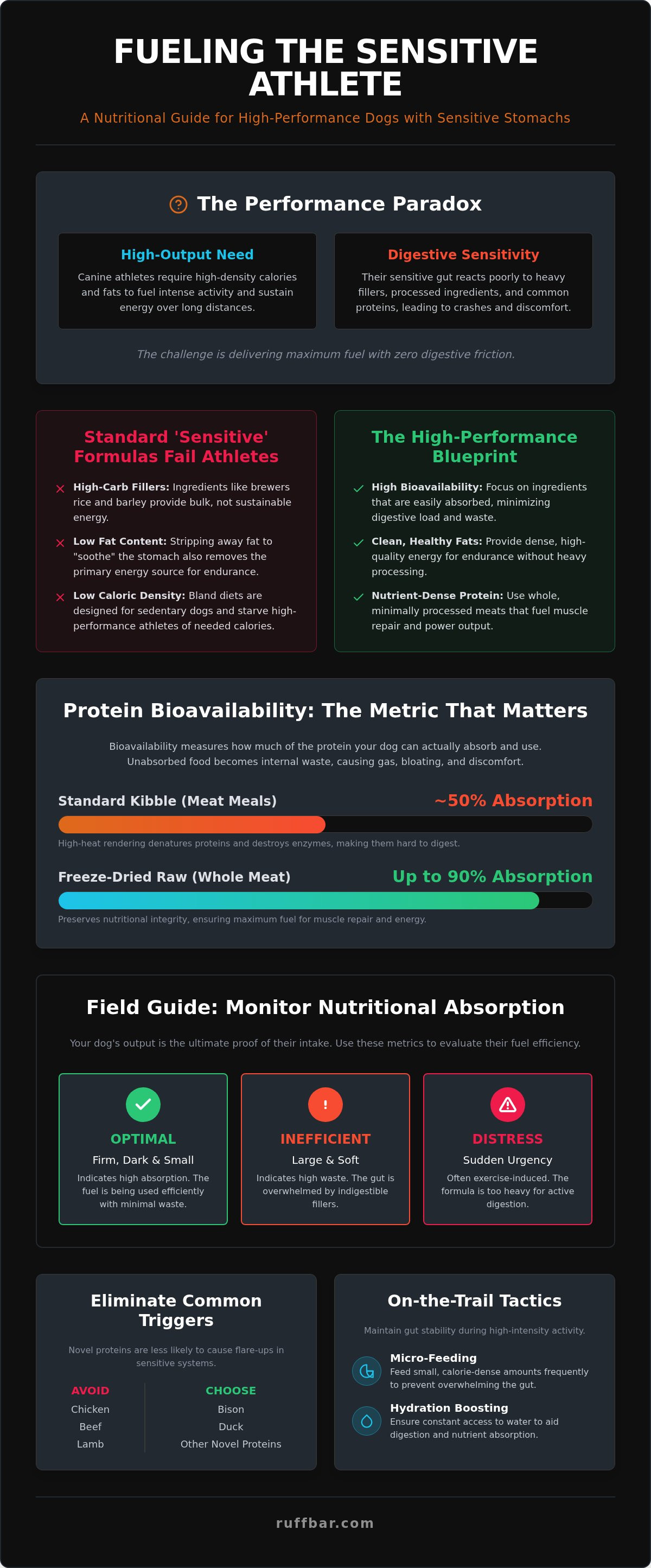
Field awareness is your best tool. You must differentiate between a chronic food intolerance and an acute trail-side illness caused by drinking from a stagnant puddle. Monitoring stool quality is the most effective way to measure nutritional absorption. Use these metrics to evaluate your current strategy:
- Firm, dark, and small: High absorption. The fuel is being used efficiently.
- Large and soft: High waste. The digestive tract is overwhelmed by fillers.
- Sudden urgency: Exercise-induced distress. The formula is too heavy for active digestion.
If your partner loses weight despite high intake, or if their energy craters after the first hour, your fueling strategy is failing. The best food for active dogs with sensitive stomachs isn't just about avoiding diarrhea; it's about powering the next mile. Pivot when the data shows a lack of efficiency. Your dog's output is the ultimate proof of their intake.
The Nutritional Blueprint: What Active Dogs Actually Need
High-intensity performance requires high-octane fuel. Most commercial "sensitive" diets are formulated for sedentary pets, not canine athletes. They slash protein and fat to avoid irritation, but this leaves the working dog in a caloric deficit. You can't power a mountain ascent on fillers and fiber alone. The best food for active dogs with sensitive stomachs must balance high-density energy with extreme digestibility. It's about moving away from "safe" and toward "functional."
Bioavailability is the metric that matters. Every gram of food that isn't absorbed is simply weight your dog carries internally until it's expelled. In a sensitive system, unabsorbed nutrients ferment in the gut, leading to gas, bloating, and trail-side urgency. By focusing on clean, limited-ingredient profiles, you eliminate the mystery triggers that ground your partner. You need a blueprint built for the rigors of the field.
Protein Bioavailability: Quality Over Quantity
Clean fuel starts with whole meat. Compare USDA-graded meats to the "meat meals" found in standard kibble. Meat meals are rendered at high temperatures, a process that denatures amino acids and destroys natural enzymes. Raw freeze-dried proteins preserve this nutritional integrity. They offer up to 90% absorption, while standard kibble often hovers around 50%. This "Clean Fuel" concept ensures that the majority of the meal goes toward muscle repair and energy rather than digestive load. When you feed higher quality, you can feed less volume, which is easier on a reactive gut.
The Grain-Free Advantage for Working Guts
Grains are often the primary source of inflammation and gas during high-intensity work. Complex carbohydrates require significant metabolic effort to break down. When your dog is under physical or environmental stress, their digestive efficiency drops. Fillers like corn, wheat, or soy can sit in the gut and trigger a flare-up. Replacing these with organic, whole-food energy sources provides a steady stream of glucose without the inflammatory spike. For a deeper look at the mechanics of endurance, read The Science of High-Protein Dog Energy Bars.
Fat is the engine of the canine athlete, but quality is paramount. Rancid or low-grade fats are common triggers for GI distress. Pure, animal-based fats provide sustained propulsion and help regulate GI transit time during heavy movement. If you're ready to stop compromising on your dog's potential, explore uncompromising nutrition designed for the rugged specialist. Focus on the blueprint, and the performance will follow.
Novel Proteins: Beyond the Common Triggers
Stop guessing at the bowl. Most "sensitive stomach" guides push chicken and rice, yet chicken remains a top three allergen for dogs, affecting roughly 15% of those with food sensitivities. For a canine athlete, an allergic reaction isn't just an itch. It's a performance killer. It leads to systemic inflammation, gas, and energy-draining diarrhea. Novel proteins provide the best food for active dogs with sensitive stomachs by introducing amino acid profiles the immune system doesn't recognize as threats. This is clean fuel for the rugged specialist.
Sourcing is the foundation of integrity. USDA-graded, grass-fed meats offer a superior nutritional profile compared to grain-finished alternatives. Grass-fed proteins contain higher levels of anti-inflammatory Omega-3 fatty acids. They provide a purer energy source that doesn't carry the chemical residue of industrial feedlots. When you eliminate the common triggers, you eliminate the friction in your dog's digestive tract.
Bison and Pork: The Rugged Energy Profile
Bison is the gold standard for lean, explosive power. It offers a dense lean-to-fat ratio that fuels muscle repair without overloading the digestive system. Bison is also naturally high in iron and B12, supporting blood oxygenation during steep climbs. Pork is an underutilized powerhouse. It's one of the most highly digestible proteins available, making it ideal for dogs that "bonk" on heavier red meats.
The combination of these two proteins creates a stable, high-output energy source. Ruff Stix® Bison Pork is a field-tested option designed for this exact purpose. It provides the caloric density of a meal in a portable format that won't trigger a flare-up. By switching to these rugged proteins, you provide the best food for active dogs with sensitive stomachs while maintaining the intensity your lifestyle demands.
Duck: The High-Fat, High-Digestibility Powerhouse
Duck is a "cooling" protein. In traditional nutritional theory, it helps manage internal heat during sustained exertion. It serves as a premier hypoallergenic alternative for dogs with severe sensitivities to beef or poultry. While duck is rich, its fat is uniquely digestible. This fat provides the dense caloric payload required for multi-day backcountry missions where energy expenditure is at its peak.
Managing this rich content is key to gut stability. For high-mileage days, Ruff Food Freeze Dried Raw Duck provides the ultimate caloric return. The freeze-drying process maintains the raw enzymes that assist in breakdown, ensuring the fat is converted to propulsion rather than waste. It keeps the gut calm while the engine runs hot. Don't settle for generic fillers. Choose the protein that matches the terrain.
Field Tactics: Feeding for Gut Stability on the Trail
Tactical feeding is just as critical as your footwear or your navigation. Even the best food for active dogs with sensitive stomachs can fail if the delivery is sloppy. Success starts with a 24-hour gut-priming window. Feed small, nutrient-dense portions the day before a major push. This ensures the digestive tract is settled and loaded with glycogen without being weighed down by active fermentation. In the field, your goal is steady propulsion, not heavy processing.
Preventing Exercise-Induced GI Upset
Feeding a large meal immediately before high-intensity movement is a recipe for disaster. It increases the risk of gastric torsion and triggers the urgency that ruins a hunt. Instead, adopt a micro-feeding strategy. Deliver small caloric hits every two to three hours during activity. This keeps blood sugar stable and avoids the "bonk" without overwhelming the gut. Portable energy bars provide the dense nutrition needed for these mid-trail spikes. For a deeper dive into optimizing your dog's output, check out Performance Dog Food Supplements. This approach turns feeding into a series of quick, efficient refuels rather than a heavy metabolic event.
The Role of Rehydration in Digestion
Dry kibble is a moisture sponge. When a dog is working hard, dry food can sap essential hydration from the gut to facilitate digestion. This leads to slow transit times and irritation. Rehydrating your meals is a non-negotiable tactic for trail stability. Freeze-dried raw meals are designed for this. They absorb water instantly, delivering hydration and nutrition in a single, bioavailable package. Enhance this process by using Ruff Bar Functional Nutrition Toppers. These toppers encourage water intake and provide the electrolyte balance required for sustained endurance. A hydrated gut is a resilient gut.
Don't ignore the recovery window. The 30 minutes following a hard effort are critical for muscle repair and inflammation control. Deliver a high-protein snack during this time to jumpstart the healing process. When you treat feeding as a tactical operation, you eliminate the variables that cause distress. Ready to optimize your partner's performance? Upgrade your field nutrition today and leave the digestive drama behind.
Ruff Bar: Uncompromising Nutrition for the Sensitive Specialist
Nutrition is equipment. For the high-performance canine, the bowl is just as vital as the harness. Ruff Bar operates on a "no-compromise" philosophy: gear for the gut, fuel for the soul. We reject the fillers, the industrial "meat meals," and the high-heat processing that destroys biological vitality. By using USDA-graded, grass-fed meats and whole organic ingredients, we deliver the best food for active dogs with sensitive stomachs. This is fuel built for the rigors of the ridge. It respects the biological demands of the hunter, the hiker, and the athlete.
Purity is our standard. Every ingredient serves a purpose. Every protein is chosen for its ability to propel the animal forward. We don't hide behind complex labels or generic additives. We provide the transparency you need to trust your partner's engine. When the stakes are high, the fuel must be clean. It must be bioavailable. It must be uncompromising.
Ruff Stix®: High-Value, Low-Irritation Performance
Elimination diets require surgical precision. Ruff Stix® focus on single-source proteins to ensure success where generic treats fail. Whether you choose Bison, Beef, or Pork, you are delivering pure, high-density energy without the systemic irritation of multi-protein blends. These bars are designed for the pocket. They are built for the trail. They offer portability without sacrificing nutritional purity. For handlers seeking the ultimate reward for a job well done, explore Premium Freeze Dried Treats for Dogs. It is performance fuel that fits in your pack and settles in their gut.
Freeze-Dried Meals: The Backcountry Gold Standard
Weight kills on the long haul. Every ounce in your backpack must justify its existence. Our Freeze-Dried Raw Backpacking Meals offer a superior weight-to-calorie ratio for the serious traveler. By removing moisture through freeze-drying, we maintain the raw enzymes and nutritional integrity of the meat. You get the benefits of raw-grade ingredients without the logistical nightmare of frozen storage. This is the best food for active dogs with sensitive stomachs in demanding environments. It delivers digestive ease, rapid rehydration, and sustained propulsion. Stop settling for subpar fuel that grounds your partner. Choose nutrition that matches your ambition.
Fuel the Pursuit: Peak Performance Without Digestive Compromise
Peak performance is a choice. You've identified the triggers. You've mapped the blueprint for clean, bioavailable energy. Now, it's time to execute. Finding the best food for active dogs with sensitive stomachs means prioritizing high-integrity proteins like bison and duck while mastering tactical field feeding. We don't believe in "safe" fillers. We believe in fuel that powers the next ridge and sustains the long haul.
Ruff Bar provides nutrition that acts as essential equipment. Our formulas utilize USDA-graded grass-fed meats with zero grains, fillers, or mystery ingredients. Every bar and meal is field-tested by professional K9 handlers who demand reliability in high-stakes environments. You don't compromise on your gear; don't compromise on your partner's engine. When the gut is stable, the energy is limitless. It's time to leave the trail-side distress behind and focus on the miles ahead.
Upgrade your dog's performance fuel at Ruff Bar. The trail is waiting. Your partner is ready. Let's move.
Frequently Asked Questions
Can high-protein food cause diarrhea in active dogs?
High protein content itself isn't the primary cause of diarrhea, but the quality and digestibility of that protein matter. Low-grade meat meals or proteins denatured by high-heat processing can overwhelm the gut. When you use bioavailable, whole-meat sources, the body absorbs the nutrients instead of expelling them as waste. Diarrhea often results from unabsorbed fillers or poor-quality proteins fermenting in the digestive tract during heavy exertion.
What is the best novel protein for a dog with a sensitive stomach?
Bison and Duck are the premier choices for dogs with high metabolic demands and reactive guts. These proteins provide the best food for active dogs with sensitive stomachs because they offer unique amino acid profiles that the immune system doesn't typically recognize as threats. Bison provides lean, explosive power, while Duck offers a cooling effect and high-digestibility fats that fuel sustained endurance without triggering the inflammation common with chicken.
How do I transition my active dog to a new performance food?
Use a slow, 10-day incremental transition to allow the gut microbiome to adapt without a performance crash. Start with 25% of the new high-density fuel mixed with 75% of the old diet for the first three days. Gradually shift the ratio every few days until the transition is complete. This method prevents the bonk and ensures that the sensitive athlete maintains energy levels while their digestive enzymes recalibrate to the new nutrient profile.
Is grain-free food better for dogs with digestive issues?
Grain-free formulas are often superior for active dogs because they eliminate common inflammatory triggers like corn, wheat, and soy. These complex carbohydrates require significant energy to break down, which can lead to gas and bloating during high-intensity work. By replacing grains with whole-food energy sources, you reduce the metabolic load on the digestive system. This allows the dog to focus energy on propulsion and recovery rather than struggling with heavy, fibrous fillers.
Should I feed my dog during a long hike if they have a sensitive stomach?
Yes, but you must use a micro-feeding strategy to maintain blood sugar without causing bloat. Delivering small, calorie-dense hits every few hours is safer than one large mid-day meal. This approach prevents the energy depletion associated with long miles while keeping the stomach from becoming too heavy during vertical climbs. Portable energy bars or small portions of rehydrated freeze-dried meals are the most efficient tools for on-trail fueling without distress.
What are the signs of food intolerance vs. food allergy in active breeds?
Food intolerance is a digestive failure, while an allergy is an immune system response. Intolerance typically manifests as immediate GI distress, such as trail-side diarrhea, gas, or vomiting shortly after eating. Allergies often present as chronic issues, including itchy skin, ear infections, or persistent paw licking. For the canine athlete, both issues ground performance, but identifying the difference helps you decide between a novel protein or a cleaner, limited-ingredient processing method.
Can I use freeze-dried raw as a meal topper for sensitive dogs?
Absolutely, and it is one of the most effective ways to boost nutrient density without adding bulk. Using freeze-dried raw as a topper introduces live enzymes and high-quality proteins to a standard diet, aiding overall digestion. This is especially useful for the best food for active dogs with sensitive stomachs because it encourages hydration when rehydrated. It provides a concentrated energy spike that supports muscle repair and sustained focus during demanding missions.
Why does my dog get an upset stomach only during hunting or agility training?
Exercise-induced GI distress is often caused by blood shunting away from the digestive tract to the muscles during peak exertion. When this happens, any food sitting in the stomach becomes a burden, leading to cramping or urgency. High-stress environments like competition also increase cortisol, which impacts gut permeability. Using a micro-feeding strategy with highly bioavailable fuel reduces the workload on the gut, allowing for high-output performance without the mid-event breakdown.