
Best Dog Treats for Hiking: Performance Fuel (2026)
Your dog isn't a couch companion; they are a high-performance athlete. On a steep ascent, the wrong snack is dead weight. Finding the best dog treats for hiking means choosing fuel that powers every mile. You need nutrition that drives propulsion, sustains stamina, and fits in a side pocket. Most owners settle for grocery store scraps. You demand more. You demand gear that works as hard as your dog does. High-altitude environments require high-standard preparation.
It's frustrating when your partner runs out of steam mid-trail. You want to go further, but bulky bags and low-quality fillers cause digestive upset and fatigue. You deserve a pack that stays light and a dog that stays fast. This guide shows you how to fuel canine endurance with high-performance trail treats built for the rugged outdoors. We'll explore lightweight pack solutions, rapid recovery strategies, and the science of sustained energy. Prepare for your next expedition with nutrition that turns every trail into a victory. It's time to stop packing snacks and start packing performance.
Key Takeaways
- Prioritize fats for sustained endurance and high-quality protein for muscle repair to keep your canine partner agile on technical terrain.
- Identify the best dog treats for hiking by selecting calorie-dense energy bars for meal replacement and meat stix for high-value rewards.
- Maintain steady blood glucose and prevent mid-trail fatigue by implementing a tactical fueling schedule with 60-minute intervals.
- Eliminate energy crashes by replacing flour-based fillers with shelf-stable, USDA-graded grass-fed meats that provide pure metabolic fuel.
- Maximize pack efficiency with lightweight, nutrient-dense nutrition designed specifically for the rigors of high-intensity outdoor adventure.
Why Standard Dog Treats Fail on the Trail
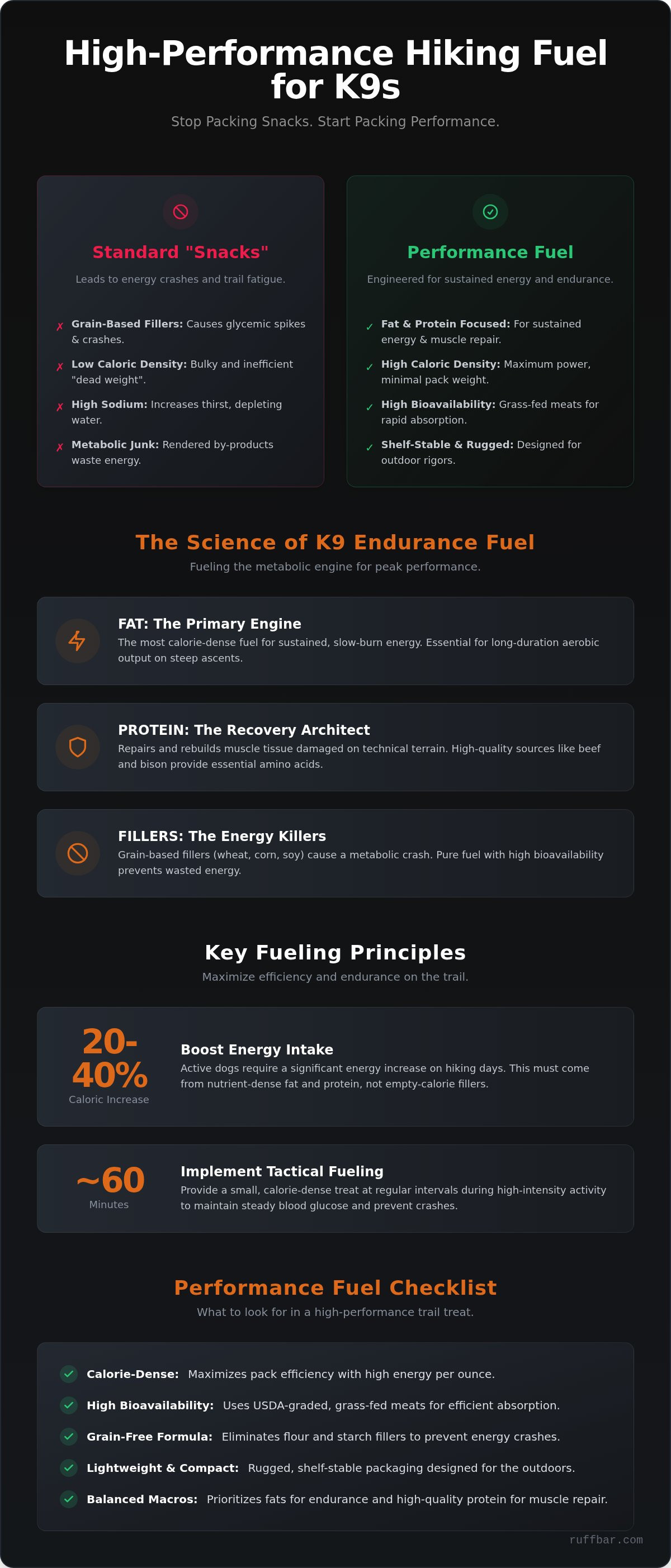
Standard dog treats are designed for the living room. They are rewards for sitting or staying in a controlled environment. The trail is different. It is a high-burn, high-stakes environment where every movement costs energy. When you pack low-quality biscuits, you aren't providing fuel. You are carrying dead weight. Most commercial treats rely on flour and starch. These ingredients lead to energy crashes. Your dog starts strong but runs out of steam mid-hike. This is a failure of preparation.
The transition from a "snack" mindset to a "fuel" mindset is critical for K9 handlers. You wouldn't fuel a marathon with crackers; don't expect your dog to climb 2,000 feet on wheat-based crumbs. The best dog treats for hiking must provide sustained propulsion. They should be viewed as tactical equipment, not just a way to say "good boy." If it doesn't contribute to endurance or recovery, it doesn't belong in your pack. Purity matters. Strength matters. Natural origin matters.
The Problem with Grain-Based Fillers
Grain-based fillers like wheat, corn, and soy are the primary culprits behind trail fatigue. These ingredients cause glycemic spikes. Your dog gets a temporary rush followed by a deep metabolic valley. This lethargy is often mistaken for simple tiredness. In reality, it is a nutritional deficit. While canine nutrition basics show that dogs can process some carbohydrates, high-output days demand protein and fat. Fillers also often contain high sodium levels. This increases thirst, forcing your dog to deplete your water supply faster than planned. Grain-free nutrition is non-negotiable for serious expeditions.
Pack Efficiency and Caloric Density
Space is a premium on the ridge. Low-density snacks are a logistical nightmare. They are bulky, fragile, and offer poor caloric returns per ounce. When evaluating the best dog treats for hiking, look at the energy density. You need high-calorie, compact solutions that fit into side pockets or hip belts. Bulky packaging is a liability. It tears easily and creates unnecessary waste. Choose treats with rugged, shelf-stable packaging designed for the outdoors. Every gram you carry should serve a purpose. If a treat is 50% air and 50% filler, it is a weight penalty you can't afford. Performance requires efficiency. Efficiency requires density.
The Science of High-Performance Trail Nutrition
High-altitude movement demands high-stakes biology. You aren't just feeding a pet; you are fueling a canine athlete. The best dog treats for hiking leverage specific biological pathways to ensure your partner doesn't hit the wall. It starts with the right macro profile. Nutrition is the difference between a dog that leads the pack and one that lags behind. Every gram of food must contribute to propulsion or recovery. There is no room for metabolic noise.
Protein vs. Fat: Finding the Balance
Protein is the architect of recovery. It repairs muscle tissue damaged by rocky scrambles and steep descents. Bison and beef provide the dense amino acid profiles necessary for this rebuild. However, protein isn't the primary engine for the hike itself. That role belongs to fat. Fat is the most calorie-dense fuel available. It provides sustained, slow-burn energy that keeps a dog moving for hours. During high-incline ascent, a dog's metabolic engine shifts toward fat oxidation to sustain long-duration aerobic output without depleting glycogen stores. This metabolic flexibility allows dogs to outlast humans on the trail.
According to the ASPCA, nutrition for active dogs requires a significant caloric increase, often 20% to 40% above baseline. This isn't an excuse for more fillers. It is a requirement for more density. You need more power in a smaller package.
The Bioavailability Factor
When selecting the best dog treats for hiking, sourcing dictates performance. Rendered meat meals and animal by-products are metabolic junk. They require more energy to process than they provide. USDA-graded, grass-fed meats offer superior bioavailability. This means the nutrients are absorbed quickly and utilized efficiently. Clean ingredients reduce the metabolic load on the liver. When the liver isn't fighting toxins or low-grade fillers, the dog stays focused. They stay sharp. They stay driven. High-quality sourcing keeps the mind as active as the body.
Micronutrients play a supporting role in preventing trail fatigue. Zinc, iron, and B-vitamins facilitate oxygen transport and energy metabolism. Without them, even the best protein fails. These elements act as the spark plugs for the metabolic engine. They ensure that every calorie is converted into movement. If you want to see the difference that high-standard sourcing makes, explore the performance-driven nutrition built for the rugged outdoors. Pure fuel creates pure endurance. No shortcuts. No compromises. Just results.
Evaluating the Best Dog Treats for Hiking
The best dog treats for hiking aren't just food. They're tactical gear. When you're miles from the trailhead, your dog's focus depends on the quality of their fuel. You need options that provide high-value rewards without compromising nutritional integrity. Not every format works for every trail. You must match the treat to the mission. Whether it's a technical scramble or a multi-day thru-hike, your selection dictates your dog's output. Pack for performance, not just for habit.
Treat Formats and Trail Utility
Format dictates function. Energy bars, like Ruff Food Bars, are the gold standard for mid-day meal replacement. They provide the dense fat and protein needed for sustained propulsion. They don't just stop hunger; they drive movement. For technical maneuvers or difficult ascents, use high-value rewards like Ruff Stix® Bison Pork or Ruff Stix® Beef. These chewable stix provide immediate motivation when focus is critical. They are easy to handle and quick to consume. Avoid hardshell biscuits and generic soft chews. Biscuits are a liability. They lack caloric density and turn into useless dust at the bottom of your bag. Soft treats often crumble under the pressure of a moving backpack. You need nutrition that stays intact until it's needed.
For multi-day expeditions, weight is your primary enemy. Ruff Food Freeze Dried Raw Backpacking Meals in Beef or Duck offer the ultimate lightweight solution. They provide the benefits of raw nutrition with none of the water weight. They are shelf-stable, rugged, and designed for high-intensity adventure. Every ounce in your pack must justify its existence. If a treat doesn't offer a high caloric return per gram, leave it at home.
Ingredient Transparency Checklist
Purity is non-negotiable. Many commercial treats hide sugars and artificial preservatives behind vague labeling. These additives cause energy crashes and digestive distress. Stick to single-source proteins. This is essential for dogs with sensitive stomachs. It ensures that the metabolic load remains low. While FDA pet food regulations provide a baseline for safety, they don't guarantee performance. You must be the final judge of quality. Look for USDA-graded meats. Avoid synthetic enhancers. Natural origin is the only way to ensure long-term vitality. Clean ingredients mean a clean trail. No shortcuts. No fillers. Just pure propulsion for the modern K9 athlete.
Tactical Fueling: How and When to Treat on the Trail
Fueling is a discipline. Random snacking leads to metabolic instability. You need a schedule that mirrors the intensity of the terrain. Precision prevents failure. Finding the best dog treats for hiking is only half the battle; you must deploy them strategically to maintain propulsion. A tactical fueling plan ensures your partner stays sharp, driven, and resilient from the first mile to the last descent.
Managing Energy Intervals
Small, frequent doses are superior to one large trail meal. Large meals divert blood flow from the muscles to the stomach for digestion. This causes lethargy. Feed small amounts every 60 minutes to maintain steady blood glucose. This interval prevents the "bonking" effect where a dog suddenly loses all stamina. Use high-value rewards like Ruff Stix® to maintain focus in wildlife-heavy areas or during technical scrambles. Watch for signs of depletion. Glazed eyes, a dropped tail, or lagging behind are clear indicators that your dog's metabolic engine is running dry. They need immediate caloric density to recover their pace.
The Recovery Phase
The work doesn't end at the trailhead. The 30-minute window immediately following a hike is the anabolic window. This is the critical time for muscle synthesis. Your dog needs protein-rich snacks to kickstart the repair of tissue damaged during the climb. Recovery is the foundation for tomorrow's performance. If you're on a multi-day expedition, this phase dictates whether your dog has the power to tackle day two.
Hydration synergy is the final piece of the recovery puzzle. Intense exercise depletes electrolytes and fluids. You can encourage water intake by using bone broth for dogs as a hydration topper. It replaces lost minerals and makes plain water more enticing for a tired animal. For overnight needs, provide a high-density meal using Ruff Food Freeze Dried Raw Backpacking Meals. This ensures the body has the raw materials required for deep tissue repair while they sleep. A well-fueled dog is a ready dog. Don't leave their recovery to chance.
Equip your dog with tactical trail fuel today.
Ruff Bar: Uncompromising Nutrition for Modern K9 Athletes
Performance isn't an accident. It's the result of disciplined preparation and superior fuel. Ruff Bar exists for handlers who refuse to settle for grocery store fillers. We build nutrition for the rugged outdoors. Our philosophy is simple: no fillers, no shortcuts, just pure performance. We use USDA-graded grass-fed meats because your dog's endurance depends on the quality of their protein. This is the standard for the best dog treats for hiking. It's equipment for the trail, designed to survive the pack and drive the dog.
Ruff Food Bars are the ultimate mid-hike engine. These high-protein bars provide the caloric density required for steep ascents and long-duration movement. They're shelf-stable, compact, and nutrient-dense. While others carry bulky bags of empty calories, you carry focused energy. It's the difference between a dog that finishes strong and one that struggles. Every bar is a commitment to your partner's vitality. No metabolic noise. Just propulsion.
The Ruff Stix® Advantage
Technical terrain requires high-stakes motivation. Ruff Stix® provide the clean protein needed for sustained working power during difficult maneuvers. Unlike soft chews that turn to dust, these stix are built for durability. They handle the pressure of a moving backpack without crumbling. Ruff Stix® Bison Pork stands as the ultimate performance fuel for high-output days. It offers a rich amino acid profile that supports muscle tissue under stress. It's fast, efficient, and uncompromising. Your dog stays sharp. They stay driven. They stay focused on the ridge ahead.
Fueling Your Next Expedition
A successful expedition requires more than just high-performance fuel; tactical preparation extends to your dog's safety gear. To ensure your partner is equipped with durable identification and a secure harness that withstands the rigors of the trail, learn more about Pet ID Tags Australia.
Every athlete has a preference. We offer Beef, Pork, and Bison to match your dog’s palate and metabolic needs. Building a comprehensive trail kit means more than just snacks. It requires a tiered approach to nutrition. Integrate performance dog food supplements to ensure every biological gap is filled during multi-day trips. This ensures that the best dog treats for hiking are supported by a foundation of total wellness.
Our direct-to-consumer model ensures freshness is guaranteed for every adventure. You get pure ingredients delivered straight to your door, ready for the backpack. The equipment you choose dictates the outcome of the expedition. Don't just hike. Propel. Endure. Recover. The trail is waiting, and your dog is ready to lead. Equip them with the fuel they deserve.
Fuel the Mission Ahead
The ridge doesn't care about intentions. It only respects preparation. You've learned that standard snacks fail when the incline increases. True performance requires a shift in mindset. You must treat nutrition as tactical equipment rather than a domestic reward. By prioritizing caloric density and biological efficiency, you ensure your partner never hits the metabolic wall. The best dog treats for hiking provide the sustained propulsion needed for high-altitude success.
Integrity is the foundation of every expedition. You need ingredients that work as hard as your dog does. Our formulas rely on USDA-graded grass-fed meats and remain entirely grain-free and filler-free. These products are built by and for backcountry adventurers who demand excellence in every vertical mile. Don't let low-quality fillers dictate your dog's endurance. Pack for the summit. Prepare for the recovery. Own the trail together. Your dog isn't just a companion; they're an athlete. Give them the fuel that matches their drive.
Fuel your next adventure with Ruff Bar Performance Nutrition. The mountain is calling. Your dog is ready to answer.
Frequently Asked Questions
How many treats should I give my dog per mile while hiking?
Feed small portions every 60 minutes rather than counting by the mile. Terrain intensity dictates demand. High-incline scrambles require more frequent fueling than flat trails. Use the 60-minute interval to maintain steady blood glucose. This prevents energy crashes. Adjust based on your dog's size and exertion level. Precision prevents failure. A tactical approach ensures your dog stays sharp and driven throughout the entire expedition.
Can my dog eat human energy bars or trail mix?
No. Human energy bars often contain toxic ingredients like xylitol, chocolate, or raisins. Even "clean" human bars have excessive sugar and salt for a canine metabolism. Trail mix often includes macadamia nuts or raisins which are lethal. Stick to dedicated performance fuel. Choose products designed specifically for canine biological demands. Safety is non-negotiable on the trail. Your dog's health depends on species-appropriate nutrition.
What is the best protein source for a high-intensity hike?
Bison and beef are the superior protein sources for high-intensity movement. These red meats provide dense amino acid profiles and high iron content for oxygen transport. When looking for the best dog treats for hiking, prioritize USDA-graded, grass-fed sources. These offer the highest bioavailability. They ensure rapid muscle tissue repair without adding metabolic noise to the liver. Pure fuel creates pure endurance. No shortcuts. No compromises.
How do I prevent my dog from getting an upset stomach on the trail?
Avoid treats with grain-based fillers, artificial preservatives, and hidden sugars. These are the primary causes of digestive distress. Stick to single-source proteins and whole organic ingredients. Introduce new treats at home before the expedition. Clean nutrition reduces the risk of trail-ruining stomach upset. High-quality sourcing ensures your dog stays focused on the ascent, not their digestion. Reliability is the result of high-standard preparation.
Are high-protein treats safe for all dog breeds during exercise?
Yes. High-protein, grain-free treats are safe and essential for active dogs across all breeds. Working dogs and K9 athletes require these building blocks for muscle synthesis during high-output days. However, always monitor individual tolerance. Ensure your dog has constant access to fresh water to support protein metabolism. Performance nutrition should scale with the intensity of the activity. Consult your vet for dogs with pre-existing kidney issues.
How should I store dog treats on a multi-day backpacking trip?
Use airtight, rugged packaging to maintain freshness and prevent scent leaks. Shelf-stable options like Ruff Stix® or freeze-dried meals are designed for multi-day expeditions. Keep them in a cool, dry section of your pack. Avoid soft chews that crumble under pressure. Durable packaging protects your investment from moisture and trail debris. Efficiency in storage equals efficiency on the ridge. Pack for the mission.
What is the difference between a training treat and a hiking fuel bar?
Training treats are low-calorie rewards for repetitive behaviors. Hiking fuel bars, like Ruff Food Bars, are calorie-dense meal replacements. They provide the fat and protein necessary for sustained propulsion. A fuel bar is tactical equipment; a training treat is a social reward. One drives the engine while the other marks a moment. Choose the best dog treats for hiking based on caloric return per gram. Focus on energy density.
Should I feed my dog a full meal or just treats during a long hike?
Avoid feeding a single large meal mid-hike. Digestion diverts blood flow away from active muscles, causing lethargy. Use a combination of frequent fuel bars and high-value rewards to maintain stamina. Save the full meal for the recovery phase at the end of the day. This allows for deep tissue repair during rest. Strategic timing ensures peak performance throughout the trek. A well-fueled dog is a ready dog.