
Benefits of Grass-Fed Beef for Dogs and Whether It’s Worth the Extra Cost
The pricier beef isn’t automatically the better fuel. The benefits of grass-fed beef for dogs can make the upgrade worthwhile if its nutrition and sourcing match your priorities: it typically offers more omega-3s and may contain more CLA and antioxidant nutrients than conventional beef. Grass-fed beef also costs more, so the value comes down to what those differences mean for your dog’s overall diet.
It makes sense to expect a premium ingredient to make a meaningful difference. But the label alone doesn’t tell the whole story. A balanced diet matters more than any single cut of beef, and nutritional differences are only one part of the comparison.
This guide explains the potential nutrient differences, what grass-fed means for how cattle are raised, and what to weigh when deciding whether the extra cost is worthwhile. You’ll get a practical way to compare options without assuming every dog needs grass-fed beef.
Key Takeaways
- Compare fatty-acid profiles, not just the grass-fed label, to understand what may differ nutritionally.
- Look at cattle-raising practices alongside the ingredient list, including the animal’s feed and use of antibiotics or hormones.
- Choose less-processed beef with your dog’s full diet in mind; one ingredient alone doesn’t make a meal balanced.
- Weigh potential nutrient differences against the added cost and your dog’s needs before deciding whether the upgrade is worthwhile.
1. Omega-3 fatty acids and dog health
Grass-fed beef typically contains more omega-3 fatty acids than grain-fed beef. That difference is one potential benefit of grass-fed beef for dogs. Omega-3s are associated with supporting skin, coat, joints, and heart function. For an active dog, those systems support movement and everyday vitality, but beef is only one part of the overall diet.
Fatty acids and vitamins are distinct nutrients. Omega-3s are fats, while vitamins perform separate roles in a dog’s body. Beef also provides protein, which supports muscle maintenance, growth, tissue repair, and immune function. The practical takeaway: don’t treat a higher omega-3 level as a substitute for adequate protein, vitamins, or other nutrients. A balanced diet needs protein, fat, fiber, vitamins, and minerals.
The ratio of omega-3 to omega-6 fatty acids matters, too. Grass-fed beef is described as having a more favorable ratio than grain-fed meat. Omega-3s support heart health, help reduce inflammation, and promote cognitive function in dogs. These are supportive roles, not a reason to view one ingredient as treatment for a health condition. Consider the beef’s fatty-acid profile alongside the rest of the food, including other fat sources that contribute omega-6s.
When comparing beef options, check whether the cattle were grass-fed and grass-finished, then consider the product’s full nutritional profile. Grass-fed, grass-finished beef is described as having a more beneficial fatty-acid profile than beef from grain-raised cattle. But fatty-acid content alone doesn’t show whether a meal is complete. Consider protein, fat, fiber, vitamins, and minerals, and how the beef fits your dog’s usual food and activity level.
2. Antibiotics, hormones, and cattle feed
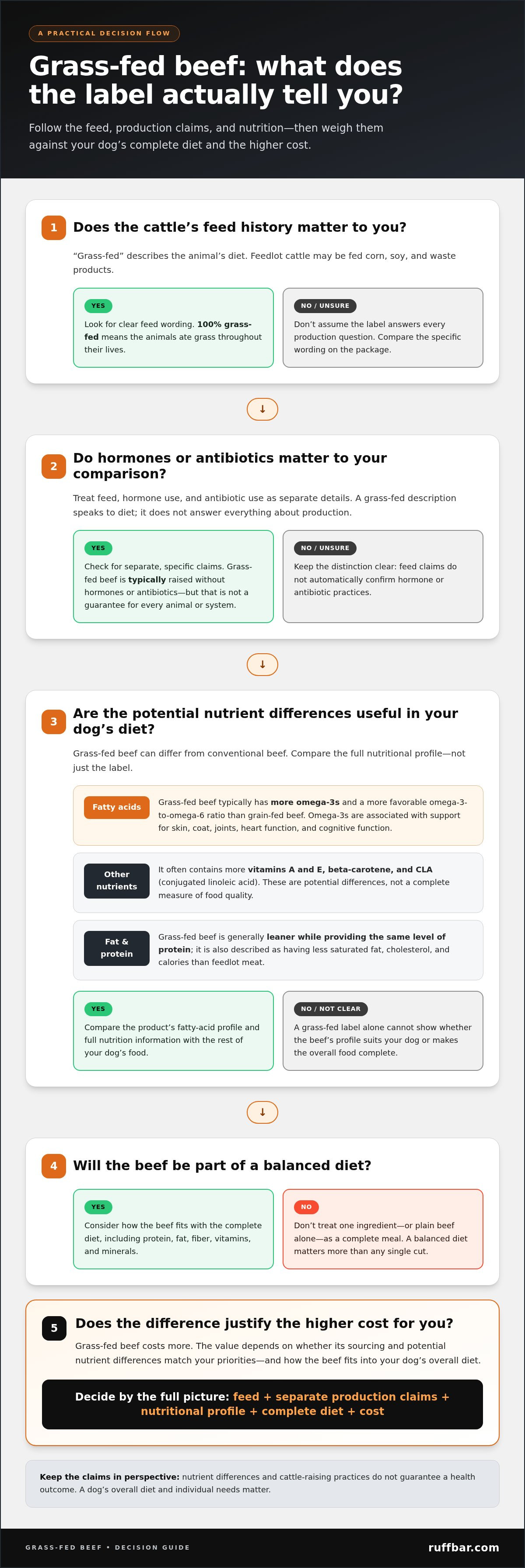
Grass-fed beef is typically raised without hormones or antibiotics. That may matter if you prioritize cattle-raising practices, but “typically” isn’t a guarantee about every animal or production system. Treat feed, hormone use, and antibiotic use as separate details. A grass-fed description speaks to diet; it doesn’t answer every question about production.
Feed is a central distinction. Cattle raised in feedlots may be fed corn, soy, and waste products. Grass-fed cattle eat grass, and 100% grass-fed means the animals ate grass throughout their lives. That wording describes the animal’s feed history. It does not mean the beef is automatically a complete dog food, or that its protein and fat profile suits every dog.
For a practical comparison, read the package in this order: identify the stated cattle diet, look for separate claims about hormones or antibiotics, then consider the beef as part of your dog’s overall food. Don’t treat “grass-fed” as shorthand for every production standard. A label, for example, may describe feed without explaining hormone use. Keeping these questions distinct makes it easier to compare products and prioritize the practices that matter to you.
Farming details describe how the animal was raised, not a guaranteed health outcome for your dog. Feed choices alone don’t show how a specific food will affect your dog’s immune system, muscle condition, or energy. Those outcomes also depend on the complete diet, portion size, activity, and individual needs. Compare the beef with your dog’s usual food rather than judging it by one label claim.
Grass-fed beef may appeal to owners seeking a specific cattle diet and production that typically avoids added hormones or antibiotics. Conventional feedlot cattle may receive corn, soy, or waste products. Make comparisons using clear, specific package wording rather than assumptions about every farm or animal.
3. Choosing less-processed beef
Less-processed beef can still be just one part of a balanced diet. A dog’s diet should include a range of nutrients, so beef alone should not be treated as a complete diet. Plain beef alone doesn’t provide that balance. Before serving it as a meal, consider how it fits with your dog’s regular food, body size, and activity.
As a broad guideline, an adult dog that isn’t too active can eat 1/4 to 1/3 of a pound of beef per day for every 20 pounds of body weight. This is a general amount, not a complete feeding plan. Adjust portions with the dog’s size and activity in mind, and monitor whether the overall diet supplies enough calories.
Raw beef carries food-safety risks, including bacterial contamination that can harm people. Freezing or freeze-drying raw meat doesn’t make it safe, so neither process removes the risk. Parasites are another concern with uncooked animal foods. Careful handling matters, but it doesn’t make raw beef risk-free.
For raw beef, serving guidance favors raw or slightly thawed meat rather than fully frozen beef, and advises against cooking it. That advice doesn’t remove the risks of raw meat. Wash hands, bowls, and utensils thoroughly after contact, and don’t leave raw-meat residue on feeding surfaces or equipment.
Ground beef also needs variety if used in a raw diet. The suggested approach is to complement it with organ meats, bones, and raw vegetables rather than relying on ground beef alone. These additions don’t automatically make a meal balanced; the full combination still needs to meet your dog’s nutritional needs. When choosing a less-processed option, consider the ingredients, preparation, portion size, and food safety together.
4. Potential nutrient differences in grass-fed beef
Grass-fed beef can differ nutritionally from conventional beef, beyond its fatty-acid profile. It often contains more vitamins A and E, beta-carotene, and conjugated linoleic acid, or CLA. These are potential differences, not a complete measure of food quality. The animal’s diet and the beef’s fat content shape what nutrients it provides.
Grass-fed beef is generally leaner than grain-fed beef while providing the same level of protein. It is also described as having less saturated fat, cholesterol, and calories than feedlot meat. These traits may matter when comparing cuts, but they don’t establish that one protein source suits every dog. Compare the full diet, not just one ingredient.
Does grass-fed beef have more omega-3 fatty acids than grain-fed beef? Typically, yes. It also tends to have a more favorable omega-3-to-omega-6 ratio, though the overall diet still determines how those fats fit into a dog’s nutrition.
Is grass-fed beef better than conventional beef or other protein sources? It may have a different nutrient profile, but “better” depends on your dog’s needs and the complete food. Beef provides protein; a balanced diet must also supply fat, fiber, vitamins, and minerals.
Is grass-fed beef safe raw or cooked? Raw beef can carry harmful bacteria, and freezing or freeze-drying doesn’t make it safe. Feeding guidance favors raw or slightly thawed beef and advises against cooking it, so preparation involves a trade-off rather than a risk-free option.
Can dogs eat it every day? Beef can be part of a balanced diet, but portions must suit your dog’s size and activity. Monitor calorie intake, and don’t let beef alone displace other nutrients.
To compare these nutrient differences with practical food choices, explore beef nutrition options and assess how each fits your dog’s overall diet.
Ruff Bar: Ruff Stix® Bison Pork
Ruff Stix® Bison Pork offers a convenient high-protein option for active dogs when you want nutrition beyond a standard meal. Ruff Bar’s formulas use USDA-graded grass-fed meats and whole organic ingredients without fillers, bringing sourcing and nutrition together in a portable format.
Choose a format that suits your routine. Ruff Food Freeze Dried Raw Backpacking Meals Beef and Ruff Food Freeze Dried Raw Backpacking Meals Duck offer meal options for the trail, while Ruff Stix® Bison Pork is a portable Stix option. These products are designed as nutrition for active dogs, not as veterinary care or a substitute for considering your dog’s complete diet.
Use this guide’s comparisons to decide what matters most: cattle feed, potential fatty-acid differences, or a practical format for outdoor days. For a grass-fed meat option suited to an active routine, explore Ruff Bar’s products on the Ruff Bar website.
Choose the Next Step with Purpose
Make your decision around your dog’s whole feeding routine, not a premium label alone. The benefits of grass-fed beef for dogs may matter when sourcing and potential nutrient differences align with your priorities. Decide which qualities matter most, then choose a format that fits daily life or time on the trail.
Ruff Bar offers Ruff Stix® Bison Pork, Ruff Food Freeze Dried Raw Backpacking Meals Beef, and Ruff Stix® Beef. These options give active dog owners different ways to bring high-protein nutrition into their routines. The right fit depends on your dog’s needs and how each option works alongside its overall diet. Take a closer look, compare the available choices, and move forward with a plan that supports your next adventure. Explore Ruff Bar’s offerings and find a practical next step for your dog.
Frequently Asked Questions
Is 100% grass-fed beef worth the extra cost?
Grass-fed beef may be worthwhile if cattle-raising practices and potential nutrient differences matter to you. The higher cost may not be useful if your main priority is simply providing adequate protein. Consider the beef’s role in your dog’s meals: a small topper serving has a different purpose from a main food. Choose based on your priorities and the overall diet, not the label alone.
Is grass-fed beef a good option for dogs with food allergies?
Grass-fed beef is still beef, so the cattle’s feed doesn’t make it suitable for every dog with food sensitivities. If your dog has reacted to beef before, switching to grass-fed beef may not resolve the issue. Keep a record of ingredients and reactions, and discuss a controlled diet change with your veterinarian rather than trying several new foods at once.
What are the nutritional benefits of grass-fed beef for dogs?
Potential benefits of grass-fed beef for dogs include a different fatty-acid profile and possible differences in vitamins and other nutrients. To make those differences useful, consider how the beef fits your dog’s full feeding plan. When comparing two foods, look at the complete ingredient and nutrient profiles rather than judging either option by its beef source alone.
Can dogs be allergic or intolerant to beef?
Yes. A dog can be sensitive to beef whether the cattle were grass-fed or grain-fed. Grass-fed describes how cattle were raised, not whether the beef will avoid triggering a sensitivity. If you suspect beef is causing a problem, don’t assume a different beef label will help. Track what your dog eats and seek veterinary guidance for a diet-change plan.
How much does grass-fed beef for dogs cost compared with regular beef or dog food?
Grass-fed beef typically costs more than conventional beef, but the difference depends on the product and how you use it. Compare cost per serving, not just per package or pound, and distinguish a treat or topper from food intended to make up a meal. This helps show whether the upgrade suits your budget and feeding routine.
What should dog owners look for when buying grass-fed beef for pets?
Look for clear wording about the cattle’s diet, and distinguish “grass-fed” from “100% grass-fed,” which describes cattle that ate grass throughout their lives. Check whether claims about hormones or antibiotics are stated separately. Then review the product’s ingredients and intended role in your dog’s diet. A specific label gives you more useful information than a broad natural-sounding claim.