
Adaptogenic Herbs for Active Dogs: Benefits, Evidence, and Safety
An adaptogen isn’t a shortcut to a stronger, faster dog. If your dog charges up the trail, trains hard, or spends long days outside, it makes sense to look for ways to support resilience and recovery. But evidence for adaptogenic herbs for active dogs is uneven. Some canine studies exist, while many claims draw on human or other animal research.
The promise is compelling: adaptogens are often marketed to help the body respond to stress. But “adaptogen” can be used loosely, and benefits aren’t guaranteed. A supplement that suits one dog may be unsuitable for another, especially when health conditions, medications, pregnancy, or nursing are involved.
This guide separates plausible benefits from broad wellness claims, explains what canine research can and can’t tell you, and outlines safety and product-quality questions to raise with your veterinarian. It also covers the basics that help keep an active dog ready to move: complete nutrition, recovery, and a workload suited to the individual dog.
Key Takeaways
- “Adaptogen” is a broad supplement label, not proof of a specific effect or a veterinary diagnosis.
- When evaluating adaptogenic herbs for active dogs, distinguish canine study findings from human research, traditional use, and anecdotal claims.
- Compare herbs by their proposed use, dog-specific evidence, and remaining uncertainties before considering a product.
- Share your dog’s medications, health conditions, diet, and current supplements with a veterinarian before introducing an herb.
- Build performance support around balanced nutrition, hydration, gradual conditioning, and rest. Supplements are optional, not a replacement.
Adaptogenic Herbs for Active Dogs: What the Term Means
What does “adaptogenic” mean when you see it on a canine supplement label? It’s a useful question if your dog trains, travels, or spends long days on the trail. The term describes a broad group of herbs associated with helping the body respond to stress. It isn’t a veterinary diagnosis, a guarantee of results, or evidence that a particular product has been tested in dogs.
What does adaptogenic mean in supplement marketing?
“Adaptogen” has a history in traditional and wellness contexts. It’s used for substances thought to support the body’s response to physical or mental stress. The definition and scientific status remain debated, and the term isn’t a standardized measure of a supplement’s effects. The Adaptogen overview outlines the term’s history and questions surrounding its use.
That distinction matters when you read a label. A proposed mechanism, such as influencing the body’s stress-response systems, isn’t the same as a demonstrated outcome in dogs. A claim that an herb may support resilience doesn’t prove it improves stamina, speeds recovery, or is safe for every dog. Evidence and terminology vary by herb, preparation, and study. Findings about one herb can’t automatically be applied to another herb or to every supplement labeled an adaptogen.
Keep three ideas separate: traditional use, a proposed biological effect, and a benefit demonstrated in dogs. Human findings can help researchers form questions, but they don’t establish canine effectiveness or an appropriate dose. The label alone also can’t confirm product quality, ingredient accuracy, or suitability for your dog.
Why active-dog owners are asking about herbs
Long hikes, conditioning sessions, travel, and demanding work can put physical and environmental stress on a dog. Owners naturally want to support their partners through exertion and recovery. That interest is reasonable, but a performance promise still needs dog-specific evidence.
Changes in energy, behavior, or recovery can have many explanations. Workload, heat, hydration, diet, sleep, pain, or an underlying health problem may all matter. Don’t use an herb to mask a change in how your dog moves or acts.
When considering adaptogenic herbs for active dogs, start with the individual animal, not the marketing claim. A veterinarian can assess health concerns and review whether an herb may be appropriate, especially if your dog takes medication or has an existing condition. Then check the basics: a complete feeding plan, suitable hydration, gradual conditioning, and enough rest. Supplements are optional. They don’t replace sound care or diagnosis.
What Evidence Exists for Adaptogenic Herbs in Dogs?
Evidence for adaptogenic herbs isn’t one uniform body of research. It varies by herb, extract, dose, and outcome measured. Traditional use and human studies can suggest questions for canine researchers, but they don’t establish that an herb improves stamina, stress tolerance, or recovery in dogs. Anecdotes are weaker still: they can’t separate a supplement’s effect from changes in training, diet, health, or routine.
Which herbs are commonly called adaptogens?
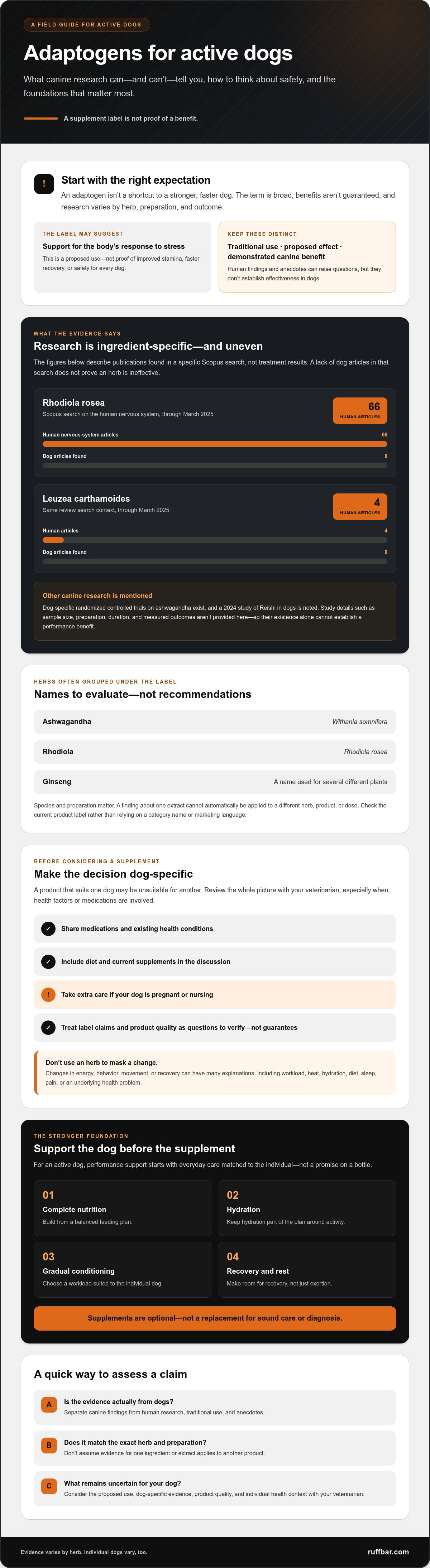
Ashwagandha (Withania somnifera), Rhodiola (Rhodiola rosea), and ginseng, a name used for several different plants, are often discussed under the adaptogen label. These are examples, not recommendations. Species and preparation matter: a finding about one extract can’t automatically be applied to another herb, product, or dose. Check the current product label rather than assuming an ingredient is present based on a product category or marketing language.
How strong is the canine research?
Dog-specific studies include randomized controlled trials on ashwagandha, and a 2024 study of Reishi in dogs has been noted. However, details such as sample size, preparation, duration, and measured outcomes aren’t provided here for those trials. Without them, it wouldn’t be responsible to turn the existence of the studies into a claim about canine-athlete performance.
The gaps are clear for some other herbs. A May 2025 review reported that a Scopus search through March 2025 found 66 articles on Rhodiola rosea and the human nervous system, but none on dogs. For Leuzea carthamoides, the search found four human articles and none for dogs. Those counts describe publications in a specific database and topic search; they don’t prove an herb is ineffective. They do show why human evidence shouldn’t be presented as canine proof.
For adaptogenic herbs for active dogs, the practical takeaway is caution: dog studies exist for some ingredients, but the information here doesn’t establish benefits for athletic stamina or recovery. Before trusting a benefit claim, look for the exact herb and preparation, the dogs studied, study length, comparison group, and outcomes. A proposed mechanism or preliminary result is a reason to investigate, not a performance guarantee.
Ruff Bar sells dog supplements as part of its nutrition range. For an overview of Ruff Bar dog supplements, check current product information and labels, and discuss any ingredient with your veterinarian.
Comparing Adaptogenic Herbs for Active Dogs Without Overreading Claims
A useful comparison doesn’t rank herbs by promise. It asks what was studied, in which species, and whether the measured outcome matches the claim being made for dogs. Ashwagandha, Rhodiola, and ginseng are examples commonly discussed as adaptogens, not a suggested supplement combination for your dog.
A cautious comparison
| Herb | Commonly claimed purpose | Canine evidence status | Key uncertainty |
|---|---|---|---|
| Ashwagandha (Withania somnifera) | Stress-response support and resilience | Dog-specific randomized trials have been reported. Bonza reported three peer-reviewed canine trials as of April 2026. | Details for each trial, including sample size, extract, duration, and measured outcomes, aren’t provided here. Effects on athletic stamina and recovery can’t be inferred. |
| Rhodiola (Rhodiola rosea) | Energy, stamina, or stress-response support | Limited. A May 2025 review reported no dog results in its Scopus search on effects on the nervous system through March 2025. | That search doesn’t establish whether other canine research exists or whether the herb is effective. Human findings aren’t canine proof. |
| Ginseng, species must be identified | Vitality or stress-response support | Canine evidence details aren’t available for this comparison. | “Ginseng” can refer to different plants. Check the species, plant part, preparation, and dog-specific studies. |
Read the label and evidence together
The table separates marketed purpose from demonstrated canine outcome. A claim about energy doesn’t mean a study measured endurance. And a study in dogs doesn’t automatically apply to canine athletes, other formulations, or long-term use.
Compare the exact botanical name, plant part, extract details, and full formulation. Products can differ even when the front label highlights the same herb. For each study, check the species, number of dogs, preparation tested, duration, comparison group, and measured outcomes. If those details aren’t available, treat the evidence as unclear rather than filling the gaps with human research or traditional use.
For adaptogenic herbs for active dogs, the strongest comparison is an honest one: dog-specific evidence where documented, indirect evidence clearly labeled, and uncertainty left visible. None of these examples establishes a universal recommendation or a guaranteed boost to performance.
How to Assess Safety Before Giving Herbs to an Active Dog
Consult your dog’s veterinarian before introducing an herbal supplement. That check matters even if a product is labeled natural or intended for dogs. Health conditions, medications, age, pregnancy or nursing, and the demands of training or travel can all affect whether a supplement is appropriate. There’s no universal dose that fits every dog or extract.
What to check on a dog supplement label
Bring the full label to your veterinarian. Check that it identifies the ingredients clearly and provides serving directions and manufacturer details. Look for batch or quality information that can help you ask how the product is made and assessed. For an herb, check whether the label names its species, plant part, and extract details where applicable.
Be cautious with vague proprietary blends that don’t disclose ingredient amounts, and with promises of guaranteed stamina, calm, or recovery. Concentrated extracts and products combining several ingredients deserve an ingredient-by-ingredient review. A blend may involve interactions or make it harder to identify what caused an unwanted reaction. The word “adaptogen” by itself doesn’t verify a formula or establish safety.
Questions to take to your veterinarian
Make the conversation specific to your dog and the exact product. Share your dog’s medications, health conditions, age, activity routine, recent diet changes, and every supplement already in use. Bring the label or a clear photo. Ask:
- Does this exact ingredient and preparation fit my dog’s health history and current medications?
- Could it affect my dog’s complete diet or be unsuitable for their age, activity level, pregnancy, or nursing status?
- What changes or possible adverse signs should prompt me to stop the supplement and seek professional advice?
- How should we assess the product alongside my dog’s workload, nutrition, and recovery routine?
Don’t start multiple new supplements at once. If your veterinarian agrees to a trial, ask how to introduce it and what to monitor. Keep notes on the product, timing, activity, appetite, behavior, and any changes you observe. That record can help your veterinarian assess the response instead of relying on a vague impression of “more energy.”
For adaptogenic herbs for active dogs, reviewing the label is only one part of the safety check. Veterinary guidance comes first. Ruff Bar offers dog supplements as a product category. Review Ruff Bar’s dog nutrition options and check current labels before discussing a specific product with your veterinarian.
A Stronger Foundation for Active Dogs: Nutrition, Recovery, and Next Steps
A supplement can’t replace a sound plan. An active dog’s foundation is a complete feeding plan, appropriate hydration, gradual conditioning, rest, and veterinary care when needed. These basics support the whole routine, not just one ingredient or workout. A change in stamina or recovery may call for an assessment of health, workload, or nutrition rather than another supplement.
Build the basics before adding a supplement
Match food and activity to your individual dog’s age, health, body condition, and demands. Your veterinarian can help assess the feeding plan and advise on changes. Increase exercise progressively, provide access to water suited to the conditions and activity, and build in recovery time. Watch for changes in movement, appetite, behavior, or willingness to continue. Those observations can help you decide whether the routine needs adjustment or professional attention.
Fuel is part of the plan, but a snack or topper isn’t a substitute for balanced daily nutrition. For context on activity fuel, see this guide to high-protein dog energy bars. For a broader look at supplement decisions, read the performance dog food supplements guide.
A practical next step for owners considering adaptogens
Before buying or using a product, make a concise record for your veterinarian. Include the exact label, why you’re considering the product, your dog’s current diet, medications and other supplements, activity routine, and the concern you hope to address. Ask whether the specific ingredients fit your dog’s health history and what changes you should watch for. This turns a broad marketing promise into a focused discussion about your dog.
Adaptogenic herbs for active dogs are optional and shouldn’t stand in for diagnosis, balanced nutrition, or recovery. Ruff Bar’s product range includes dog supplements, functional and pure-blend toppers, food bars, chewable Stix, and freeze-dried backpacking meals. Check current labels to see which ingredients are in a product.
Explore Ruff Bar’s performance nutrition categories, and review product labels with your veterinarian when considering a supplement.
Choose the Next Step That Fits Your Dog
Adaptogenic herbs for active dogs aren’t a guaranteed edge on the trail. Canine evidence varies by herb, and claims about stamina or recovery shouldn’t go beyond what studies actually measured. Before considering a supplement, review the specific product with your veterinarian and keep the fundamentals in focus: balanced nutrition, hydration, gradual conditioning, and rest.
Every dog’s needs differ. Start with a clear picture of your dog’s activity, diet, and recovery, then make supplement decisions with evidence and veterinary guidance, not marketing promises.
Ruff Bar offers performance-oriented food bars, Stix, freeze-dried meals, toppers, and supplements for dogs. The brand describes its products as using USDA-graded grass-fed meats and whole organic ingredients. Check current product information and labels to see what fits your dog’s nutrition plan.
Explore Ruff Bar’s performance nutrition for active dogs and keep building a strong foundation for every mile ahead.
Frequently Asked Questions
Are adaptogenic herbs safe for dogs?
Not automatically. Safety depends on the specific herb, preparation, product, and individual dog. Health conditions, age, pregnancy or nursing status, and medications can affect whether a supplement is appropriate. Choose products intended for dogs, but don’t treat that label as proof of safety or quality. Consult your dog’s veterinarian before introducing an herbal supplement, and share the full ingredient label for review.
Can adaptogens improve a dog’s energy or athletic performance?
It hasn’t been established that adaptogens reliably improve athletic performance in dogs. Some canine studies have examined specific herbs, but that doesn’t prove gains in stamina or faster recovery for active dogs. Human findings and proposed mechanisms aren’t evidence of canine performance benefits. If your dog’s energy or recovery changes, discuss workload, hydration, nutrition, pain, and health concerns with your veterinarian rather than relying on a supplement to solve the problem.
Which adaptogenic herbs are commonly discussed for dogs?
Ashwagandha (Withania somnifera), Rhodiola (Rhodiola rosea), and ginseng are often discussed under the adaptogen label. “Ginseng” can refer to different plant species, so the exact botanical name matters. Dog-specific evidence varies by herb, and evidence for one preparation doesn’t automatically apply to another. Treat these as examples to discuss with your veterinarian, not a recommended combination or supplement plan.
How much adaptogen can I give my dog?
There’s no universal dose for dogs. If a veterinarian considers a supplement suitable, the appropriate amount depends on the specific herb, extract, formulation, and your dog’s health and medications. Don’t estimate a dose from human instructions or a product intended for another species. Ask your veterinarian to review the exact dog-product label and provide guidance before giving any amount.
Can dogs take adaptogenic herbs with medication?
Possibly, but don’t assume a combination is safe. Herbal ingredients may affect how a medication works or add unwanted effects, and information about interactions can be limited. Give your veterinarian the names and doses of all prescribed and over-the-counter medicines, along with every supplement your dog takes. Ask about the exact herb and product before use. Don’t stop or change a prescribed medication to make room for an herbal supplement.
What should I do if my dog reacts after taking an herbal supplement?
Stop giving the supplement and contact your veterinarian for advice. Keep the package and note how much your dog received, when it was given, and what signs you observed. If your dog has trouble breathing, collapses, has a seizure, or seems severely unwell, seek emergency veterinary care immediately. Don’t induce vomiting or give another remedy unless a veterinary professional instructs you to do so.
Are human adaptogen supplements suitable for dogs?
Don’t give your dog a human adaptogen supplement unless your veterinarian specifically reviews and approves that exact product. Human formulas may use different concentrations, combinations, or other ingredients, and a human serving isn’t a safe guide for a dog. Choose a product formulated for dogs and check its complete label with your veterinarian. Species-specific labeling still doesn’t replace an individual safety assessment.