
Working Dog Nutrition: A Tactical Guide to Performance Fueling (2026)
Your dog isn't a pet during a twelve-mile ridgetop push. They're a high-output engine. Standard kibble often fails because it's built for the backyard, not the backcountry. You've likely seen the signs of "bonking" mid-trail or felt the frustration of watching your partner lose weight during peak training. Trail fatigue, digestive upset from low-quality fillers, and slow recovery times are the enemies of performance. Mastering working dog nutrition requires a tactical shift from carbohydrate-heavy fillers to fat-burning endurance and metabolic efficiency.
You want sustained energy, rapid recovery, and a partner that stays lean and powerful through every rugged season. It's about more than just calories. It's about functional excellence, biological integrity, and the bond of shared activity. This guide breaks down the specific metabolic requirements of the high-performance canine. You'll learn how to fuel for rugged longevity, optimize post-activity repair, and select high-density fuel that lightens your pack while maximizing output. We're moving beyond basic maintenance into the realm of elite, high-stakes preparation for the trail ahead.
Key Takeaways
- Understand the metabolic gear shift from carbohydrate-burning to fat-burning required for sustained endurance.
- Master working dog nutrition by matching high-density fuel to your partner's specific performance tier and caloric output.
- Prioritize USDA-graded grass-fed proteins to eliminate systemic inflammation and avoid the digestive upset caused by low-quality fillers.
- Execute tactical feeding schedules to prevent mid-trail fatigue and maximize muscle synthesis during the golden hour of recovery.
- View precision performance fuel as essential equipment designed for the rigors of high-stakes backcountry exploration.
Beyond the Bowl: Why Working Dog Nutrition Requires a Metabolic Shift
Your dog isn't a pet during a high-altitude trek or a full day of field work. They're a biological engine. Standard feeding protocols fail because they treat the animal as a sedentary companion rather than a high-output partner. True working dog nutrition requires a tactical shift from high-volume fillers to high-density, fat-forward fueling. This isn't just food. It's essential equipment. When you prioritize metabolic efficiency, you move beyond simple survival and into the realm of elite performance.
The signs of nutritional failure are unmistakable. You see it in muscle wasting after a heavy season. You feel it when your dog "bonks" or hits a wall of trail fatigue mid-afternoon. You notice it in the slow, stiff recovery that drags into the next day. These aren't inevitable parts of the job. They're symptoms of a fueling deficit. Relying on standard "active" kibble is like putting low-grade fuel in a race car; it might run, but it won't win.
The Limitations of Modern Commercial Kibble
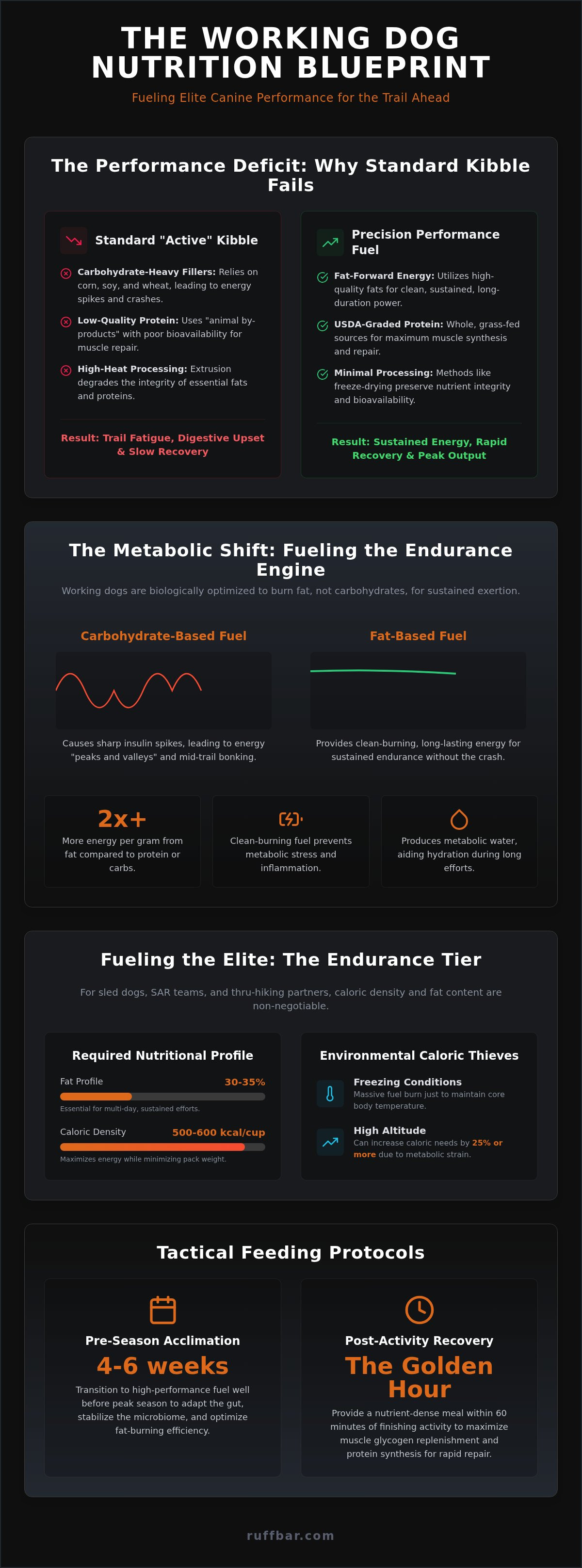
Most commercial kibble is produced through extrusion, a high-heat process that can degrade the integrity of essential proteins and fats. Manufacturers often rely on corn, soy, and wheat fillers to provide cheap, shelf-stable calories. These "empty" carbohydrates spike insulin and lead to energy crashes. Even when a label claims "high protein," the bioavailability is often low. If the protein comes from "animal by-products" rather than whole, recognizable sources, the canine body struggles to utilize it for muscle repair and structural maintenance. High-performance dogs need clean, organic ingredients that provide immediate, usable energy without the inflammatory load of grain-based fillers.
Canine Fat Metabolism: The Endurance Engine
Dogs are biologically optimized for endurance. While humans rely heavily on carbohydrate-driven glycogen, dogs are masters of oxidizing fatty acids. Understanding canine athlete energy requirements means recognizing that fat is the primary fuel source for sustained movement. Fat provides more than double the energy per gram compared to protein or carbohydrates. It burns cleaner and lasts longer, preventing the peaks and valleys associated with sugar-heavy diets. Metabolic water is the moisture produced internally as a byproduct of fat oxidation, which helps your partner stay hydrated during intense, long-duration exertion. By fueling with high-quality fats, you tap into a dog's natural endurance engine, ensuring they stay powerful from the first mile to the last.
The Three Tiers of Canine Performance Fueling
Precision starts with classification. You can't fuel a sprinter like a sled dog. Effective working dog nutrition requires you to match caloric density to specific mechanical output. Most high-performance partners fall into the medium-activity or endurance tiers. These dogs aren't just "active"; they're metabolic athletes operating under extreme physical stress. Identifying where your dog sits on the performance spectrum is the first step in building a resilient, high-output engine.
Preparation is a long game. Shifting your strategy takes time. Adhering to Veterinary nutritionists' feeding guidelines suggests a four to six week acclimation period before your peak season begins. This window allows the gut to adapt. It stabilizes the microbiome. It ensures your dog is a fat-burning machine before you hit the first trailhead. If you wait until the morning of a big push to change their fuel, you're inviting digestive failure and mid-day crashes.
Environmental factors are caloric thieves. Cold weather and high altitude significantly increase energy demands. In freezing conditions, a dog burns massive amounts of fuel just to maintain core temperature. High-altitude work can increase caloric needs by 25 percent or more due to increased respiratory rates and metabolic strain. You must account for these "hidden" costs when calculating daily rations.
Endurance Athletes: Sledding, SAR, and Thru-Hiking
Endurance is a game of caloric density. Sled dogs and Search and Rescue teams require a massive 30 to 35 percent fat profile for multi-day sustained efforts. You can't carry enough bulk to fuel these dogs with standard kibble. You need 500 to 600 calories packed into every single cup. This keeps the pack light and the dog powered. For these grueling missions, freeze dried raw dog food for backpacking provides the necessary density without the unnecessary weight of fillers.
Sprinters and Arena Hunters: Agility and Flyball
Sprinters need explosive power. Short duration. High intensity. These dogs benefit from a tactical inclusion of high-quality carbohydrates to fuel anaerobic bursts. Too much fat can lead to digestive sluggishness during a run. The focus here is on protein for rapid muscle repair after high-impact jumps. Balance is key; you want them lean, fast, and ready to ignite. For a portable, high-protein boost between heats that won't cause a heavy stomach, Ruff Stix® Beef offers the perfect mid-work solution.
Ingredient Purity: Why USDA Grass-Fed Protein is Non-Negotiable
Quality dictates outcome. You can't build a resilient athlete on industrial waste. In the world of working dog nutrition, the source of your protein is just as critical as the percentage on the label. Low-grade proteins and vague "animal by-products" are unreliable. They introduce systemic inflammation. They slow down recovery. They compromise the long-term structural integrity of your dog's joints and muscles. Choosing USDA-graded grass-fed meats isn't a luxury; it's a performance requirement for any serious handler.
Grass-fed bison, beef, and pork offer superior amino acid profiles compared to grain-finished alternatives. These proteins are cleaner. They're more nutrient-dense. They provide the specific building blocks needed for cellular repair after a grueling day in the field. A "Clean Label" approach ensures every ingredient serves a functional purpose. We prioritize whole organic ingredients like apples and carrots to provide natural antioxidants and fiber. No fillers. No synthetic dyes. No compromises on the equipment your dog relies on for survival and success.
Bioavailability and Muscle Retention
Bioavailability measures how much protein actually reaches the muscle. High numbers mean high efficiency. Standard kibble is often cooked at extreme temperatures that denature proteins, rendering them less effective for tissue repair. Raw-dehydrated and freeze-dried proteins preserve the natural structure of these molecules. They're easier to digest. They're faster to absorb. They ensure your dog maintains lean muscle mass even during peak training seasons. Including organ meats provides a natural source of vitamins and minerals that synthetic premixes can't replicate. It's about maximizing every ounce of fuel carried in your pack.
The Grain-Free Advantage for Active Digestion
Grains are a liability for the working K9. They lead to bloat. They cause sluggishness. They trigger digestive upset during high-intensity work when blood flow is diverted from the gut to the muscles. A grain-free formula maintains a stable gut microbiome. This ensures better nutrient absorption and consistent energy levels throughout the day. For handlers looking to optimize this balance, integrating performance dog food supplements can further support digestive health and systemic resilience. Keep the gut clean. Keep the engine running. Focus on the mission, not the fillers.
Tactical Feeding Protocols: Mid-Activity and Recovery
Timing is the difference between a peak performer and a liability. Proper working dog nutrition doesn't end at the breakfast bowl. It's a continuous cycle of intake and expenditure. To prevent hypoglycemia during long work sessions, you must maintain steady blood glucose levels. A single large meal mid-day is a tactical error. It diverts blood flow to the stomach when the muscles need it most. It increases the risk of Exercise-Induced Gastric Dilatation-Volvulus, or bloat. This condition is often fatal and entirely preventable with disciplined fueling. Keep portions small. Keep intervals frequent. Wait at least 60 minutes after intense exertion before offering a full meal.
Hydration is equally critical. A dehydrated dog cannot regulate temperature or clear metabolic waste. Many high-drive dogs ignore thirst when focused on a task. You must intervene. Use bone broth to increase palatability or "bait" their water with a small amount of protein to encourage intake. This ensures they stay hydrated on the trail even when the drive to work overrides the drive to drink. Consistent hydration supports kidney function and keeps joints lubricated during high-impact movement. It's about maintaining the internal environment for maximum output.
Mid-Trail Fueling with High-Protein Bars
Small, frequent snacks are the gold standard for steady energy. They provide a constant stream of fuel without the digestive burden of a full meal. We recommend using Ruff Stix® Bison Pork for this exact purpose. They are lightweight. They are high-protein. They provide immediate fuel that won't weigh your partner down during technical maneuvers. These stix are designed to be broken into small pieces for quick delivery during short breaks. Baiting water with a crumbled piece of protein is a proven tactic to force hydration in high-drive dogs that refuse to stop for a bowl.
The Recovery Phase: Rebuilding the Athlete
The "Golden Hour" of recovery is a narrow 30 to 60-minute window post-activity. This is when the body is most primed for muscle synthesis and glycogen replenishment. Waiting until you get home to feed is a missed opportunity for repair. You need high-quality protein delivered immediately to halt the catabolic state. Using high protein dog energy bars provides the necessary amino acids to stop muscle breakdown and start the rebuilding process. This preparation is what makes "Day 2" of an expedition possible. Nutrient loading during the recovery phase ensures your athlete wakes up ready for the next ridgetop push. It's about cumulative resilience. If you want to see the best results for your partner, equip your pack with Ruff Food Bars before your next mission.
Ruff Bar: Precision Nutrition as Essential K9 Equipment
Our "No Compromise" philosophy is the foundation of every product we build. We reject the shortcuts of the industrial pet food complex. No grains. No fillers. No low-grade by-products. We utilize only USDA-graded grass-fed meats and organic whole ingredients. This ensures every calorie is functional. Every gram of fat is usable energy. Every ounce of protein is a building block for muscle repair. We have eliminated the dead weight of soy and corn so you can carry more power with less bulk. Your dog deserves fuel that matches their drive.
Ruff Food and Ruff Stix®: The Performance Lineup
The right fuel depends on the mission. Our lineup is engineered to meet the specific metabolic demands of the working canine. Ruff Stix® Bison Pork, Ruff Stix® Beef, and Ruff Stix® Pork provide portable, high-density protein for mid-work intervals. They are designed for the pack. They are shelf-stable. They provide immediate amino acids to prevent muscle wasting during high-output days. For the ultimate backcountry dinner, our Ruff Food Freeze Dried Raw Backpacking Meals in Beef or Duck deliver the benefits of a raw diet in a lightweight, packable format. These meals ensure your dog recovers deeply overnight, ready for the next ridge. If your partner needs an extra edge, Ruff Bar Functional Nutrition Toppers add a concentrated punch of vitamins and minerals to standard rations, bridging the gap between maintenance and peak performance.
Prepared for the Mission
Logistics matter when you are miles from the trailhead. Carrying bulky, low-calorie kibble is a tactical failure. It slows the handler and underfeeds the dog. Ruff Bar products provide the highest caloric density in the smallest footprint possible. This is why we are the choice for elite SAR teams and high-altitude adventurers who cannot afford gear failure. Every bar in your pack is a guarantee of sustained energy and rapid recovery. Treat your dog’s fuel with the same respect you give your own. Do not settle for fillers when the mission is on the line. Fuel your next adventure with Ruff Bar and witness the difference of precision engineering in every mile.
Fuel the Mission Ahead
The ridgetop doesn't care about excuses. Your dog doesn't either. They rely entirely on your preparation. We've detailed the metabolic shift to fat-forward fueling and the tactical importance of mid-trail snacks. You've learned how the recovery window preserves muscle and powers the next day's push. Mastering working dog nutrition is a commitment to biological integrity and functional excellence. Every mile depends on the quality of your gear. Don't let your dog's fuel be the weak link in your pack.
Ruff Bar provides the gold standard in performance nutrition. Our products feature USDA-graded grass-fed meats and organic whole ingredients. They're hand-crafted in the USA. We're trusted by backcountry adventurers worldwide to deliver sustained vitality in the harshest environments. We reject fillers. We reject shortcuts. We prioritize the bond of shared activity through high-standard preparation. Upgrade your dog's fuel with Ruff Bar Performance Nutrition. The trail is waiting. Make sure your partner is ready to lead the way.
Frequently Asked Questions
What is the best protein source for a working dog?
USDA-graded grass-fed meats like bison, beef, and pork are the superior protein sources for high-performance canines. These whole-muscle meats provide the specific amino acid profiles necessary for muscle retention and cellular repair. Avoid "meat meal" or "by-products" because they lack the bioavailability required to sustain a dog during multi-day expeditions in rugged terrain.
How many calories does a hunting dog need per day?
A hunting dog can require 1.5 to 2.5 times their maintenance calories during peak training or hunting seasons. This often translates to 2,500 to 5,000 calories daily for a 50-pound dog working in cold or mountainous environments. You must monitor their body condition score weekly and adjust fat density to prevent significant weight loss or "bonking" mid-trail.
Should I feed my dog during a long hike or wait until the end?
Provide small, high-protein snacks every 2 to 3 hours during a long hike rather than waiting for a single large meal at the end. This tactical fueling prevents blood sugar crashes and keeps the engine running steadily throughout the day. It also minimizes the risk of bloat, which is a major concern when feeding large volumes to an exhausted animal.
Is high-protein food bad for a dog's kidneys?
High protein is not harmful to the kidneys of a healthy, active dog. Protein is the foundational building block for repairing the micro-tears in muscle fibers caused by intense work and exploration. Restricting protein in a working athlete actually increases the risk of injury and slows down systemic recovery after a demanding mission.
How do I prevent my dog from losing weight during training season?
Prevent weight loss by shifting to a fat-forward working dog nutrition strategy that prioritizes caloric density over food volume. Dogs often cannot eat enough standard kibble to offset a 4,000-calorie day without digestive upset. Use freeze-dried raw meals or high-fat toppers to pack more energy into a smaller, more digestible portion that stays in the gut.
Can I use human energy bars for my working dog?
Human energy bars are dangerous and biologically inappropriate for working dogs. Many contain xylitol, macadamia nuts, or raisins, which are toxic to canines even in small amounts. Even "safe" human bars have too much sugar and not enough fat, leading to insulin spikes and energy crashes that compromise your dog's endurance.
What is the difference between performance food and regular dog food?
Performance food is engineered with higher fat and protein percentages to support the specific metabolic demands of the canine athlete. Regular maintenance food is built for sedentary lifestyles and relies heavily on carbohydrate fillers for bulk. Performance working dog nutrition prioritizes nutrient density and bioavailability to ensure every ounce of food translates into usable propulsion.
How do I switch my dog to a high-performance diet safely?
Execute a gradual 10-day transition by mixing the new performance diet with the current food in increasing increments. This slow introduction protects the gut microbiome and prevents digestive sluggishness during the switch. For the best results, finalize this transition 4 to 6 weeks before your primary working season to allow for full metabolic acclimation.