
Traveling With a Dog With a Sensitive Stomach: The Performance Handler’s Guide
A single dietary slip-up can turn a high-stakes mountain ascent into a desperate search for the nearest rest stop. Traveling with a dog with a sensitive stomach shouldn't feel like a calculated risk every time you hit the road. You need a plan that prioritizes metabolic stability, gut integrity, and raw performance. It is about more than just avoiding a mess. It is about protecting the bond of the trail.
We understand the frustration of bulky food bags, the worry of dietary drift, and the dread of a ruined trip. You want your dog to be an active partner, not a liability. This guide provides the blueprint for high-adventure travel without the digestive fallout. You will learn to manage new 2026 travel regulations, handle airline logistics, and implement a rugged, limited-ingredient nutrition strategy. From the weight efficiency of Ruff Food freeze-dried meals to the clean fuel of Ruff Stix, we are stripping away the fillers. Prepare for consistent energy, reliable results, and zero surprises on the road.
Key Takeaways
- Learn how travel-induced cortisol spikes stall digestion and how to maintain metabolic stability during high-adventure transit.
- Discover why traveling with a dog with a sensitive stomach requires a strict zero-filler policy to prevent gut fermentation on the trail.
- Utilize the 4:1 weight advantage of freeze-dried raw nutrition to fuel your dog with high-bioavailability protein without the bulk.
- Implement a seven-day "pre-flight" transition and water pre-loading strategy to eliminate digestive surprises and "new source" shock.
- Prioritize USDA-graded, grass-fed meats to ensure your canine partner receives clean fuel that supports endurance and rapid recovery.
Why Travel Triggers Digestive Distress in Active Dogs
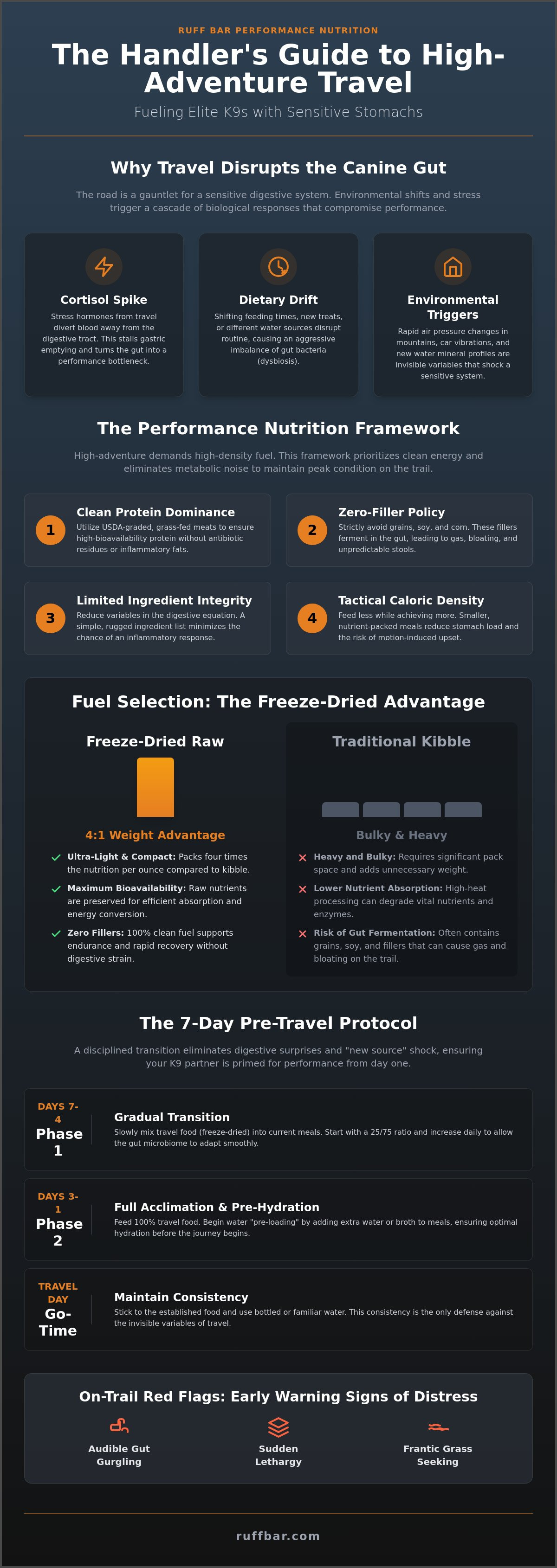
The road is a gauntlet for the canine gut. When you are traveling with a dog with a sensitive stomach, you aren't just managing a diet; you are managing a biological response to environmental shifts. Travel triggers a "Cortisol Spike." This surge of stress hormones diverts blood away from the digestive tract and toward the muscles. Digestion slows. Gastric emptying stalls. The system that usually fuels your dog's endurance suddenly becomes a bottleneck. It's a survival mechanism that, in a modern travel context, works against your dog's performance.
Routine is the anchor of gut motility. Shifting a feeding window by just two hours can disrupt the clockwork of the GI tract. This leads to "Dietary Drift." It starts with a well-meaning "vacation treat" or a gulp of mineral-heavy local water. These small variances cause travel-induced dysbiosis. This is a temporary, aggressive imbalance of gut bacteria caused by environmental stressors. The result is a dog that is sluggish, bloated, and physically compromised before the adventure even begins.
The Performance Handler’s Perspective
A sensitive stomach is not a death sentence for high-energy expeditions. It is a signal for precision. Performance handlers know that "sensitive" does not mean "low energy." It means your dog has a lower threshold for inflammatory inputs. Watch for the warning signs: audible gut gurgling, sudden lethargy, or frantic grass-seeking behavior. Intense physical exertion naturally increases gastrointestinal permeability. Without a comprehensive overview of dog nutrition and a plan for high-purity fuel, the barrier between the gut and the bloodstream weakens. This "leaky gut" response during travel can sideline even the most athletic canine. You need gear that matches the mission.
Environmental Triggers Beyond the Bowl
The environment itself is a trigger. Mountain travel involves rapid air pressure changes. These fluctuations cause internal gases to expand, leading to discomfort or potential gas. Car vibrations and constant motion contribute to motion-induced gastric upset, even if the dog doesn't show outward signs of nausea. Then there is the "new water" factor. Water sources in different regions contain unique mineral profiles and microbial colonies. For a sensitive K9 microbiome, these shifts are a shock to the system. Consistency is the only defense against these invisible variables. You must control what you can to mitigate what you can't.
The Performance Framework: Nutritional Standards for Sensitive Guts
Forget the standard advice of boiled chicken and white rice. While a bland diet might stop an immediate crisis, it fails the active dog. High-adventure expeditions demand high-density fuel. Traveling with a dog with a sensitive stomach requires a transition from generic grocery store kibble to a performance framework. You need a strategy that prioritizes clean protein dominance and eliminates metabolic noise. When every ounce of weight and every calorie of energy counts, there is no room for fillers that trigger inflammatory responses.
Clean protein is the foundation. We use USDA-graded, grass-fed meats because they lack the antibiotic residues and inflammatory fats found in grain-fed alternatives. A zero-filler policy is equally critical. Grains, soy, and corn are notorious for fermenting in the gut, which leads to gas, bloating, and unpredictable stools. By following a rule of limited ingredient integrity, you reduce the number of variables in the digestive equation. Fewer variables mean fewer problems on the trail. This "Adventure-First" philosophy ensures your dog’s system stays focused on propulsion, not processing waste.
Caloric density is your tactical advantage. High-quality fuel allows you to feed less while achieving more. Smaller meal volumes reduce the physical load on the stomach, which is vital for managing feeding schedules and preventing motion sickness during long hauls. By concentrating nutrients, you provide the energy needed for rugged terrain without the risk of gastric distension. It's about efficiency. It's about precision. It's about providing the exact biological tools your dog needs to thrive in demanding environments.
The Role of Alternative Proteins
Proteins aren't created equal. Bison and beef are rugged, nutrient-dense options for dogs with high-output requirements. They provide the iron and B-vitamins necessary for sustained endurance. However, some sensitive systems react to common poultry sources. In these cases, pork and duck serve as excellent alternative proteins. Rotating these high-purity sources can support long-term gut resilience by preventing the development of new sensitivities. This variety keeps the microbiome adaptable and ready for the shifting demands of the road.
Functional Toppers and Digestive Insurance
Stability is the goal of every performance handler. Utilizing Ruff Bar Functional Nutrition Toppers provides a layer of digestive insurance during travel transitions. These toppers use organic, whole-food ingredients to stabilize the microbiome without relying on synthetic additives. Fiber plays a key role here, ensuring consistent stool quality even when environmental stress is high. If you want to maintain gut integrity across state lines, consider adding Ruff Bar Pure Blend Toppers to your travel kit to keep your dog's performance peak and their digestion predictable.
Fuel Selection: Freeze-Dried Raw vs. Traditional Kibble
Kibble is a logistical liability in the field. It's heavy. It's bulky. Most importantly, it's prone to rancidity when stored in hot vehicles or damp packs. Traveling with a dog with a sensitive stomach requires fuel that is as resilient as the handler. Traditional kibble often relies on high-heat processing that denatures proteins and reduces bioavailability. For a dog with a compromised GI tract, these highly processed pellets are harder to break down, leading to larger stools and wasted energy. You need nutrition that the body can use immediately without metabolic friction.
Freeze-dried raw nutrition offers a decisive 4:1 weight advantage. One pound of freeze-dried food provides the same caloric value as four pounds of traditional wet or fresh food. This allows you to pack light without sacrificing performance. Beyond the weight savings, freeze-dried meals act as a critical vehicle for hydration. By rehydrating the food at the campsite, you force essential water intake, which is often neglected during high-output travel days. This control over moisture levels helps maintain gut motility and prevents the dehydration-induced constipation that often plagues sensitive dogs on the road.
Shelf stability is the final pillar of this framework. Unlike kibble, where fats can oxidize and turn toxic in the heat, freeze-dried raw meals remain stable and nutrient-dense. You aren't just carrying food; you are carrying a biological insurance policy. This format ensures that every meal served is as fresh as the day it was prepared, regardless of the temperature in your glovebox or backpack.
Ruff Food: The Backcountry Gold Standard
When the mission demands peak performance, Ruff Food Freeze Dried Raw Backpacking Meals Beef or Duck are the primary choice. These formulas prioritize gut soothing through high-purity ingredients. For a dog with a sensitive system, rehydration is a tactical opportunity. Use warm water to enhance aroma and ease digestion, or utilize bone broth to provide extra electrolytes and collagen for gut lining support. Precision feeding is key here. Because these meals are so nutrient-dense, you can feed smaller portions to avoid gastric overload while still hitting your dog's caloric requirements for the day.
Ruff Stix®: The Tactical "In-Between" Fuel
Energy management doesn't stop between meals. Ruff Stix® Bison Pork serves as the perfect low-mess travel snack for maintaining blood sugar levels without the "sugar crash" associated with cheap, grain-filled treats. These stix are high in protein and completely grain-free, ensuring that your dog's energy remains steady throughout the haul. They are designed for portability. Keep a few in your pocket or glovebox to provide gut-safe nutrition whenever the terrain gets demanding. It's clean fuel that fits in your hand, allowing you to sustain your dog's propulsion without the risk of a digestive flare-up.
The Handler’s Field Guide: 7-Day Travel Prep
Success on the trail is won in the week before you leave. Traveling with a dog with a sensitive stomach requires more than just a bag of food and a leash. It demands a tactical lead-up. You must synchronize the gut with the upcoming environmental stress. This is not about convenience. It is about precision. Preparation is your primary defense against the metabolic chaos of the road. If you wait until the morning of your departure to consider nutrition, you have already lost the advantage.
Start water pre-loading 48 hours before you pull out of the driveway. Mix your home water with the bottled water you plan to use on the trip. This prevents the "new source" shock that often triggers diarrhea in sensitive systems. Simultaneously, begin activity tapering. Reduce training intensity 24 hours before a long haul to calm the gut. A resting body maintains a more stable microbiome. By lowering physical stress before transit, you ensure your dog’s system is resilient enough to handle the vibrations and air pressure changes of the journey.
Every handler needs a "K9 Travel Kit" that prioritizes gut integrity. This checklist is your baseline for the mission:
- Ruff Food Freeze Dried Raw: High-density, shelf-stable nutrition.
- Ruff Stix®: Clean, portable fuel for mid-transit energy.
- Bottled or Filtered Water: Consistency is the key to hydration.
- Collapsible Silicone Bowls: Easy to clean to prevent bacterial buildup.
Step-by-Step Transition Protocol
Generic three-day transitions are insufficient for high-performance dogs. Use this seven-day protocol to ensure stability. On Days 1-3, introduce Ruff Bar Functional Nutrition Toppers to current meals to prime the gut with whole-food nutrients. From Days 4-6, swap 50% of the food volume for Ruff Food Freeze Dried Raw. On Day 7, conduct a full travel ration test. Monitor stool quality and energy levels closely. This gradual shift builds the digestive resilience needed for the road ahead.
On-the-Road Management
Once you are traveling with a dog with a sensitive stomach, follow the "Small and Frequent" feeding rule. Avoid large, heavy meals before long periods of transit. Feed smaller portions every four hours to keep the stomach settled and blood sugar stable. Time your hydration carefully. Offer water during breaks but avoid heavy gulping immediately before or after intense movement to prevent bloating. Use Ruff Stix® as a tactical bridge between travel and your destination dinner. It provides the protein hit your dog needs without overloading their system during the haul.
Ready to build your dog's travel kit? Get the Ruff Food Backpacking Meal Kit to ensure your next adventure is fueled by high-purity, rugged nutrition.
The Ruff Bar Advantage: No-Compromise Nutrition
The trail doesn't care about excuses. Your dog shouldn't have to either. We reject the idea that traveling with a dog with a sensitive stomach means slowing down or settling for bland, low-energy diets. Our "Adventure-First" philosophy is the foundation of every product we create. We don't build for the grocery store shelf. We build for the backpack. We build for the summit. We build for the long haul home. This is equipment for your dog's internal system, designed to withstand the rigors of the road.
Just as professional outdoor enthusiasts rely on The BBQ Experts for high-grade fuel sources that perform in any environment, your dog deserves nutritional gear that never compromises on quality.
Every bar, stix, and meal starts with USDA-graded grass-fed meats. This is the gold standard for clean protein. It provides the essential amino acids for muscle repair without the inflammatory baggage of grain-fed alternatives. We maintain a strict commitment to purity. No grains. No soy. No corn. No fillers. We've stripped away the metabolic noise so your dog's system can focus on what matters. Performance. Vitality. Strength. When you eliminate the junk, you eliminate the surprises.
Sourcing with Integrity
Sourcing with integrity is a performance requirement, not an afterthought. Grass-fed protein makes a tangible difference in muscle recovery and gut health. It contains higher levels of Omega-3 fatty acids and antioxidants that are critical for managing the physical stress of travel. Organic ingredients aren't a luxury. They're a necessity for dogs that work hard and play harder. Our "Made in the USA" promise is our commitment to quality control. We oversee every step. We verify every source. We never compromise on safety because your dog's health is the mission.
Ready for Your Next Expedition?
Your next expedition is waiting. Don't let digestive fallout hold you back from the places you want to go. Traveling with a dog with a sensitive stomach is a logistics challenge that we've already solved with rugged, shelf-stable nutrition. Customize your dog’s travel bundle today. Mix the bison and pork of Ruff Stix® with our high-protein freeze-dried meals. Join a community of professional handlers who refuse to settle for average. You've got the gear. You've got the drive. Now, get the fuel.
Gear up for your next adventure with Ruff Bar
Fuel the Mission, Protect the Gut
Traveling with a dog with a sensitive stomach shouldn't be a gamble. You've mastered the 7-day tactical prep. You've identified the metabolic cost of travel stress. Now, it's about execution. High-performance dogs require uncompromising standards. By prioritizing USDA-graded grass-fed meats and eliminating inflammatory fillers, you ensure your partner stays in the lead. Clean fuel. Precise prep. Zero surprises. Every detail matters when you're miles from civilization.
Don't settle for average nutrition that fails under the pressure of the trail. You need gear that belongs in a backpack, not on a grocery store shelf. Our grain-free, high-protein formulas are trusted by backcountry handlers and K9 athletes because they deliver results without the digestive fallout. It's time to stop worrying about bathroom emergencies. It's time to focus on the next summit. Your dog is ready for the challenge. Make sure their nutrition is too. The road is calling. Answer it with confidence.
Fuel your dog’s next adventure with Ruff Bar’s clean performance nutrition
Frequently Asked Questions
What is the best way to prevent my dog from getting diarrhea while traveling?
Maintain absolute dietary consistency and control your dog's water source. Scavenging or "vacation treats" introduce new bacteria that trigger immediate distress. Traveling with a dog with a sensitive stomach requires a zero-variance policy. Stick to your 7-day prep plan. Use bottled water to avoid mineral shifts. Control every input to protect the gut from environmental shock. Consistency is your only defense against the road.
Can I feed my dog freeze-dried raw food if they have a sensitive stomach?
Yes, freeze-dried raw is often the superior choice for sensitive systems. It provides high bioavailability because the proteins aren't denatured by high-heat processing. This makes the nutrients easier to absorb with less metabolic effort. Ruff Food Backpacking Meals eliminate the heavy fillers and grains that cause fermentation and gas. You get more energy with less waste. It is clean fuel for high-output days.
How much water should a dog with a sensitive stomach drink during a road trip?
Target approximately one ounce of water per pound of body weight daily, but offer it in small, frequent increments. Gulping large volumes of water during transit can lead to bloating or vomiting. Use a collapsible bowl to provide a few laps every two hours. If you are traveling with a dog with a sensitive stomach, mixing home water with bottled water prevents "new source" shock. Hydration supports motility.
Are high-protein treats like Ruff Stix® safe for dogs prone to upset bellies?
Ruff Stix® are specifically designed for dogs that require high-purity nutrition without the fallout. We use USDA-graded grass-fed meats and a grain-free formula to ensure clean digestion. Cheap treats often rely on soy, corn, or sugar, which are primary triggers for inflammation. These stix provide a stable energy bridge between meals. They offer the protein hit your dog needs without the digestive noise of inferior snacks.
Should I feed my dog before or after a long car ride?
Feed a small portion at least three hours before you depart or wait until you reach your destination. A full stomach during transit increases the risk of motion sickness and gastric distress. If the haul is long, use the "small and frequent" rule. Offer tiny amounts of high-density fuel like Ruff Stix® during breaks. This maintains blood sugar without overloading the GI tract while the vehicle is in motion.
What are the best "limited ingredient" proteins for active dogs?
Bison, beef, and duck are the gold standard for performance. These proteins provide the dense caloric load required for endurance while minimizing the number of variables in the bowl. Grass-fed sources are essential. They lack the antibiotic residues that can irritate a sensitive gut lining. By sticking to a single, high-purity protein source, you reduce the risk of an inflammatory response. Fewer ingredients mean fewer points of failure.
How do I handle a sudden upset stomach when I’m in the backcountry?
Stop all solid food for 12 to 24 hours to allow the digestive system to reset. Focus entirely on hydration. Offer small amounts of water or rehydrated bone broth to maintain electrolytes. When you reintroduce food, use a highly digestible, limited-ingredient meal like Ruff Food. Start with half the normal portion. Monitor stool quality closely before returning to full activity. Rest is a tactical requirement for recovery.
Can stress alone cause my dog to stop eating while we are away from home?
Stress triggers cortisol spikes that physically slow the digestive system and suppress the appetite. This is a common survival response in high-stakes environments. Don't force a large meal. Instead, use a high-aroma topper like Ruff Bar Pure Blend to stimulate the drive to eat. The goal is to provide nutrient-dense fuel in a small, enticing package. Once the dog settles into the new routine, their metabolic drive will return.