
How to Build Stamina in a Dog: The K9 Athlete Training Guide
A dog is not a domestic ornament. It is a precision-engineered athlete built for movement, endurance, and the raw grit of the trail. You want to push deeper into the backcountry. You want to reach the summit together. Yet, the fear of overexertion or watching your partner "bonk" mid-hike often keeps the leash short. Learning how to build stamina in a dog requires more than just longer walks. It demands a calculated approach to physical conditioning and metabolic performance.
We agree that your dog deserves to be more than a weekend warrior. You need a partner that recovers fast, stays cool under pressure, and handles ten-mile treks with ease. This guide delivers the roadmap to master canine endurance through progressive loading, functional fueling, and elite recovery protocols. We will explore the latest 2026 research on musculoskeletal fitness, from twenty-minute targeted sessions to breed-specific heart rate recovery benchmarks. Prepare to transform your companion into a high-performance K9 athlete. The trail is calling; it is time to answer with strength, speed, and uncompromising vitality.
Key Takeaways
- Master the 10% rule of progressive loading to safely increase distance without risking overexertion.
- Fuel the engine with high-protein, fat-dense nutrition to sustain energy during grueling backcountry efforts.
- Identify how ambient temperature and humidity act as hidden stamina killers for your active partner.
- Learn how to build stamina in a dog by prioritizing active recovery and metabolic fueling to repair muscle tissue.
- Shift training to varied terrain to build the functional stability required for 10+ mile hikes.
The Physiology of Endurance: Decoding Canine Stamina
Stamina is not a single trait. It is a fusion of biological capacity and neurological grit. To understand how to build stamina in a dog, you must first decode the mechanics of endurance. True stamina is the ability to maintain peak physical and mental output over extended periods. It is the difference between a dog that quits at mile three and one that leads the pack at mile ten.
Endurance manifests in two distinct forms: aerobic and anaerobic. Aerobic endurance fuels the long haul. It relies on oxygen to power muscles during steady, moderate activities like hiking. Anaerobic power is the engine for explosive bursts. It provides the energy for vertical scrambles or high-speed retrievals. A high-performance athlete needs both. The cardiovascular system acts as the delivery engine, pumping oxygenated blood to working tissues while flushing out metabolic waste. If the heart cannot keep pace, the muscles starve.
Physical muscle is only half the battle. Mental focus is the silent partner of trail endurance. A dog that loses focus becomes prone to sloppy movement and injury. Maintaining the drive to navigate technical terrain while fatigued requires a resilient nervous system. Building a K9 athlete means training the brain to stay sharp even when the lungs are burning.
Mitochondrial Adaptation and Energy Production
Consistent training triggers a cellular revolution. It increases mitochondrial density within muscle cells. These powerhouses become more efficient at converting fuel into propulsion. In elite endurance dogs, the primary fuel source shifts from quick-burning glucose to long-lasting fat oxidation. This transition is vital for sustaining energy on multi-day adventures. Metabolic efficiency is the physiological ability to maximize caloric energy for movement while minimizing heat and waste production.
Breed-Specific Baseline Assessments
Every dog starts from a different physiological baseline. You must identify the "floor" before you can build the "ceiling."
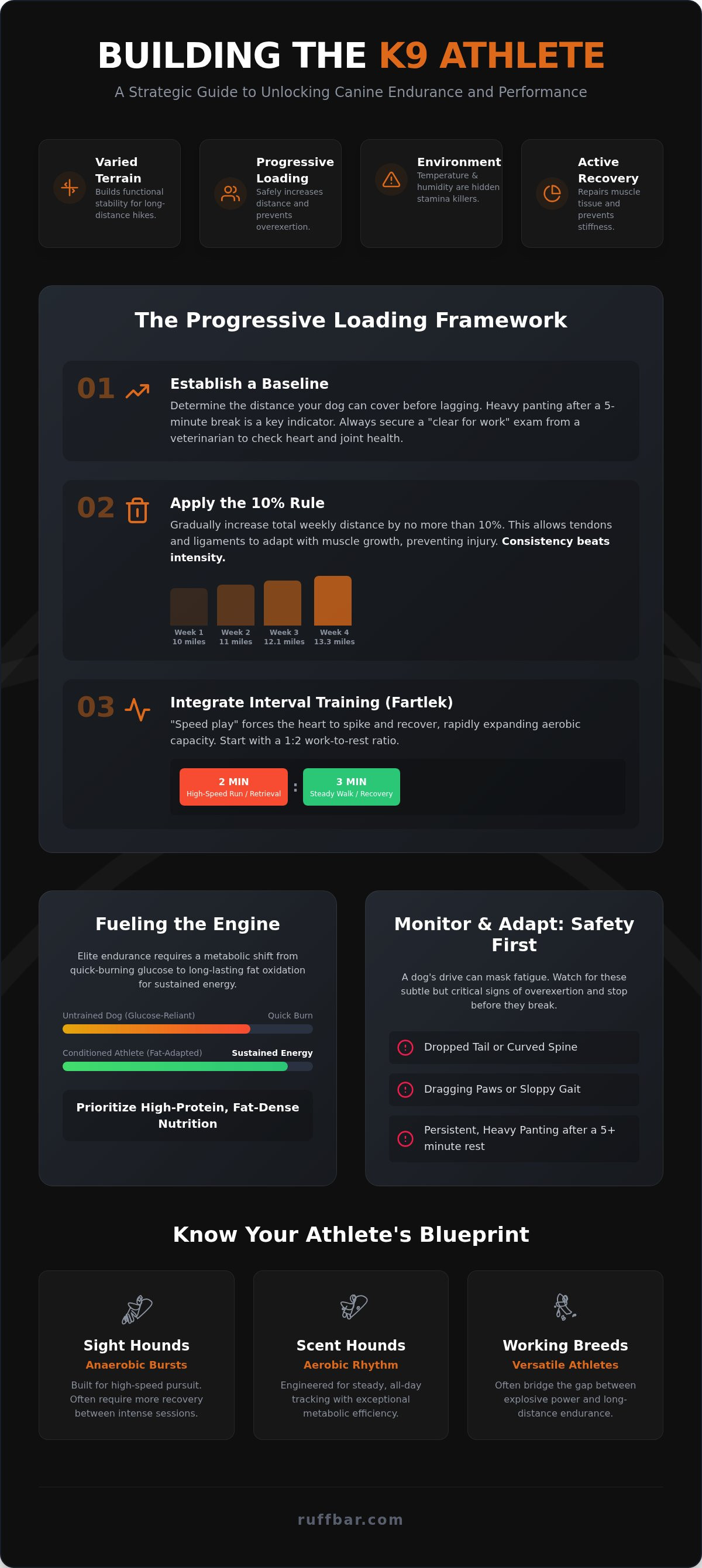
- Sight Hounds: Built for anaerobic bursts and high-speed pursuit. They often require more recovery between sessions.
- Scent Hounds: Engineered for steady, aerobic rhythm and all-day tracking.
- Working Breeds: Versatile athletes that often bridge the gap between power and distance.
Determine your dog's current baseline by monitoring the distance they cover before signs of lagging appear. Heavy panting that persists after a five-minute break indicates you have reached the current limit. Always secure a "clear for work" exam from a veterinarian to check heart health and joint integrity. This ensures your program builds strength instead of exposing hidden weaknesses. For those breeding the next generation of elite athletes, maintaining long-term health is paramount; K9 Stud Hub offers a guide on responsible litter frequency to protect your dog's vitality.
The Progressive Loading Framework: 5 Steps to Building Distance
Building elite endurance isn't about random hikes. It's about data-driven progression. Knowing how to build stamina in a dog requires a commitment to the progressive loading framework. This system ensures your partner adapts to stress without reaching the point of failure. Discipline on the trail prevents injury in the backyard.
The 10% rule is the bedrock of canine conditioning. If your dog covers 10 miles in a total week, increase the load to 11 miles the following week. No more. This gradual adaptation allows tendons and ligaments to catch up with muscle growth. Rapid spikes in mileage lead to soft tissue fatigue and long-term joint degradation. Consistency beats intensity every single time.
Surface variation is equally critical. Pavement is predictable; it's also punishing on the pads and joints. Move your training to dirt trails, sand, or tall grass. These dynamic surfaces force the body to engage stabilizing muscles that remain dormant on flat ground. While your dog works, monitor their gait. A dropped tail, dragging paws, or a curved spine are red flags. These postural shifts signal that the primary movers are fatigued and the skeletal system is taking the hit. Stop before they break.
Integrate active rest days between heavy sessions. A 20-minute slow sniff-walk keeps blood flowing to recovering tissues without adding structural stress. Movement facilitates repair. Stagnation leads to stiffness.
Interval Training for Cardiovascular Strength
Fartlek training, or "speed play," forces the heart rate to spike and recover. It is the fastest way to expand aerobic capacity. For a beginner 20-minute session, alternate two minutes of high-speed retrieval or running with three minutes of steady walking. Use a 1:2 work-to-rest ratio to start. This structure builds the cardiovascular floor while sharpening neurological drive. During these high-intensity sessions, providing a quick hit of clean protein like Ruff Stix® Bison Pork helps maintain focus and prevents metabolic crashes.
Resistance Training and Pack Weight
Resistance adds a new dimension to endurance. Introduce a K9 pack only after the skeletal system is fully mature, typically around 18 to 24 months. Start with an empty pack to allow for proprioception adjustments on uneven terrain. Gradually add weight until you reach 10% of their total body weight. Never exceed 15%. This added load increases caloric burn and strengthens the core, ensuring your dog can handle the physical demands of multi-day backcountry exploration.
Fueling the Engine: Nutritional Strategies for Stamina
Precision training requires precision fueling. You cannot build a K9 athlete on low-tier fillers. High-protein, grain-free nutrition is the non-negotiable baseline for endurance. While humans rely on carbohydrates for energy, dogs are built differently. They are metabolic masters of fat oxidation. During long-distance efforts, fats provide the sustained propulsion needed to keep moving. Carbohydrate loading is a mistake. It leads to insulin spikes, digestive distress, and the inevitable mid-trail crash. Focus on fat for fuel. Focus on protein for repair. Focus on results.
Just as your dog requires the right fuel to avoid a crash, you can discover Organic Fuel for organic herbal supplements that help maintain your own energy and stamina during grueling outdoor activities.
The "Metabolic Window" is your most powerful tool for recovery. Within 30 to 60 minutes of finishing a hard effort, the body is primed for muscle synthesis. This is the time to deliver clean, bioavailable protein to repair structural micro-tears. Skipping this window extends recovery times and limits the gains from your training. If you are serious about how to build stamina in a dog, you must treat their post-hike meal as a tactical necessity. Proper timing ensures that today's exertion builds tomorrow's strength.
Mid-Adventure Energy and Glycogen Maintenance
Small, frequent snacks are essential to prevent the "bonk." A dog bonks when their glycogen stores are depleted and their blood sugar hits the floor. You will see the signs: glazed eyes, sudden lethargy, and a loss of coordination. Ruff Stix® Bison Pork provides high-density, portable fuel that fits in a pocket or pack. It delivers the energy needed to bridge the gap between base meals without causing a heavy, lethargic stomach. Stable glucose means a stable pace. Keep the engine running with clean, meat-based calories that provide immediate propulsion.
Hydration and Electrolyte Balance
Canine thermoregulation is an evaporative process. Dogs pant to shed heat, but this strips the body of water and electrolytes. On grueling, multi-hour expeditions, plain water is often insufficient. It hydrates the stomach but fails to replenish the cellular minerals lost through exertion. Dehydration increases blood viscosity, forcing the heart to pump harder and draining the dog's energy reserves. Check out these DIY Dog Food Toppers for Energy to learn how to integrate hydration-boosting ingredients into their performance routine. Proper hydration keeps the blood thin, the heart efficient, and the stamina high.
Environmental Factors and Safety Protocols
Environment dictates performance. You cannot out-train a hostile climate. Ambient temperature directly impacts cardiovascular efficiency. When the mercury rises, the heart pumps harder to dissipate heat through the skin and lungs. This diverts blood from the working muscles, slashing endurance. Humidity is the silent stamina killer. High moisture levels prevent evaporative cooling. For long-haired breeds, this creates a thermal trap. Learning how to build stamina in a dog involves respecting these environmental ceilings. Discipline on the trail means knowing when to push and when to pivot.
Altitude adds another layer of metabolic stress. Reduced oxygen density forces the lungs to work faster to oxygenate the blood. If you are preparing for mountain adventures, start slow. Allow 48 to 72 hours for physiological acclimation before attempting vertical gains. A dog conditioned at sea level will "bonk" quickly at 10,000 feet without proper adjustment. Preparation is the bridge between a successful summit and a dangerous rescue scenario.
Heat Management and Cooling Strategies
Prevention is the only strategy. Use the "Three-Point Check" to monitor your dog's status during intense activity. Check the gums; they should be moist and pink, not tacky or brick-red. Monitor the heart rate; it should return to a steady baseline within five minutes of stopping. Assess responsiveness; a glassy-eyed stare or a "dark tongue" indicates an immediate heat emergency. Strategic rest stops are mandatory. Seek shade, provide water, and prioritize belly-cooling. The belly and paw pads act as heat sinks. Use them to dump core temperature fast.
Paw and Joint Protection
Foot health is the foundation of endurance. A single pad tear ends the expedition. Toughen pads by training on varied, abrasive surfaces like gravel or dry rock. Use booties only for extreme heat or sharp scree fields where injury is certain. High-mileage weeks also demand structural support for the frame. Joint lubrication is essential for high-impact movement on uneven terrain. Support the skeletal system with Ruff Supplements for Dogs to ensure joints remain resilient under heavy loads. Resilient joints lead to longer miles. Longer miles lead to a stronger athlete.
Recovery Optimization and Long-Term Maintenance
Training ends at the trailhead. Growth begins at home. If you want to know how to build stamina in a dog, you must respect the recovery cycle as much as the exertion phase. Muscles don't grow during the hike; they grow during the repair. Total stagnation after a grueling day leads to stiffness, lactic acid buildup, and prolonged fatigue. Instead, prioritize active recovery. A 15-minute low-intensity movement session the day after a summit push maintains blood flow. It flushes metabolic waste. It keeps the machine primed.
Sleep is the ultimate performance enhancer. During deep rest, the canine body releases growth hormones essential for tissue repair and neurological reset. A tired dog isn't just resting; they are rebuilding. Long-term periodization is the final piece of the endurance puzzle. You cannot maintain peak intensity year-round. Use a seasonal approach: build distance in the spring, peak in the summer, and transition to maintenance in the winter. This prevents burnout. It preserves joint longevity. It builds a lifetime of stamina rather than a single, fleeting peak.
The Role of Raw Nutrition in Repair
Clean fuel dictates the speed of recovery. Freeze-dried raw proteins provide the bioavailable amino acids required for rapid tissue synthesis. Unlike processed kibble, grass-fed meats offer natural anti-inflammatory benefits that soothe stressed joints and muscles. For multi-day expeditions where weight and quality are critical, refer to The Ultimate Guide to Freeze Dried Raw Dog Food for Backpacking (2026). High-standard nutrition ensures your partner wakes up ready for the next mile. Don't settle for fillers when your dog's vitality is on the line.
Monitoring the Resting Heart Rate (RHR)
Data drives excellence. Track your dog's Resting Heart Rate (RHR) as a concrete metric for improving fitness. As cardiovascular efficiency increases, the heart becomes more powerful. A decreasing RHR over several months is the definitive sign of a stronger, more resilient athlete. It proves that your conditioning program is working at a biological level. Monitor the numbers. Adjust the load. Fuel the drive. High-stakes adventure demands high-standard preparation. Fuel your dog’s next milestone with Ruff Bar Performance Nutrition.
Forge the Ultimate Adventure Partner
Stamina is the byproduct of relentless discipline. It requires a commitment to the 10% rule of progressive loading and a deep respect for biological recovery cycles. You now have the tactical blueprint for how to build stamina in a dog through cellular adaptation and environmental awareness. Consistency on the trail and precision in the bowl transform a companion into an elite K9 athlete. Every mile matters. Every rest day counts. Every calorie serves a purpose.
Don't compromise on the fuel that powers your journey. High-stakes movement demands high-standard nutrition that can handle the rigors of the backcountry. Equip your K9 athlete with high-protein Ruff Stix®. Our performance fuel features USDA-graded grass-fed bison and beef. It's grain-free. It's filler-free. It's designed by adventure athletes for adventure dogs who live for the wild. Your next summit is not just a goal; it's a shared milestone. The trail is open. Go get it together with strength and vitality.
Frequently Asked Questions
How long does it take to build stamina in a dog?
Expect to see measurable physiological changes in approximately six to eight weeks of consistent training. A 2026 study on home-based fitness programs confirmed that 10 to 20 minute sessions, performed four times a week, lead to significant musculoskeletal improvements within a six-week window. Incremental loading is the only reliable path to adaptation. Rapid gains often lead to structural failure, so prioritize the long game for a resilient athlete.
What are the best exercises to increase dog endurance?
The most effective exercises combine steady-state movement with varied terrain and resistance. Trail running, weighted pack walks, and "fartlek" speed play are the gold standards for elite conditioning. These activities engage stabilizing muscles while expanding cardiovascular capacity. Learning how to build stamina in a dog requires a diverse training mix to ensure they are prepared for the unpredictable demands of the rugged backcountry.
Can I build stamina in an older dog safely?
You can build stamina in a senior dog by focusing on low-impact, joint-friendly activities. Limit sessions to 20 to 60 minutes of daily movement, such as swimming or walking on soft surfaces like grass or sand. Always secure a veterinary exam before starting a new program for an aging athlete. Senior dogs require longer recovery windows and high-quality, bioavailable protein to maintain muscle mass without overstressing their connective tissues.
What should I feed my dog during a long hike for energy?
Prioritize high-density, meat-based proteins and fats to maintain stable blood sugar levels during exertion. Small, frequent snacks prevent metabolic crashes and the "bonk" that occurs when glycogen stores are depleted. Avoid grain-heavy fillers that lead to insulin spikes and mid-trail lethargy. Clean, portable fuel provides the propulsion needed for multi-hour efforts. Focus on quality sourcing to ensure every calorie serves a functional purpose.
How do I know if I am pushing my dog too hard?
Monitor heart rate recovery and postural changes to detect overexertion. A fit dog should return to a resting heart rate within five minutes of stopping. Red flags include a "dark tongue," glazed eyes, dragging paws, or a curved spine. These are emergency indicators of heat stroke or systemic fatigue. Immediate rest in the shade and hydration are mandatory. Never ignore these signals in the pursuit of a summit.
Does swimming help build running stamina in dogs?
Swimming is an elite cross-training tool that builds cardiovascular strength without joint impact. It expands lung capacity and strengthens the core, which provides the structural foundation for running endurance. While it doesn't replace the weight-bearing demands of the trail, it's a vital component of a high-performance program. Use swimming to maintain fitness during summer heatwaves or as an active recovery tool after high-mileage weeks.
Is it better to do long slow walks or short fast sprints for stamina?
A versatile athlete needs both long, slow distance and short, fast intervals. Long walks build the aerobic base and toughen the paw pads for abrasive terrain. Sprints and interval play increase the anaerobic threshold and heart rate efficiency. Knowing how to build stamina in a dog means balancing these two extremes. This dual approach ensures your partner can handle the steady grind and the explosive vertical scramble.