
How to Add Calories to Dog Food for Hiking: The Ultimate Trail Fuel Guide
Your dog’s nutrition is a piece of technical gear. It is not just a meal. If you are still hauling heavy bags of standard kibble into the backcountry, you are sacrificing your own endurance and your partner's performance. You know the frustration of a bulging pack. You've seen your dog hit a wall at mile ten. It's a common struggle for every serious hiker. Learning how to add calories to dog food for hiking is the only way to ensure peak performance on the trail. You need fuel that moves with you.
We will show you how to master the art of caloric density. You can keep your dog energized and focused without weighing down your pack with unnecessary bulk. This guide covers the essential strategies for sustained canine power. We explore high-fat toppers, clean protein sources, and the efficiency of freeze-dried raw meals. Get ready to streamline your routine. Build a faster, stronger, and more resilient trail team. Your next summit depends on it.
Key Takeaways
- Prioritize caloric density to maximize energy while minimizing pack weight. Learn exactly how to add calories to dog food for hiking by focusing on high-yield energy ratios.
- Balance high-performance fats with clean proteins for sustained propulsion. Avoid digestive distress by choosing quality ingredients over low-grade oils.
- Switch to freeze-dried raw meals to reduce food weight by up to 80 percent. This ensures your dog carries essential nutrition without the burden of heavy fillers.
- Deploy a strategic feeding routine using frequent snacks and mandatory rehydration. This method protects kidney function and prevents mid-trail fatigue.
- Utilize diverse protein rotations to maintain high motivation on difficult terrain. Bison, duck, and beef provide the varied nutritional profile required for elite endurance.
The Caloric Density Challenge: Why Standard Kibble Fails on the Trail
Standard kibble is for the living room. It isn't for the mountain. When you are pushing vertical miles, your dog’s biology shifts. Caloric density is the only metric that matters. It is the ratio of usable energy to physical weight. Most owners ignore this. They pack more of the same low-grade food. This is a mistake. On the trail, your dog requires 1.5x to 2x their normal daily intake. If you rely on standard kibble, you are carrying a bag full of air, moisture, and cheap fillers. You need to know how to add calories to dog food for hiking without blowing out your pack’s seams. The objective is simple: maximum propulsion with a minimum footprint.
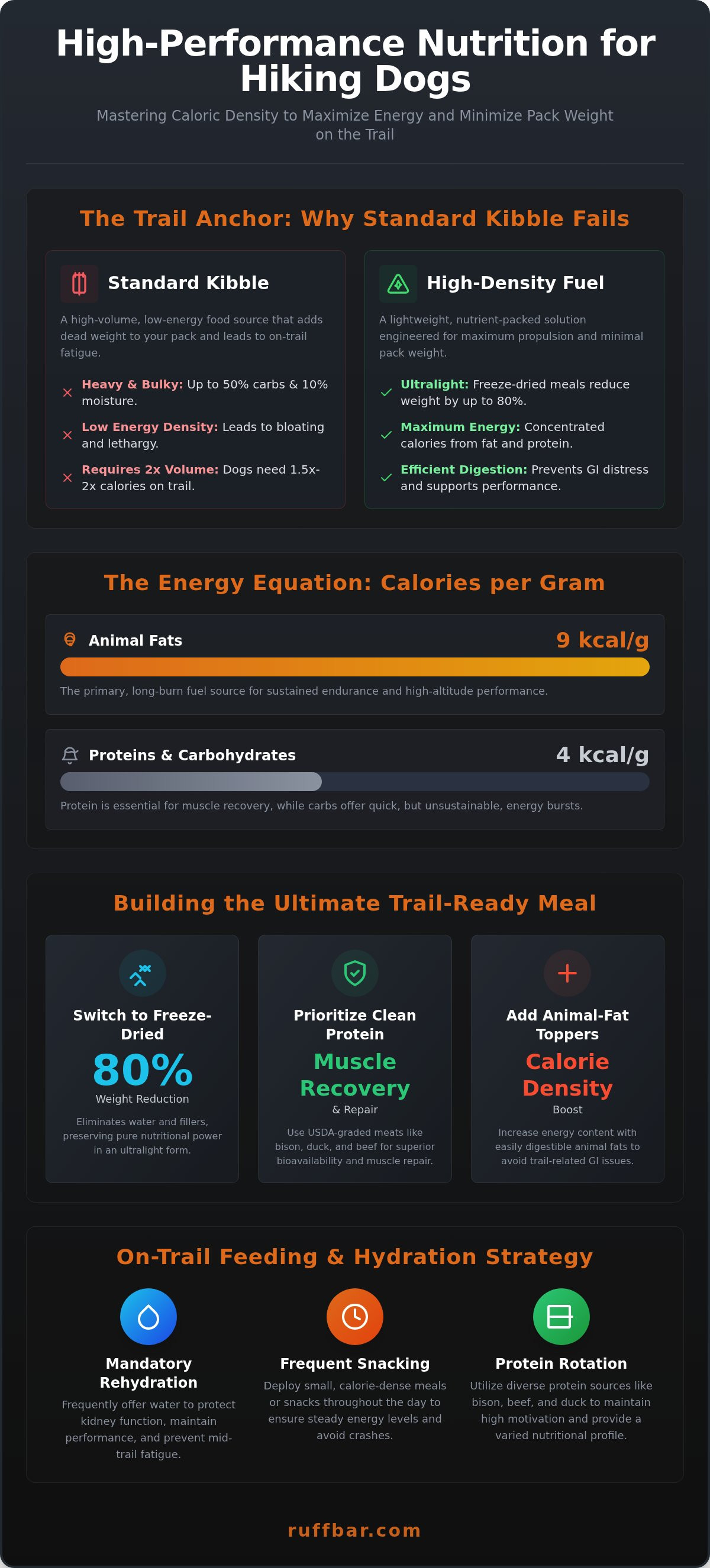
Standard kibble is often 10 percent moisture and up to 50 percent carbohydrates. This is dead weight. It creates a high-volume, low-energy profile. Your dog’s stomach has limited capacity. Forcing them to eat double the volume of low-density food leads to bloating. It leads to lethargy. It leads to a miserable partner. You are essentially carrying water and corn across state lines. Stop the waste. Focus on fuel that delivers results per ounce.
Canine Metabolic Demands During Elevation Gain
Vertical gain is a metabolic furnace. Working breeds don't just walk; they navigate, climb, and sprint. This activity drains glycogen stores rapidly. To keep them moving, you must understand the nutritional needs of active dogs. Fats are the primary endurance fuel for canines. They provide 9 kcal per gram. Simple carbohydrates provide less than half that. Carbs lead to spikes. They lead to crashes. They leave your dog lethargic at the summit. Clean, dense fats provide the steady burn required for high-altitude exploration. Purity matters. Strength matters. Natural origin matters.
The True Cost of Pack Weight
Every ounce counts. Every gram has a price. If your dog carries their own food, they spend energy just to transport that energy. It is a cycle of diminishing returns. Standard kibble is bulky. It is inefficient. It is heavy. A smaller, denser meal increases overall trail efficiency. It improves canine ergonomics. It preserves pack balance. It maximizes endurance. When you use freeze-dried raw meals, you reduce food weight by 75 to 80 percent. You remove the water. You remove the waste. You keep the power. This is the foundation of how to add calories to dog food for hiking. Efficiency is the difference between a dog that survives the trail and a dog that thrives on it.
Evaluating High-Performance Boosters: Proteins vs. Fats
Energy is a calculation. Fats deliver 9 kcal per gram. Proteins and carbohydrates deliver only 4 kcal per gram. When you are figuring out how to add calories to dog food for hiking, you start with fat. It is the most efficient fuel source available. It provides the long-burn energy required for dawn-to-dusk movement. But there is a dangerous trap. Many hikers dump olive oil or peanut butter into standard kibble. This is a mistake. Sudden fat-loading with vegetable oils often leads to trail diarrhea. It ruins the trip. It dehydrates your partner. You must prioritize animal-based fats. They offer superior bioavailability. They are easier on the canine gut. They provide the power without the gastrointestinal risk.
Protein plays a different role. It is not the primary energy source for the climb, but it is the foundation for the recovery. After ten miles of rocky ascent, muscle fibers are stressed. They need immediate repair. High-quality protein ensures your dog wakes up ready for the next peak. You need to look beyond the calorie count. Look at the source. According to a veterinary perspective on nutrition for working dogs, maintaining proper body condition is critical for long-term health. Fuel for the move. Protein for the mend.
Why Clean Protein Matters for Trail Recovery
Quality is non-negotiable. Avoid "meat meals" or generic "animal by-products." These are low-grade fillers with poor absorption rates. Demand USDA-graded meats. Grass-fed proteins provide a cleaner nutritional profile for sustained muscle repair. This is the science of high-protein dog energy bars. It is about providing functional recovery tools. Clean protein prevents the mid-trip slump. It keeps the tail up. It keeps the pace steady. For a reliable boost, integrate Ruff Bar Functional Nutrition Toppers into your feeding routine.
The Dangers of Fillers and Grains on the Move
Grains are dead weight. Corn, wheat, and soy cause systemic inflammation. They make dogs sluggish. On a steep grade, inflammation is the enemy. It taxes the joints. It slows the heart. Many "performance" kibbles are packed with these empty calories. They look good on a budget but fail on the ridge. Grain-free options are essential for dogs with sensitive trail stomachs. If an ingredient doesn't build muscle or provide energy, it doesn't belong in your pack. Focus on purity. Focus on strength. Focus on results.
Choosing Adventure-Ready Meals: A Buying Guide for Hikers
Treat your dog’s food like your tent or your boots. It is essential gear. When you evaluate trail meals, you are looking for the highest energy-to-weight ratio possible. This is the ultimate solution for how to add calories to dog food for hiking without destroying your back. Freeze-dried meals are the undisputed champion of the backcountry. While air-dried options are viable, they often retain more moisture and weight. Freeze-drying removes 75 to 80 percent of the original weight of fresh food. You get the nutritional power of a five-pound raw meal in a one-pound bag. It is efficient. It is lightweight. It is the gold standard for high-altitude performance.
Do not settle for "toppers" alone on long hauls. Look for "complete and balanced" labels. This ensures your dog doesn't face nutritional gaps during multi-day treks. Rehydration speed is another critical factor. After a twelve-mile day, you don't want to wait thirty minutes for a meal to soften. High-quality freeze-dried options rehydrate in seconds. Ensure the packaging is rugged. You need puncture-resistant bags that survive the friction of a stuffed pack. A torn bag is a lost meal. Reliability is everything.
Freeze-Dried Raw: The Gold Standard for Backpacking
The freeze-drying process is superior because it avoids high-heat processing. Heat kills enzymes. It degrades vitamins. It compromises protein structures. Raw-to-freeze-dried technology locks in nutrient density at the peak of freshness. You are providing your dog with live nutrients that support digestion and vitality. This isn't just food; it is biological fuel. For a deeper dive into the technology, read the ultimate guide to freeze-dried raw dog food. It explains why raw ingredients outperform processed kibble in every mountain environment.
Portioning and Planning for Multi-Day Treks
Precision prevents failure. Calculate your dog’s daily caloric needs based on the terrain. Steep inclines and cold temperatures increase burn rates. Use a "pre-mix" strategy. Combine your base meals with high-fat boosters before you leave the trailhead. This streamlines your camp routine. It also allows you to manage waste effectively. Minimal packaging is a "Leave No Trace" essential. Repackage meals into reusable, airtight silicone bags to reduce bulk. This is how to add calories to dog food for hiking while maintaining a clean, organized pack. Every gram you save in packaging is a gram of extra fuel you can carry for the summit push.
Maximizing Trail Energy: Rehydration and Feeding Strategies
Strategy is the final component of your trail nutrition plan. You have selected the right gear. Now you must execute the delivery. Knowing how to add calories to dog food for hiking is useless if your dog's body cannot process the fuel. Performance depends on timing, state of mind, and biological readiness. Don't just dump food in a bowl and expect results. Follow a structured feeding routine to ensure every calorie translates into forward motion.
- Step 1: Always rehydrate. Freeze-dried meals are lightweight because the water is gone. If you feed them dry, your dog's body must provide the moisture for digestion. This draws water away from the muscles and stresses the kidneys. Always add water to restore the meal to its natural raw state.
- Step 2: Feed frequent snacks. Avoid the "one big meal" trap. Large volumes of food lead to bloat and lethargy. Feed smaller portions every few hours to maintain consistent blood sugar levels.
- Step 3: Use high-value toppers. Trail stress or extreme fatigue can kill a dog's appetite. Use Ruff Bar Pure Blend Toppers to encourage eating when they are too tired to care about standard fuel.
- Step 4: Monitor and adjust. Watch your dog's gait and focus. If they start lagging or searching for grass, increase the fat intake immediately.
The Importance of Hydration in Caloric Absorption
Water is the catalyst for energy. Without proper hydration, a dog's ability to process fats and proteins drops significantly. Dry food in a dry environment is a recipe for a "bonk." You can increase fluid intake at camp by mixing bone broth or specific performance dog food supplements into their water. This masks the taste of unfamiliar water sources and ensures they drink enough to support their metabolic needs. Hydration is the foundation of how to add calories to dog food for hiking effectively.
Mid-Trail Fueling: The Role of Energy Bars
Long climbs require quick caloric top-offs. You don't always have time to stop and rehydrate a full meal. This is where energy bars and stix become essential equipment. They provide a dense hit of protein and fat during short breaks. This prevents blood sugar crashes on steep grades. Stix formats, like Ruff Stix® Bison Pork, are superior for on-the-go rewarding. They are easy to portion and don't require camp setup. Keep your dog's momentum high by fueling the move, not just the rest. For consistent power throughout the day, pack Ruff Food Bars as your primary mid-trail energy source.
Standout Performance Meals: The Ruff Bar Adventure Collection
The mountain is the ultimate testing ground. Your gear must be uncompromising. Your dog's nutrition is no different. The Adventure Ready collection is engineered as essential backcountry equipment. It isn't just food. It is a biological tool for sustained propulsion. We use USDA-graded bison, duck, and beef to provide varied protein rotations. This variety prevents nutritional boredom and ensures a complete amino acid profile. When you master how to add calories to dog food for hiking, you stop guessing and start performing. Every gram in our meals serves a purpose. There is no waste. There is no dead weight.
Our "no-filler" philosophy is a commitment to purity. We reject grains, soy, and synthetic additives. These ingredients cause inflammation and sluggishness on the ridge. Instead, we focus on high-density fats and clean proteins. These meals integrate seamlessly with your existing trail diet. Use them as the primary fuel source or as high-octane boosters for standard rations. You gain the flexibility to scale energy levels based on the day’s vertical gain. Efficiency is the difference between a dog that survives the trek and a dog that leads the pack.
Ruff Food Freeze Dried Raw Backpacking Meals: Beef & Duck
Specific environments demand specific fuel. Ruff Food Freeze Dried Raw Backpacking Meals Beef is designed for high-intensity burn. It features a high-fat content that is critical for cold-weather treks and high-altitude exposure. If your dog has a sensitive gut, Ruff Food Freeze Dried Raw Backpacking Meals Duck offers a novel protein source. It provides clean energy without the risk of common allergens. The packaging is as rugged as the contents. These lightweight bags are puncture-resistant and designed to fit in the tightest corners of a stuffed backpack. They survive the friction. They deliver the power.
Enhancing the Bowl: Ruff Bar Functional Nutrition Toppers
Sometimes you need an immediate energy spike. Ruff Bar Pure Blend Toppers allow you to instantly increase caloric density without adding bulk. They are the perfect solution for how to add calories to dog food for hiking during high-mileage pushes. These toppers also serve a psychological purpose. Trail stress and exhaustion can make even the most food-motivated dog refuse a meal. The intense aroma and flavor of our toppers entice picky eaters to finish their bowl. This ensures they get the recovery nutrients they need for the next morning's ascent. Prepare your partner for the peak. Shop the Adventure Ready Collection for your next trek and experience the standard of elite trail fuel.
Dominate Every Ridge with Elite Fuel
The mountain demands more. Your dog’s biology requires precision. You now have the blueprint for how to add calories to dog food for hiking without compromising your pack’s weight. Prioritize caloric density. Master the rehydration process. Use frequent, high-octane snacks to prevent the mid-trail bonk. This isn't just about feeding. It is about fueling a partner. You've learned to value fat as endurance fuel and protein as recovery gear. Every meal is a tactical decision.
Ruff Bar provides the essential equipment for the high-stakes hiker. Our formulas feature USDA-graded grass-fed meats and are entirely grain-free and filler-free. We build nutrition that works as hard as you do. It is a standard trusted by thru-hikers and K9 athletes across the most demanding terrains. Stop carrying dead weight. Start carrying power. Every ounce in your pack must contribute to the mission. Every gram must drive your team forward.
Fuel your next adventure with our Adventure Ready Backpacking Meals. The summit is waiting. See you at the top.
Frequently Asked Questions
How many extra calories does my dog need for a 10-mile hike?
Your dog typically requires 1.5x to 2x their normal daily maintenance calories for a 10-mile trek. This depends heavily on elevation gain and pack weight. High-intensity movement on steep terrain burns glycogen rapidly. Focus on delivering these extra calories through dense fats rather than increasing the volume of standard kibble.
Can I just add olive oil to my dog's regular kibble for hiking?
Adding olive oil to regular kibble is a mistake that often leads to trail diarrhea. Sudden fat-loading with vegetable oils shocks the canine digestive system. You should prioritize animal-based fats for superior bioavailability and gut safety. This is a critical factor when learning how to add calories to dog food for hiking without causing a medical emergency.
What is the best high-calorie food for a dog with a sensitive stomach?
Novel proteins like duck are the best choice for dogs with sensitive digestive systems. Avoid common allergens like chicken or grain-heavy fillers that trigger inflammation. Ruff Food Freeze Dried Raw Backpacking Meals Duck provides high-density energy in a clean, grain-free format. It delivers the power your dog needs without the risk of mid-trail gastric distress.
Is freeze-dried raw dog food safe for backpacking in summer heat?
Freeze-dried raw food is perfectly safe for summer backpacking because it is shelf-stable. Removing the moisture prevents spoilage that affects fresh or frozen raw diets. Keep the packaging sealed and stored in a cool part of your pack away from direct sunlight. Only rehydrate the meal immediately before feeding to maintain safety.
How do I calculate my dog's pack weight limit including food?
A healthy, conditioned dog can safely carry 10% to 15% of their total body weight. This total includes the harness, water, and all food supplies. For a 50-pound dog, the pack should never exceed 7.5 pounds. Always prioritize lightweight, freeze-dried meals to keep the weight within this safe range while maximizing energy delivery.
Why is my dog refusing to eat their food while we are hiking?
Stress, extreme fatigue, and unfamiliar environments can suppress a dog’s appetite on the trail. They may also be too dehydrated to process dry food. Use Ruff Bar Pure Blend Toppers to provide an aromatic boost that encourages eating. These toppers spike the caloric density and entice even the most exhausted dogs to finish their bowl.
Should I feed my dog before or after a strenuous climb?
Feed a small portion two hours before the climb and a full meal at least one hour after you reach camp. Never feed a large meal immediately before or after heavy exertion to reduce the risk of bloat. Use small, frequent snacks throughout the day to keep blood sugar stable. This ensures consistent propulsion without taxing the digestive system during the ascent.
What are the best lightweight dog treats for high-energy training on trail?
Dehydrated meat stix are the ultimate lightweight rewards for trail training. They provide high protein and fat in a compact, rugged format. Ruff Stix® Bison Pork are easy to portion and provide an immediate energy boost during short breaks. Using these stix is a practical way to master how to add calories to dog food for hiking during active movement.