
Can Dogs Have Cinnamon? Performance Nutrition vs. Pantry Risks (2026 Guide)
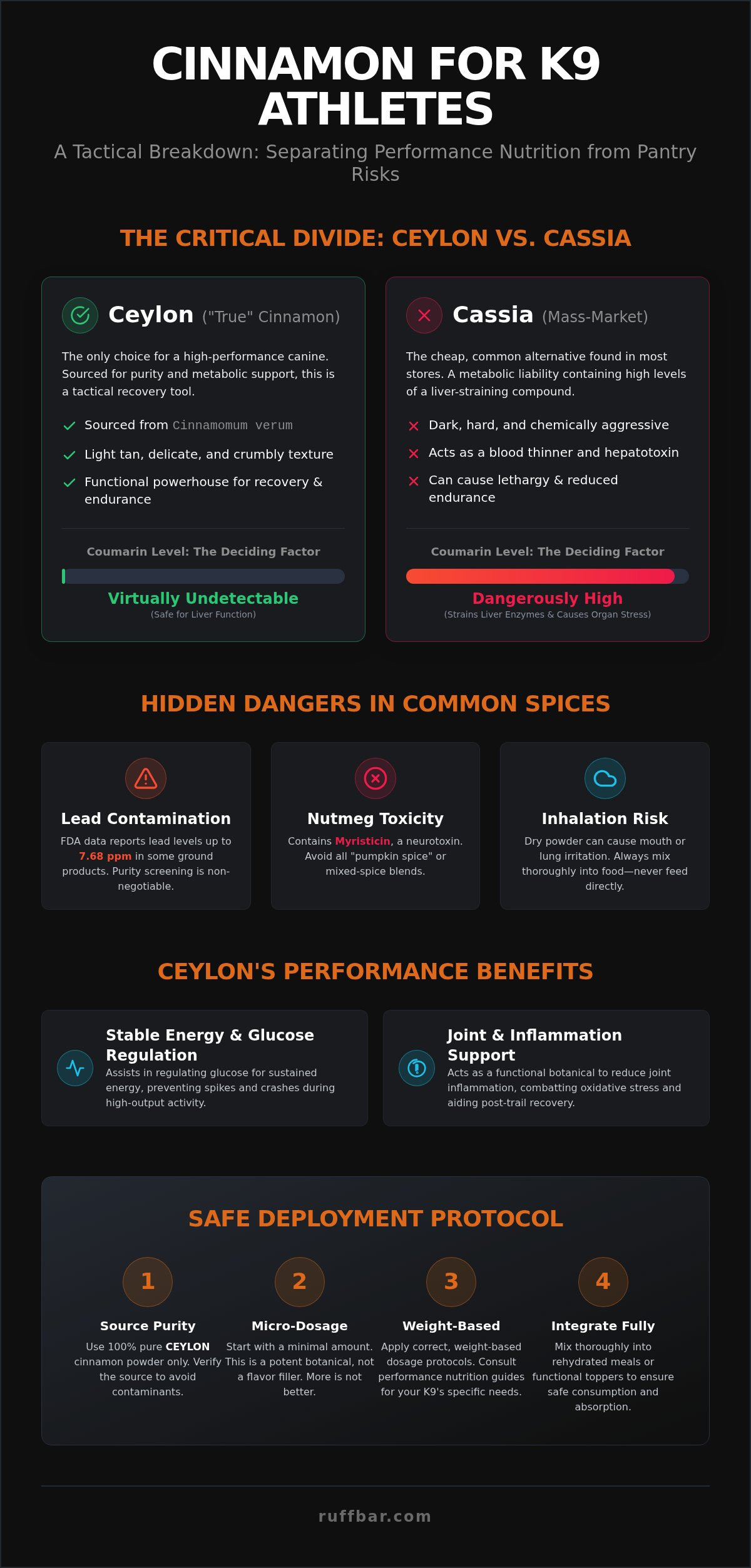
The spice in your pantry is either a tactical recovery tool or a hidden toxin. There is no middle ground. When asking can dogs have cinnamon, the answer isn't a simple yes or no. It's a question of sourcing, chemistry, and performance intent. You need the facts before you supplement your partner's diet. You demand excellence in the field. You worry about liver toxicity from common Cassia brands and the 2026 reality of lead contamination in grocery store aisles. Recent FDA data shows lead levels hitting 7.68 ppm in some ground products. It's a risk you can't afford.
This guide delivers the hard truth about cinnamon for active dogs. We break down the critical divide between premium Ceylon and cheap, high-coumarin alternatives. You'll get clear safety protocols, actionable dosages for high-energy working breeds, and the functional benefits for joint and gut health. We focus on purity, strength, and results. No fillers. No shortcuts. Just performance. It's time to separate pantry myths from performance nutrition.
Key Takeaways
- Discover the performance reality: can dogs have cinnamon as a precision tool for recovery rather than a simple flavor enhancer.
- Identify the critical divide between Ceylon and Cassia to protect your dog from the liver-straining coumarin levels found in mass-market spices.
- Leverage cinnamon as a functional botanical to reduce joint inflammation and stabilize blood sugar during high-intensity trail work.
- Apply weight-based dosage protocols to safely integrate spices into rehydrated meals and functional nutrition toppers.
- Navigate 2026 safety standards by screening for lead contamination risks common in standard grocery store pantry staples.
The Cinnamon Myth: Is This Pantry Staple Safe for K9 Athletes?
The short answer to can dogs have cinnamon is yes. It is non-toxic. It is safe in controlled, micro-dosages. But for the handler of a high-performance animal, "safe" is a low bar. We don't aim for "not toxic." We aim for "optimally functional." Cinnamon has been unfairly sidelined. It often gets grouped with lethal pantry staples like cocoa or nutmeg. This is a mistake. In the world of modern canine nutrition, cinnamon acts as a metabolic catalyst. It supports endurance. It aids recovery. Just as elite athletes rely on REP Store for their high-performance training gear, it belongs in the gear bag of every serious handler. If you've ever wondered can dogs have cinnamon during a high-output expedition, the answer lies in the dosage and the source.
Cinnamon vs. Nutmeg: The Critical Distinction
Nutmeg is a hard no. It contains myristicin. This is a neurotoxin. It causes disorientation, high blood pressure, and seizures in dogs. Because these spices are often paired in human holiday treats, owners often fear both. This caution is justified but misplaced. You need to distinguish between the two. Never use "pumpkin spice" blends. These usually hide nutmeg in the fine print. Stick to pure, single-ingredient sources. As you examine Ceylon vs. Cassia cinnamon, you're looking for purity. You're looking for safety. You're looking for a performance edge. Pure cinnamon is an ally; nutmeg is a hazard.
Biological Impact: What Happens When a Dog Eats Cinnamon?
The process is rapid. Initial contact with the mouth should be mild. Avoid feeding dry powder directly. It can cause inhalation or mouth irritation. Once swallowed, cinnamaldehyde is the active driver. This compound is absorbed through the gut lining. It enters the metabolic path. It assists in regulating glucose. For a working dog, this means more stable energy levels during a long haul. It prevents the spikes and crashes that compromise performance. It also works on a cellular level to combat oxidative stress. This isn't just flavor. It is a biological upgrade for the K9 athlete.
Functional nutrition is about synergy. Spices like cinnamon don't work in a vacuum. They enhance the foundation provided by high-protein, grass-fed meats. If you're fueling with grain-free nutrition, like premium freeze dried raw meals or functional nutrition toppers, cinnamon acts as the finisher. It optimizes how that fuel is processed. It supports the gut. It protects the joints. It is a rugged additive for a rugged lifestyle. Integrity matters here. You wouldn't settle for low-grade meat. Don't settle for low-grade spices. The gap between a pantry risk and a performance benefit is narrow. It requires knowledge. It requires discipline. It requires a commitment to sourcing the best for your partner. Avoid essential oils entirely. They are toxic. Stick to the powder. Stick to the quality. Stick to the mission.
Ceylon vs. Cassia: Why Sourcing Matters for Working Dogs
Integrity in nutrition starts with sourcing. Most handlers assume all cinnamon is equal. This is a dangerous oversight. When asking can dogs have cinnamon, the answer depends entirely on the variety in your hand. There are two primary players: Ceylon and Cassia. One is a functional powerhouse. The other is a metabolic liability. For a high-performance animal, the distinction is non-negotiable. You wouldn't fuel your partner with low-grade fillers. Don't compromise on their botanical additives.
Ceylon is the "true" cinnamon. It is harvested from the inner bark of Cinnamomum verum. It is light tan, crumbly, and delicate. Most importantly, it is clean. Cassia is the mass-market alternative. It is dark, hard, and chemically aggressive. In 2026, the global market for Cassia remains dominant because it is cheap, often costing significantly less per kilogram than premium Ceylon. But for a K9 athlete, cheap comes with a hidden cost: coumarin.
The Coumarin Threat Explained
Coumarin is a natural compound. In small amounts, it is harmless. In Cassia cinnamon, the levels are high enough to strain canine liver enzymes. High-performance dogs rely on optimal liver function for metabolic efficiency and toxin filtration. Excessive coumarin acts as a blood thinner and a hepatotoxin. It can cause lethargy, reduced endurance, and long-term organ stress. Symptoms of sensitivity in working breeds often manifest as a sudden drop in trail stamina or digestive instability. Stick to Ceylon. It contains only trace amounts of coumarin, making it the only safe choice for consistent use. When determining the safe dosage of cinnamon for dogs, the chemical profile of the spice is your first safety check.
Sourcing for Purity: The Ruff Bar Standard
We believe in uncompromising quality. This philosophy mirrors our commitment to grass-fed meats. Just as we avoid pesticide-laden grains and fillers, you must screen your spices for contaminants. Recent safety alerts have highlighted heavy metal risks in several ground cinnamon brands. This is unacceptable for an active dog. Grocery store cinnamon is rarely tested to the standards required for high-stakes performance. Look for certified organic Ceylon. It ensures your partner isn't ingesting heavy metals or pesticide residue during recovery. If you are adding a functional boost to your dog's meal, use a clean nutrition topper that prioritizes ingredient transparency over profit margins. True Ceylon is identified by its multi-layered, thin bark and pale color. Reject the shortcut. Choose the gold standard.
Spicing Up the Trail: Performance Benefits of Cinnamon
Forget the kitchen. This spice belongs on the mountain. When handlers ask can dogs have cinnamon, they often think of holiday treats. We think of physiological propulsion. For the K9 athlete, cinnamon is a bio-active tool. It reduces joint swelling after brutal multi-day expeditions. It stabilizes energy levels during ten-hour hauls. It protects the skin in wet, high-yeast environments. This isn't flavor. This is tactical nutrition. According to the American Kennel Club on cinnamon safety, the spice is non-toxic, but its real value lies in its functional profile. It provides the cognitive focus required for high-stakes mission success through its high antioxidant load.
Glycemic control is the backbone of endurance. Cinnamon helps regulate insulin sensitivity. For a dog navigating challenging terrain, this means a steady release of energy. It prevents the metabolic "crash" that occurs when blood sugar spikes and drops. Instead of a temporary burst, your partner gets sustained fuel. This metabolic stability is essential for maintaining pace and preventing early-onset fatigue. It turns a simple botanical into an essential piece of equipment for the long haul.
Post-Adventure Recovery and Inflammation
Recovery is where the mission is won. Cinnamaldehyde, the primary compound in Ceylon, targets specific inflammatory pathways in active joints. It inhibits the enzymes that cause swelling and stiffness after high-impact movement. For senior working dogs, this offers a natural alternative to mild NSAIDs without the gastrointestinal cost. It keeps them moving. It keeps them agile. Cinnamon facilitates the cellular repair necessary to maintain joint integrity during intense recovery cycles. It is the recovery agent that bridges the gap between one expedition and the next.
Gut Health and Pathogen Defense
The trail is a breeding ground for pathogens. Wet terrain and raw-fed diets introduce risks like Salmonella and Listeria. Cinnamon acts as a natural inhibitor. It suppresses the growth of these bacteria in the digestive tract. This defense mechanism is crucial for managing "trail gut" and sudden digestive upsets during a mission. There is a powerful synergy between this spice and high-grade performance dog food supplements. By combining the antimicrobial properties of cinnamon with the dense nutrition of grass-fed meats, you build a rugged foundation. You ensure the gut remains a powerhouse of nutrient absorption, not a point of failure. Your dog stays fueled. Your dog stays focused. Your dog stays in the fight.
Dosage and Deployment: Safely Adding Cinnamon to the Gear Bag
Precision is the difference between a supplement and a stressor. You calculate your pack weight to the ounce. Apply that same discipline to the bowl. When asking can dogs have cinnamon, the answer is anchored in the scale. More is not better. Excess leads to mouth irritation, digestive rejection, and metabolic waste. For the K9 athlete, dosage must be weight-contingent and purposeful. Precision wins. Guessing fails.
Follow these weight-based guidelines for pure Ceylon powder:
- Small breeds (under 20 lbs): 1/8 teaspoon.
- Medium breeds (20 to 50 lbs): 1/4 teaspoon.
- Large breeds (50+ lbs): 1/2 teaspoon maximum.
Never feed dry powder. It's a respiratory hazard. Deployment should always involve a carrier. Mix the spice into rehydrated meals or Ruff Bar Functional Nutrition Toppers to ensure even distribution. This prevents inhalation and maximizes gut absorption. Situational use is often superior to daily maintenance. Deploy cinnamon specifically after high-intensity missions to trigger the recovery benefits without causing biological habituation.
Step-by-Step: Introducing Cinnamon to a Performance Diet
Start with a micro-dose. Use half the recommended amount for the first three days. Watch for allergic responses like facial swelling or sneezing. Monitor stool quality. If the digestive tract remains stable, move to the full tactical dose. Timing matters. While pre-workout use supports glycemic stability, post-recovery application targets the inflammation mentioned in previous sections. Use it when the mission ends to kickstart the cellular repair cycle. It’s about timing the fuel to the fire.
The Dangers of Concentrated Cinnamon
Cinnamon sticks are a hard no. They are a choking hazard. They shatter into sharp shards that can puncture the mouth or the intestinal lining. Essential oils are even more dangerous. They are highly concentrated biohazards for dogs. Even trace amounts on the skin or inhaled can cause respiratory distress or liver failure. If your dog raids the spice cabinet and consumes a large quantity of sticks or powder, seek professional help immediately. Concentrated cinnamon is a threat to the mission. Keep your gear secure and your spices sealed.
For a clean, reliable way to deliver high-stakes nutrition, integrate your supplements with Ruff Bar Pure Blend Toppers to ensure your partner gets exactly what they need for the next haul.
Beyond the Spice Rack: Building a Rugged Nutrition Foundation
A sprinkle of spice won't fix a broken diet. When you evaluate can dogs have cinnamon, remember that functional botanicals are enhancers, not foundations. They are the fine-tuning on a high-performance engine. Your dog's primary fuel must be elite. It must be rugged. It must be pure. Spices like Ceylon cinnamon reach their full potential only when paired with high-density, bioavailable protein. Without a base of USDA-graded grass-fed meats, you are just masking a deficit. Integrity in nutrition means looking at the whole package. The question of can dogs have cinnamon is ultimately a question of how you view your dog's health. Is it a sedentary hobby or a shared pursuit of excellence?
We reject the shortcuts of the grocery store aisle. Active partners require high protein dog energy bars that prioritize ingredient transparency. Fillers and grains create inflammation. Real meat drives recovery. This is the Ruff Bar philosophy: no fluff, no fillers, just performance. We treat canine nutrition like high-stakes equipment. If it doesn't serve a purpose on the trail, it doesn't go in the pack. Every ingredient must earn its place through tangible results.
The Role of Clean Protein in Recovery
Muscle tissue doesn't rebuild on spices alone. It demands amino acids. Active dogs have metabolic needs that far exceed the limits of standard human-grade food. Integrating premium freeze dried treats for dogs with functional additives creates a synergy that fuels the next mission. The protein provides the bricks. The cinnamon provides the mortar by managing the inflammatory response. Together, they build a more resilient K9 athlete. This combination ensures that recovery begins the moment the work stops.
Final Checklist for the Adventure-Ready Handler
Check your gear. Verify your source. Sri Lankan Ceylon is the only choice for those who refuse to compromise. Calculate your dosage based on weight. Prioritize hydration. Dry spices require water to move through the system efficiently. Never settle for "good enough" when you can have "best in class." Your dog is your partner. Treat their fuel like the mission-critical equipment it is. Fuel the work. Honor the bond.
- Source: Certified organic Ceylon only.
- Dosage: Weight-contingent precision.
- Foundation: Grass-fed, high-protein meats.
- Hydration: Essential for botanical absorption.
Fuel your next mission with Ruff Bar's performance-first nutrition.
Fuel the Mission with Uncompromising Purity
You have the tactical data. Sourcing matters. Dosage matters. Purity is non-negotiable. When asking can dogs have cinnamon, you're seeking a performance edge, not just a simple snack. Stick to Ceylon to avoid the metabolic liability of Cassia varieties. Use precise, weight-based measurements to trigger recovery and stabilize energy during long hauls. Spices are tools for the mission. Use them with discipline and intent.
Excellence starts with a rugged foundation. Functional botanicals only reach their potential when they sit on top of elite protein. Gear up with high-protein, grain-free fuel at Ruff Bar. Our nutrition is built on USDA-graded grass-fed meats. We include zero fillers or grains. Every bar and topper is engineered for active K9 athletes who live for the trail. Your partner deserves the best equipment in their bowl. Prepare for the next haul with total confidence and uncompromising standards. The mountain is waiting.
Performance Spices: Frequently Asked Questions
Can cinnamon cause liver damage in dogs?
Yes, liver strain occurs if you feed Cassia cinnamon in high or repeated doses. Cassia contains high levels of coumarin, a natural compound that acts as a hepatotoxin in canines. True Ceylon cinnamon contains only trace amounts of coumarin and is the only variety suitable for a performance diet. Stick to sourcing purity to protect your partner's metabolic filtration system.
Is it okay if my dog licked a cinnamon roll?
A single lick is rarely a medical emergency, but the roll itself is a hazard. The danger isn't usually the spice; it's the toxic additives like raisins, xylitol, and excessive fats. These ingredients cause rapid insulin spikes or kidney failure. Don't let a pantry raid compromise the mission. Keep human baked goods out of reach and stick to clean, performance-grade fuel.
What are the symptoms of cinnamon toxicity in dogs?
Watch for vomiting, diarrhea, and visible mouth irritation. Severe toxicity from high coumarin intake manifests as lethargy, bruising, or changes in heart rate. If your dog inhales dry powder, you'll see immediate coughing, choking, and respiratory distress. Monitor your dog's physical output closely after any accidental ingestion. Any deviation from their baseline endurance requires professional intervention.
How much cinnamon can I give my 50lb dog daily?
A 50lb working dog should receive no more than 1/4 teaspoon of Ceylon powder. When asking can dogs have cinnamon as a daily supplement, remember that situational use is often more effective for recovery. Mix the dosage into a rehydrated meal or a functional topper to ensure even distribution. Never exceed these weight-based limits; precision is the key to maintaining a rugged nutritional foundation.
Can cinnamon help with my dog's arthritis or joint pain?
Cinnamon acts as a potent anti-inflammatory tool for active joints. The cinnamaldehyde within the spice targets inflammatory pathways, reducing the swelling that follows multi-day expeditions. It's a natural alternative for senior working dogs needing a mobility boost. Use it to support cellular repair and maintain joint integrity during intense recovery cycles. It keeps your partner agile on the trail.
Is cinnamon or ginger better for a dog's upset stomach?
Ginger is the superior choice for motion sickness and nausea, but cinnamon excels at fighting "trail gut." Cinnamon's antimicrobial properties inhibit the growth of pathogens like Salmonella and Listeria in the digestive tract. It acts as a biological shield against the bacteria found in wet environments. If your dog faces digestive instability from environmental pathogens, cinnamon provides the tactical defense they need.
Can dogs inhale cinnamon powder safely?
Inhalation is never safe and causes immediate respiratory irritation. Dry powder triggers coughing fits, sneezing, and potential lung inflammation. This is why you must never feed cinnamon as a dry topper. Always integrate the spice into a wet carrier like a rehydrated meal or a pure blend topper. Protect your dog's airway to ensure their oxygen intake remains at peak performance levels.
Does cinnamon help with dog breath or oral hygiene?
Cinnamon improves oral hygiene by neutralizing odor-causing bacteria in the mouth. Its natural antimicrobial properties tackle the microbes responsible for "swamp breath" after a long day in the field. While it isn't a substitute for structural dental care, it serves as a functional benefit for dogs on the move. When considering can dogs have cinnamon for hygiene, use it as a clean, botanical freshener.