
Can Dogs Eat Avocado? Performance Nutrition vs. Trailside Risks (2026 Guide)
Avocado is a tactical liability disguised as a superfood. You want your dog fueled for the summit, not sidelined by a sudden digestive crisis. It is natural to ask, can dogs eat avocado when you are searching for high-fat energy sources to sustain a long day of movement. You see the healthy fats and think fuel. The reality is far more volatile. While the flesh itself is not strictly toxic, the high fat content introduces a gamble you cannot afford to take on the trail.
One study of 200 dogs found evidence of chronic pancreatitis in over 25 percent of cases. That is a massive risk for a low-reward snack. This 2026 guide provides the definitive safety verdict on Persin toxicity and trailside hazards. You will learn why plant-based fats often fall short of athletic requirements. We will show you how to choose safer, high-performance alternatives that prioritize animal-based energy and functional excellence. Stop guessing about human food. Start fueling for the mission.
Key Takeaways
- Analyze the toxicity threshold of Persin to determine why the question of can dogs eat avocado often leads to tactical liabilities on the trail.
- Contrast the digestive efficiency of plant-based oils against the 95% bioavailability of animal-sourced lipids for high-intensity canine performance.
- Mitigate trailside hazards by identifying how high-fat human snacks can trigger life-threatening pancreatitis during backcountry excursions.
- Replace high-risk energy sources with portable, zero-filler alternatives like Ruff Stix® and freeze-dried raw meals for sustained endurance and recovery.
Persin and Pits: Is Avocado Actually Toxic to Dogs?
Avocado is a nutritional paradox for the active canine. While humans view it as a heart-healthy staple, the biological reality for your dog is far more complex. The central concern is Persin, a fungicidal toxin found throughout the plant. From the bark to the pit, this compound serves as a natural defense mechanism for the fruit. Most veterinary consensus in 2026 suggests dogs possess a higher tolerance than species like horses or birds. However, tolerance isn't immunity. High doses trigger biological distress that can compromise a dog's performance and long-term vitality.
The common question, "can dogs eat avocado?" often leads to a dangerous "Safe Flesh" myth. Owners assume the green meat is a harmless energy source. While the flesh contains lower concentrations of toxins than the leaves or pit, it isn't risk-free. Unripened fruit is particularly volatile. It carries significantly higher toxicity levels that can overwhelm a dog's system during a high-output adventure. Performance dogs require stability. Introducing a variable toxin into their diet is an unnecessary gamble when superior options exist.
The Three Major Hazards
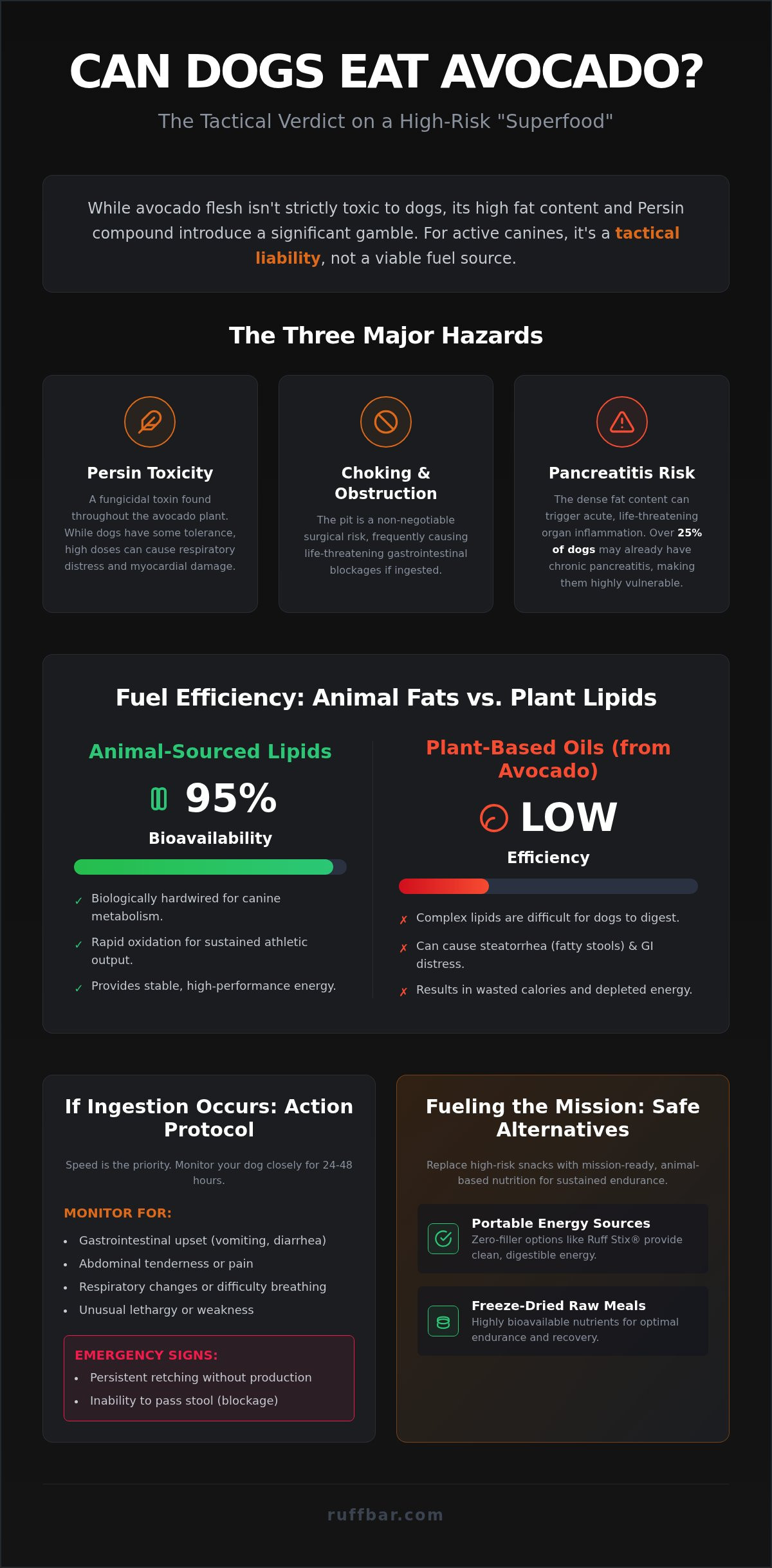
You face three distinct threats when your dog consumes avocado. Speed and clarity are essential for mitigation. These risks include:
- Persin Toxicity: High concentrations can lead to myocardial damage and acute respiratory distress in extreme cases.
- Choking and Obstruction: The pit is a non-negotiable surgical risk. It's the primary cause of life-threatening gastrointestinal blockages in scavenger scenarios.
- Pancreatitis: The dense fat content can trigger acute organ inflammation. Research shows that over 25 percent of dogs may already show signs of chronic pancreatitis; adding high-fat plant foods increases this vulnerability.
What to Do if Ingestion Occurs
Speed is the priority if your dog scavenges an avocado. Monitor for immediate signs of gastrointestinal upset like vomiting or abdominal tenderness. Watch their breathing closely. Respiratory changes or unusual lethargy over 24 to 48 hours indicate systemic distress. Emergency signs are clear and urgent. Persistent retching without production or an inability to pass stool suggests a life-threatening blockage. Don't wait for symptoms to escalate. Active partners require immediate stabilization to ensure they return to the trail. Your goal is a fast recovery and a return to high-performance standards.
The Fat Factor: Analyzing Avocado’s Nutritional Profile
Avocados are nutritional powerhouses for humans. They pack dense monounsaturated fats. They provide creamy texture and healthy calories. For your dog, this profile is a complex puzzle. When you ask can dogs eat avocado, you are really asking if their system can process plant-based lipids efficiently. Canine biology says no. Dogs are apex predators. Their metabolic machinery is built for animal fats, not fruit oils. Plant-sourced lipids are often too complex for their digestive tract to handle under the physical stress of a high-output adventure.
Caloric density does not always equal performance energy. An avocado is high in calories, but those calories are only useful if they are absorbed. High-fat plant foods often pass through the system too quickly. They lubricate the gastrointestinal tract with excessive efficiency. This creates "The Runnies." You want a dog that is fueled for the climb, not one sidelined by sudden GI distress. High-performance nutrition requires stability. Plant fats introduce a variable that can ruin a backcountry mission and leave your partner depleted.
Plant Fats vs. Canine Biology
Dogs lack the specific enzymes required to break down complex plant lipids with high efficiency. When these fats remain undigested, they cause steatorrhea. These are fatty, loose stools that drain your dog's hydration and energy levels on the trail. It is a waste of metabolic effort. Canine lipid metabolism is biologically hardwired to prioritize the rapid oxidation and absorption of animal-based fatty acids for sustained athletic output. Stick to what works. Avoid the digestive gamble of plant oils that lead to wasted energy and trailside accidents.
Is There Any Benefit?
Avocados do contain vitamins A, C, E, and B6. They offer high potassium levels. These are essential nutrients for recovery and muscle function. However, the risk-to-reward ratio is skewed. You can find these same nutrients in safer, more bioavailable formats. Citing The Scoop on Avocado and Your Pets, leading animal welfare organizations emphasize that the gastrointestinal upset from Persin and high fat outweighs the minor vitamin gains. Reliable performance comes from salt-balanced supplements and precision nutrition. You can build better stamina by exploring DIY Dog Food Toppers for Energy that utilize clean, animal-based ingredients. If you need a field-tested solution that skips the plant fat drama, Ruff Stix® Beef offers the pure, animal-sourced energy your dog needs to stay focused on the objective.
Trailside Hazards: Why Avocado is a Tactical Liability
High-performance missions require absolute stability. You don't pack untested gear. You shouldn't feed untested variables. When you ask can dogs eat avocado, you must consider the environment. On a backcountry thru-hike, a digestive flare-up isn't just an inconvenience. It's a life-threatening emergency. Acute pancreatitis can strike without warning when a dog's system is already under metabolic stress. The sudden influx of plant-based lipids can trigger organ inflammation that halts propulsion immediately. Reliability is the foundation of every successful expedition. Avocado destroys that foundation.
The risk isn't just what you pack. It's what they find. Southern regions feature avocado trees as legitimate trail hazards. Scavenging is a survival instinct, but a "found" avocado is a tactical disaster. According to the Merck Veterinary Manual, while dogs show resistance to persin, the gastrointestinal obstruction risk remains severe. A dog's focus should be on the trail, not on scavenging a fruit that causes a total systems failure. Plant fats also lack the sustained burn of clean animal protein. They provide a quick caloric spike followed by a metabolic crash. For a canine athlete, this creates a performance "yo-yo" effect that compromises stamina and focus.
Gastrointestinal Distress and Dehydration
Endurance depends on hydration. Vomiting and diarrhea cause rapid fluid loss that compromises muscle function. You cannot maintain a high-octane pace when your dog's electrolytes are in freefall. Imbalances lead to muscle cramping, poor recovery, and mental fog. If you need a crunch-factor snack for the trail, choose safer options like apples for dogs. They provide clean fiber and hydration without the volatile fat profile of an avocado. Protect the gut to protect the mission.
Obstruction Risks in the Wild
The pit is the ultimate "no-compromise" forbidden food. It is the perfect size to lodge in the small intestine. A swallowed pit requires immediate veterinary intervention. In the wild, you are miles from a surgical suite. You must recognize the signs of a high-intestinal blockage early. Persistent retching, abdominal guarding, and a refusal to move are red flags. Can dogs eat avocado safely in the wild? The answer is a definitive no. The distance from medical care turns a simple snack into a fatal mistake. Stick to high-standard, portable fuel that belongs in your pack, not a fruit that belongs in a hazardous waste bin.
Superior Energy Sources: Animal Fats vs. Plant Lipids
Efficiency is the only metric that matters at the summit. While humans debate the merits of plant-based diets, your dog's biology remains uncompromising. When evaluating if can dogs eat avocado for energy, you must compare it to animal-sourced lipids. Animal fats from bison, beef, and pork are the preferred fuel for high-intensity recovery and sustained endurance. They offer unparalleled bioavailability that plant sources simply cannot match. Research indicates that canine systems absorb and utilize animal fats with nearly 95% efficiency. Plant lipids from fruit often pass through the system as waste. They provide bulk without the same metabolic payoff.
Sustained movement requires a clean burn. Dogs are unique athletes because they utilize fat as their primary energy source during aerobic activity. Clean animal fats support this "fat-burning" zone without the digestive interference of plant fibers or Persin toxins. This allows for a steady release of energy rather than a volatile spike. You avoid the "pantry risk" of grabbing human snacks by using purpose-built performance equipment. Precision matters on the trail. Don't settle for kitchen leftovers when you can provide optimized, species-appropriate fuel designed for the mission.
Why Bison and Beef Outperform Avocado
USDA-graded meats provide complete amino acid profiles that avocados lack. This is the structural foundation for muscle repair after a grueling climb. Clean fats from these sources offer immediate caloric density. You get the energy without the Persin risk or the threat of pancreatitis mentioned in previous sections. If you want to understand the mechanics of endurance, read about High Protein Dog Energy Bars. This is where science meets the trail.
Safe Performance Additives
Not all oils are equal in the backcountry. Omega-3s from fish oils provide critical anti-inflammatory benefits that plant-based Omega-6 or 9 oils cannot replicate. Organ meats deliver dense micronutrients like B12 and iron in their most bioavailable forms. They are the original performance enhancers. Animal-sourced fats are the gold standard for K9 endurance because they align perfectly with ancestral digestive pathways and high-output requirements. Fuel your next mission with the right equipment and explore engineered dog energy bars designed for the rugged outdoors.
Fueling the Adventure: Safe Alternatives to Avocado
Precision is the difference between a successful summit and a forced descent. Now that you understand why the question can dogs eat avocado leads to a tactical dead end, it's time to focus on professional-grade equipment. Active dogs don't need plant-based fillers. They need recovery-focused fuel that rebuilds muscle and restores glycogen without the risk of GI distress. High-performance nutrition eliminates the guesswork found in human "superfoods." It prioritizes clean, animal-based energy that matches the intensity of your mission. Functional excellence is the only standard that matters when you are miles from civilization.
Ruff Stix® Bison Pork and Beef options provide portable, high-protein energy with zero risk. These aren't treats for the couch. They are functional tools for the trail. For extended backcountry expeditions, Ruff Food Freeze Dried Raw Backpacking Meals Beef or Duck offer the ultimate energy density. You get the benefits of raw nutrition in a lightweight, shelf-stable format. Clean nutrition means no fillers, no plant-based oils, and no digestive gambles. Every calorie serves a purpose. Every ingredient drives propulsion. Your dog's vitality is the engine of your adventure; fuel it with the purity and strength of USDA-graded meats.
The Ruff Bar Advantage
Ruff Bar formulas are grain-free and filler-free. They are engineered specifically for sensitive athletic stomachs under environmental stress. We use only USDA-graded meats like Bison, Pork, and Beef to ensure maximum nutrient density. This is uncompromising quality for uncompromising environments. Our products belong in your backpack because they provide the reliability you need when the terrain gets demanding. You wouldn't trust your own safety to subpar gear. Don't trust your dog's endurance to kitchen scraps or high-risk fruits.
A Handler’s Checklist for New Foods
Success on the trail begins in the kitchen. Always test new proteins at home before hitting the backcountry. This ensures your dog's system is primed for the specific nutrient profile without sudden surprises. Prioritize animal-based toppers for caloric boosts during high-output days. Avoid common pantry risks that handlers often mistake for healthy additions. Can dogs eat avocado safely? The previous sections proved the risk is too high. Use this checklist for your next mission:
- Test new fuel sources at least 72 hours before a major hike to monitor digestion.
- Focus on high-bioavailability animal lipids for sustained endurance and recovery.
- Verify safety data on cinnamon and other common pantry spices.
- Identify and eliminate potential toxins like garlic that compromise long-term health.
Stick to animal-sourced lipids. Stay focused on the objective. Keep moving forward.
Fuel the Mission with Precision
Performance is built on reliability. You've seen why the question can dogs eat avocado often leads to tactical liabilities on the trail. Between the risk of Persin toxicity and the inefficiency of plant-based lipids, avocado is a gamble your dog doesn't need. High-intensity missions require fuel that is absorbed with maximum efficiency. Animal-sourced fats and proteins are the only equipment that belongs in your pack. Precision nutrition eliminates the variables that lead to trailside failure. It ensures your partner stays fueled for the long haul.
Choose nutrition that matches your standards. Trusted by backcountry handlers, our formulas prioritize USDA-graded grass-fed meats. There are no grains, no fillers, and no compromises. You wouldn't trust a summit to second-rate gear. Don't trust your dog's endurance to kitchen scraps. It's time to upgrade your backcountry strategy with nutrition designed for the rugged outdoors. Ditch the risky snacks—fuel your adventure with Ruff Stix®. Keep your partner strong and your focus on the horizon. The trail is waiting. Keep moving forward.
Adventure Nutrition: Frequently Asked Questions
Is the flesh of an avocado safe for dogs in small amounts?
The flesh is generally considered non-toxic in 2026 veterinary consensus, but it remains a low-reward energy source. While a small slice won't cause immediate poisoning, the question of can dogs eat avocado usually overlooks the high fat content. For an active dog, even small amounts can disrupt a finely tuned digestive system. Stick to animal-based proteins to avoid unnecessary variables on the trail.
What should I do if my dog eats an avocado pit?
Contact a veterinarian immediately because an avocado pit is a high-level surgical emergency. The pit cannot be digested and frequently causes life-threatening intestinal blockages or choking. Distance from a clinic turns this into a critical survival situation in the backcountry. Monitor for persistent retching or abdominal guarding while you move toward medical care.
Can avocado cause pancreatitis in active dogs?
Yes, the dense fat concentration in avocados can trigger acute pancreatitis. This condition involves painful organ inflammation that compromises metabolic function and hydration. Active dogs under physical stress are particularly vulnerable to sudden dietary shifts. A single high-fat event can sideline a performance canine for weeks or lead to permanent organ damage.
Are there any benefits to avocado oil for a dog's coat?
Avocado oil provides some Vitamin E and Omega fatty acids, but it isn't the gold standard for performance. Animal-sourced oils like wild-caught fish oil offer superior bioavailability for coat health and inflammation control. You want ingredients that fuel the engine, not just the surface. Choose high-standard animal lipids for more reliable results.
Is guacamole dangerous for dogs?
Guacamole is a toxic hazard that should never be shared with your partner. Most recipes contain garlic, onions, and excessive salt, all of which are dangerous to canine health. These ingredients can cause red blood cell damage or severe electrolyte imbalances. Keep the human snacks on the table and the performance fuel in the bowl where it belongs.
Why is avocado considered a 'superfood' for humans but not for dogs?
Biological specialization defines how species process nutrients. Humans possess the metabolic pathways to efficiently utilize monounsaturated plant fats for heart health. Dogs are optimized for animal-sourced lipids and proteins. What fuels a human often acts as a digestive lubricant or a metabolic burden for a dog. Performance requires species-appropriate equipment, not human trends.
Can dogs have avocado-based dog foods?
Some commercial brands include avocado, but these are often designed for sedentary pets rather than athletes. When considering if can dogs eat avocado in kibble form, prioritize the primary protein source above all else. Performance dogs require USDA-graded meats like bison or beef. Don't let marketing-driven "superfoods" replace the proven power of clean animal energy.
What are the first signs of Persin poisoning in dogs?
Vomiting and diarrhea are the most common early indicators of Persin distress. You should also watch for unusual lethargy, abdominal tenderness, or a change in respiratory rate. Signs typically manifest within 12 to 24 hours of ingestion. Rapid identification is key to preventing a minor upset from becoming a systemic performance failure during your next mission.